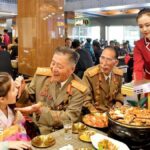





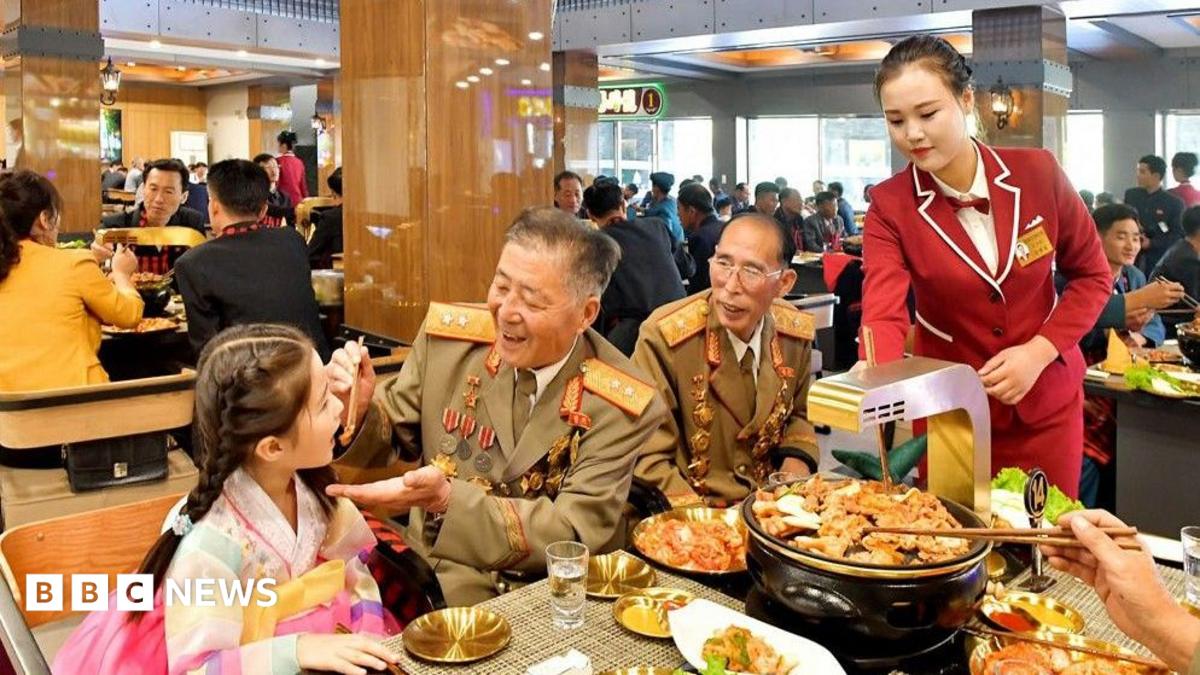
The barbecue boom is not the only sign of North Korea’s changing economic fortunes.
Before that, it was reports of newly opened luxury hotels and a Benidorm-style coastal resort.
In April, state television documented North Korean leader Kim Jong Un’s tour of Pyongyang’s Hwasong district – home to his flagship urban housing campaign – where he visiting a pet shop with his daughter and touted rising pet ownership in the country.
“If you find it in the North Korean news, it’s propaganda by design,” says Simon Cockerell, the general manager of Koryo Tours, one of the only Western tour companies permitted entry into the country.
But, he adds: “It doesn’t make it not true.”
In more than 180 trips he has made to North Korea over more than two decades, Cockerell has noticed a tangible shift in public attitudes towards materialism, from the surge in cars to the popularisation of al fresco dining.
“It’s a lot more accepted now to conspicuously consume things, which would have been very much frowned upon before,” he says.
Meanwhile his colleague, marketing manager Zoe Stephen, was struck by the prevalence of smartphones on Pyongyang’s streets when she visited last year.
Instead of tourists like her taking photos of Pyongyang’s residents, “it was North Koreans taking a lot of photos and videos of us”, says Stephen.
And while Pyongyang’s restaurant culture was already “starting to boom” before the pandemic, she says, the fresh restaurants mushrooming around the capital were ever fancier and “more open to this new booming middle class”.
A meal of white rice and meat soup was one of the famous promises made by founding leader Kim Il-sung to his people.
By the time he died in 1994, the country was on the cusp of a devastating famine that would kill by some estimates millions of North Koreans.
North Korea may have moved past this tragic history, but it’s still wrestling with sharp inequalities among its people. The dinner plate is one example of that.
Surveys of defectors have revealed that North Koreans in general eat very little meat, and access to meat varies considerably by social class.
This disparity is especially stark when it comes to beef, as cattle is traditionally reared for ploughing agricultural land rather than for consumption.
“In North Korea, it’s illegal for individuals to slaughter cows. The only time you can eat the beef is if the cow dies, say, from an illness,” says the woman who fled the country in 2017. “I never had beef at a restaurant.”
Kim Il-hyeok, another defector who left the country in 2023, recalls going to barbecue restaurants “quite often”. But he admits that his lifestyle was one of privileged exception.
“Generally speaking, most people hardly ever got to eat out,” he tells the BBC.
On the occasions that Kim brought friends or acquaintances to restaurants, they did not know how to unfurl the wet towels served to them, or what to do with the large napkins meant for their laps, he recalls.
“They’d say things like, ‘I can’t remember the last time I ate at a place like this,'” he says. “They’d thank me over and over again.”
For all the hype these barbecue restaurants have generated, it’s unclear if they will be able to stay open.
According to Radio Free Asia, sources inside the country claimed that some restaurants had to temporarily close because of uncertain meat supplies.
Experts say that while the state would have likely ordered the setup of these barbecue restaurants, they may end up being run as de facto private operations.
To keep their doors open, “they’ll need to adopt capitalist-style business practices”, says Lee Ju-young, a research fellow at the Bank of Korea.
“And if they’re able to keep operating over the long term, that would suggest there’s genuine demand for them.”