







At times it seemed the killing was getting out of control. The police appeared to be trying to meet quotas. The president, far from restraining them, urged them to carry on, and not to worry about legal repercussions. I will be the one who will go to jail for you, he told them.
When 32 were killed in a single night in Bulacan, a province north of Manila, in August 2017, Duterte said he would like to see 32 killed every night. At one point he compared himself to Adolf Hitler.
The ICC has charged him in relation to the deaths of 76 people, though prosecutors say these should be seen as examples from a much wider pattern of killings. The cases date back to before his election as president, to his time in office in Davao where he is alleged to have run death squads.
As president, Duterte withdrew the Philippines from the ICC in March 2019. But the court says it still has jurisdiction over alleged crimes committed before that date, and that the failure of the Philippines to investigate and prosecute those responsible for the mass killings during the drug war gives it the authority, as a “court of last resort”, to try them at The Hague.
Duterte has denied the charges, his lawyers arguing the death toll during the drug campaign was caused by excessive police enforcement, not an official policy of killing drug users and dealers.
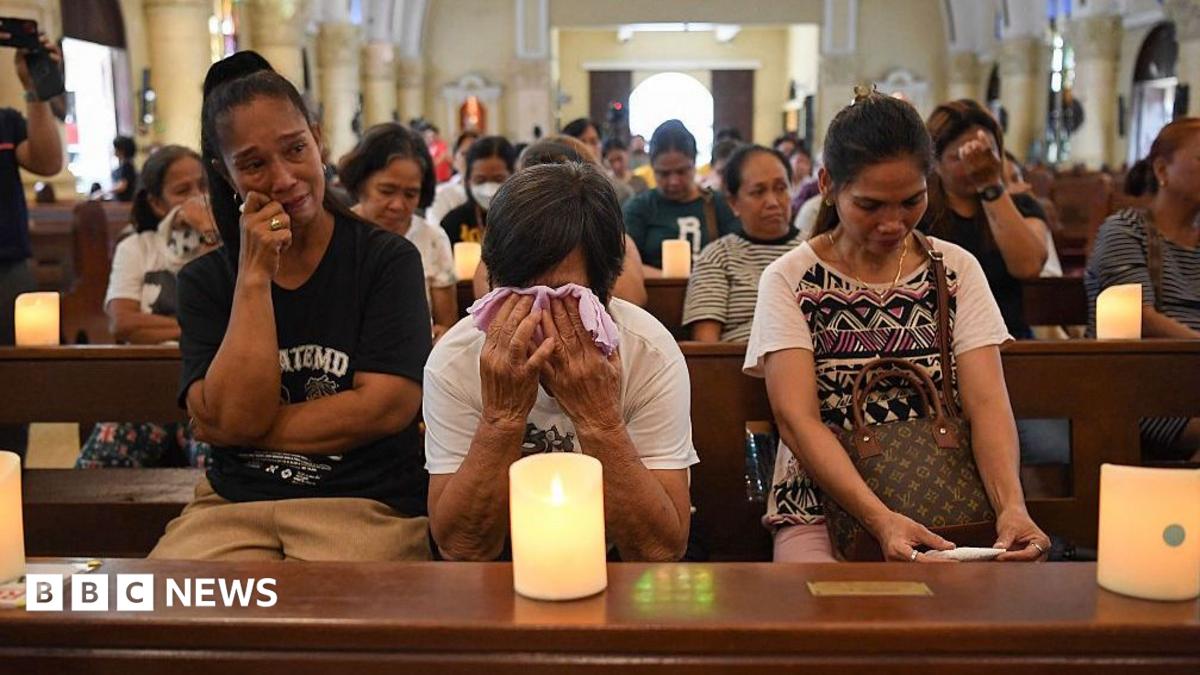
He is the first Asian leader to be tried at the ICC, and if found guilty, would be the first former head of state or government to be convicted there. Yet the case remains very controversial in the Philippines.
The way he was taken to The Hague outraged his supporters. He was whisked by police officers onto a private jet at Manila airport in March last year, after returning from a trip to Hong Kong, right after the ICC indictment was made public.
The Duterte family had formed an alliance with the Marcoses to fight the 2022 election, winning Ferdinand Marcos Jr the presidency and Sara Duterte, Rodrigo’s daughter, the vice-presidency.
But by last year the partnership had broken down, each side trading scathing attacks on the other. The Dutertes believe that the extradition was a purely political manoeuvre by the Marcos administration to weaken them.
This argument, tapping into public sympathy for the ageing ex-president, probably helped pro-Duterte candidates in the mid-term election for the Philippines Congress last year, and is still used by Sara Duterte, who is widely considered a front-runner for the next presidential election in 2028.