



Mary, another former content writer whose name we’ve changed, says her employer encouraged the use of AI as a productivity tool.
Instead of making her job easier, she says it created additional responsibilities.
“We had to edit more, fact-check more because the data AI produced was inaccurate,” she says. “Technically it was more work for us.”
Like Lisa, she was later made redundant.
Companies are under pressure to implement AI, to reduce costs and increase productivity, experts say.
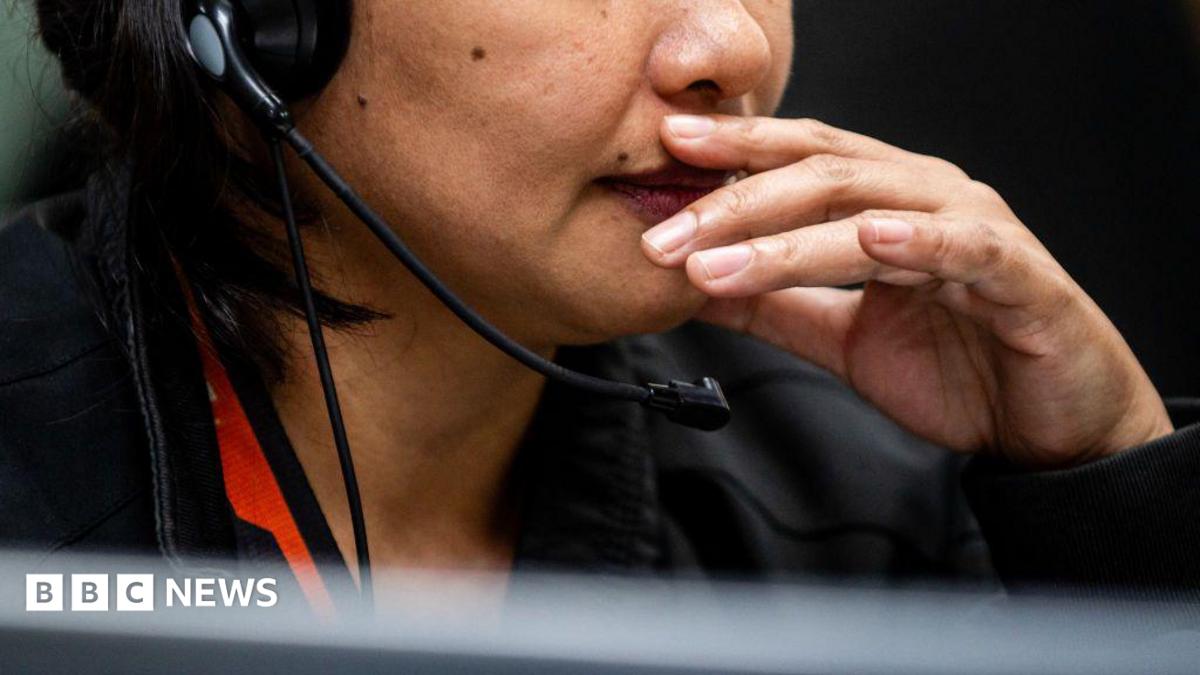
Teleperformance, the world’s largest call centre operator and one of the Philippines’ biggest private employers, has said AI offers an opportunity to augment rather than replace its workforce.
The company expects AI to handle routine interactions while human agents move into more complex roles.
Teleperformance has also said it plans to retrain employees.
Accenture has similarly said that generative AI will reshape almost every job rather than eliminate positions.
The firm has promised to invest billions of dollars in AI capabilities and workforce training.
Concentrix – which is the biggest outsourcing firm in the Philippines – says its AI systems should remain under human oversight and has committed to training employees in the new technology.
Some Filipino managers are uneasy about AI and want to slow down adoption, according to Paul Quintos, from the University of the Philippines-Diliman.
They are concerned about how much of the domestic workforce might be displaced.
“But there’s tremendous pressure from foreign clients to adopt AI,” he says. “It’s a major cost-cutting measure.”
Philippine outsourcing companies compete directly with rivals in India and elsewhere for contracts from multinational corporations.
Increasingly, those clients expect suppliers not only to provide cheaper labour, but also to integrate AI into the services they deliver.