





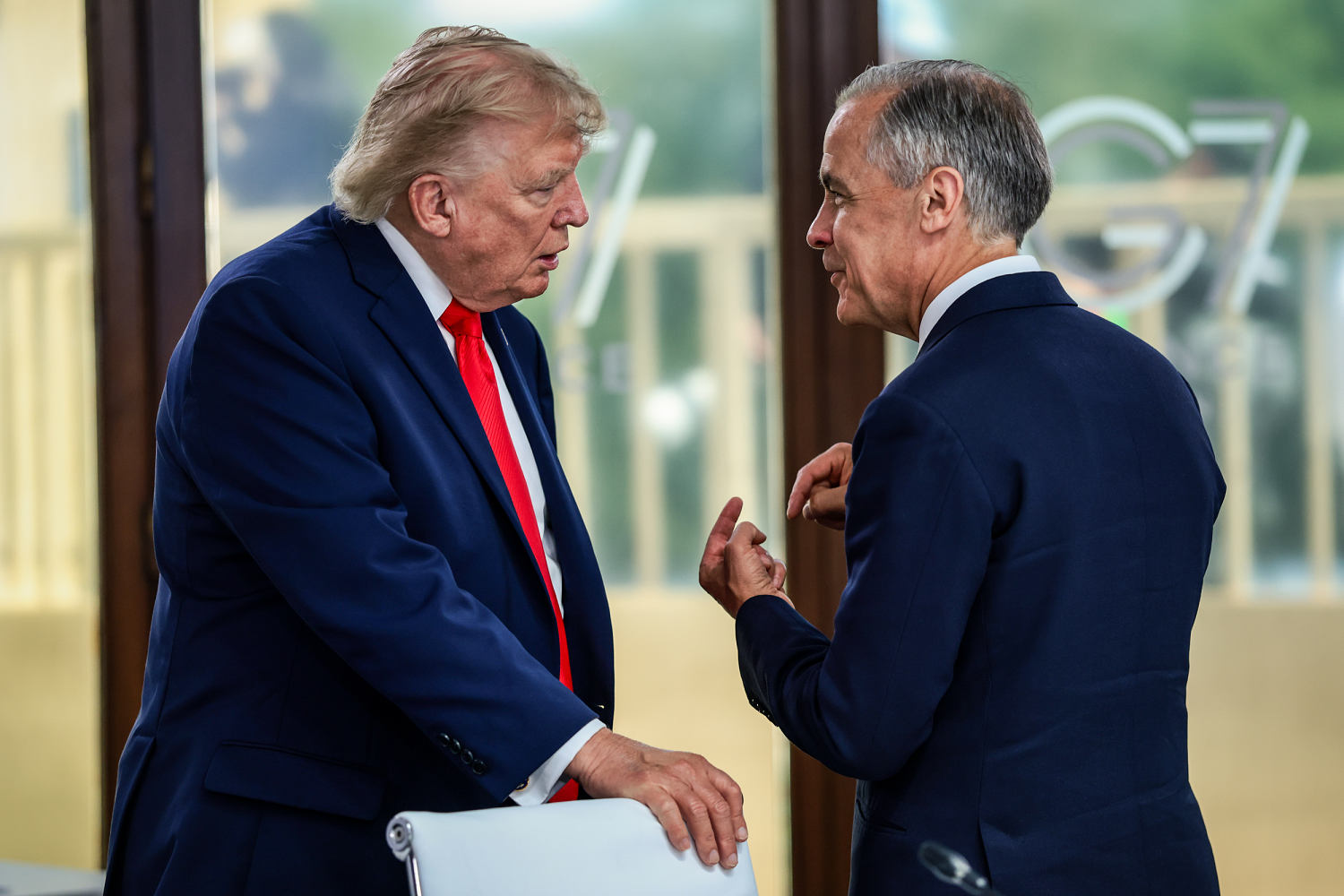
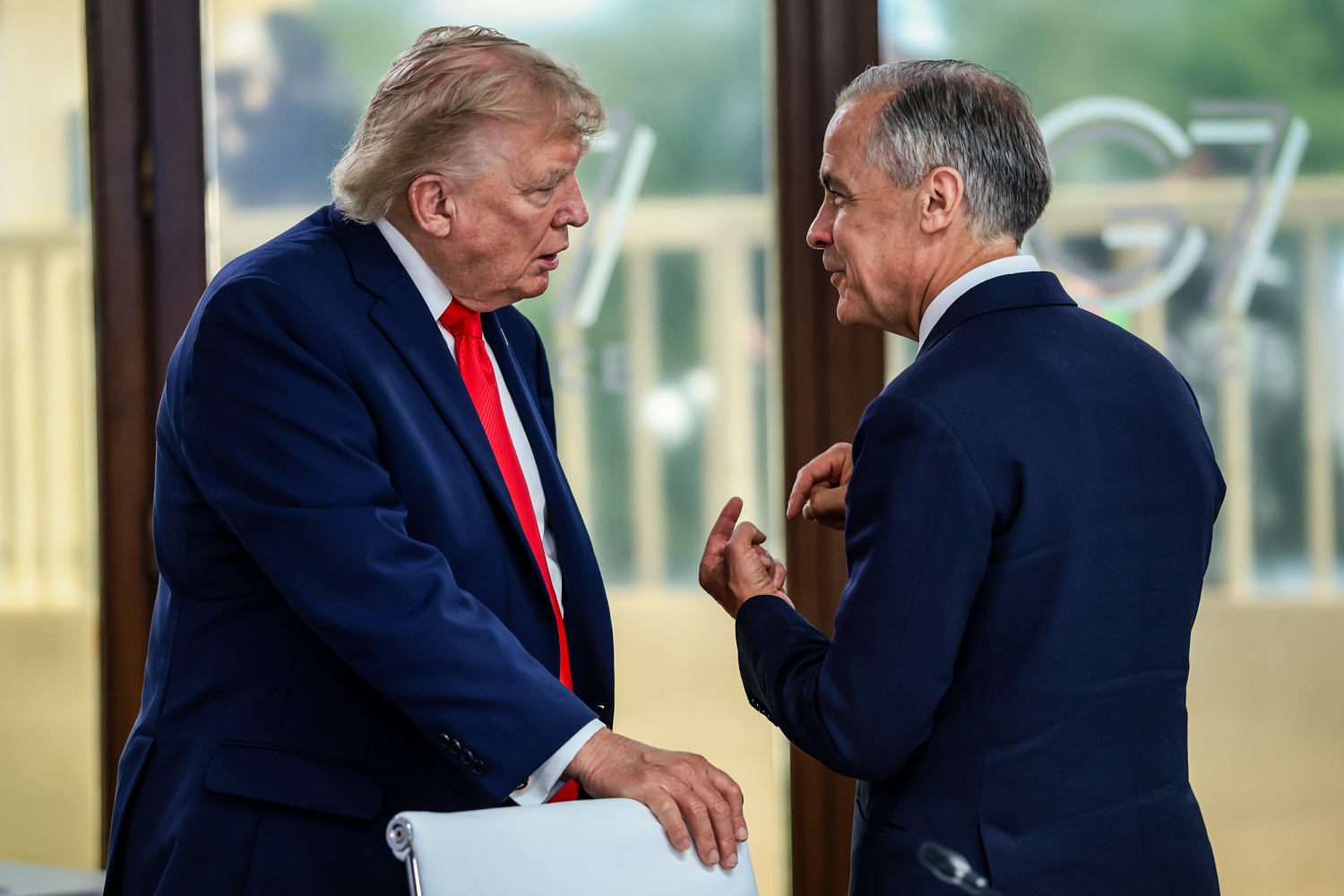
The Canadian government is racing to negotiate a deal with the Trump administration in order to avoid a fresh wave of U.S. tariffs set to hit many of its exports to the United States starting on Wednesday.
However, after weeks of meetings, the prospects for a deal remained uncertain Monday, and Canadian broadcaster CBC reported that the two countries were at an impasse.
The new tariffs, if implemented, would hit about $20 billion worth of Canadian products imported to the U.S., including hockey sticks, some clothing, wines, some dairy products and certain building materials such as cement and plywood. Energy products, potash, fish and critical minerals are excluded from the duties.
In 2025, Canada ranked as the third-largest source of imports for the U.S., according to Census Bureau data, with more than $380 billion worth of goods crossing the border into the States last year.
The White House has said the tariffs are in response to Canada’s “discriminatory treatment of American products” and that it’s “leveling the playing field for crucial American exports — cars, alcohol, and dairy.”
It plans to implement the duties under Section 338 of the Tariff Act of 1930, a 96-year-old law that authorizes the president to hit any foreign country that discriminates against U.S. commerce with tariffs of up to 50%.
No president has ever invoked Section 338 before, and legal challenges are all but certain to be filed against the tariffs.
Nonetheless, importers could pass the new tariffs down to consumers — putting more pressure on Americans who are already navigating higher costs. Consumer prices have jumped 3.4% over the last year, up from 2.4% right before the Iran war.
Tariffs currently cost the average American household around $1,100 annually, Yale’s Budget Lab estimates.
A trade cold war gets hot
For more than a year, the U.S. and Canada have engaged in a trade tit for tat. The U.S. put in place global tariffs on imports including steel, aluminum and autos last year — as well as IEEPA tariffs on Canada over alleged fentanyl trafficking at the northern border.
Canada denied that its border was a significant source of fentanyl smuggling into the U.S. and retaliated with tariffs of its own on American products. Now, U.S. officials say these new tariffs are payback for Canada’s retaliation.
“The policy basis for [Wednesday’s] duties are related to measures that Canada took against the United States,” U.S. Trade Representative Jamieson Greer said last week. “I’ve got two countries in the world that have retaliated against the United States for trade measures: the People’s Republic of China and Canada,” said Greer. “That’s not the kind of company you really want to be running in.”
Canadian Prime Minister Mark Carney, in a statement, called the threatened duties “the latest in a series of unilateral U.S. trade actions” that have been in “direct violation” of the United States-Mexico-Canada Agreement — a trade deal Trump inked during his first term.
As Wednesday’s deadline nears, top Canadian officials have gathered in Washington, D.C., to try to hammer out a deal with their U.S. counterparts.
The negotiations are so urgent for Canada’s government that Dominic LeBlanc, Carney’s minister responsible for U.S.-Canada trade relations, who has been in Washington for almost a week, met Sunday for an hour with Greer.
That followed “several days of detailed technical discussions” between Canada’s chief trade negotiator to the United States and U.S. Deputy Trade Representative Jeff Goettman, a spokesperson for LeBlanc told NBC News.
On Monday afternoon, LeBlanc and Charette will again meet with Greer. Commerce Secretary Howard Lutnick will also join the meeting, a spokesperson for LeBlanc said.
Canadian officials declined to provide further details on the state of the talks to NBC News. The U.S. Trade Representative’s office did not respond to requests for comment on Monday.
The outlook for consumers
Economists widely believe that trade barriers typically drive up prices for the importer and exporter.
Higher prices are not just a problem for the United States. Inflation is also back on the rise in Canada. On Monday, Statistics Canada reported inflation rose 3.0%, up 0.5% from a month earlier.
“Tariffs were once considered a one-off but they are hitting sequentially,” KPMG chief economist Diane Swonk said Friday. “All of this further complicates inflation over next year, even if energy prices are able [to] ebb and flow toward a lower level.”
“We will see more cost pressures,” she added.
In mid-July, the Trump administration rolled out a separate tranche of tariffs on 60 economies after dozens of trade investigations into forced labor issues.
“Regardless of whether the tariffs go into effect, the President is signaling that he believes he has a new tariff authority that can be used for negotiating leverage and that he intends to use it,” wrote Evercore analysts in a July note.
“This is the most aggressive posture we have seen from the Administration since the Supreme Court IEEPA decision and could be a harbinger of things to come,” they added.