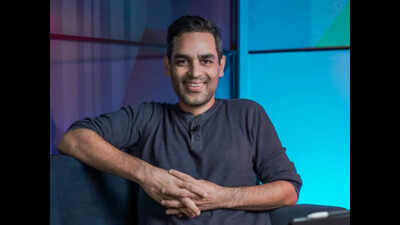




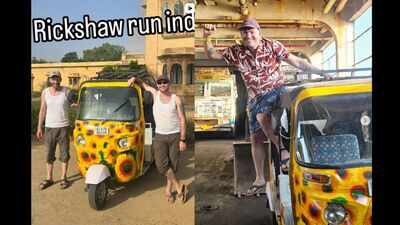
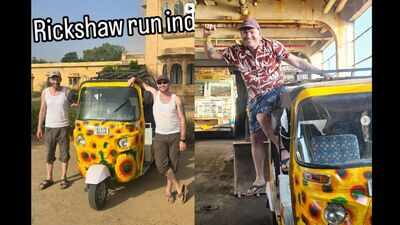
What happens when you trade the comfort of conventional travel for a three-wheeled auto-rickshaw and set out to cross India? For Norwegian mayor Jo Inge Hesjevik and his travel companion Øyvind Hesjevik, the answer lies somewhere between breathtaking landscapes, unexpected encounters and chaotic Indian traffic.The duo recently took on the Rickshaw Run India, an adventure that saw them travel from Jaisalmer in Rajasthan to Fort Kochi in Kerala. The journey began on September 26 and culminated on October 9, covering a reported distance of approximately 4,300 km. The adventure also caught public attention after the Norwegian mayor was spotted travelling in a colourful auto-rickshaw in Gujarat.Organised by The Adventurists, the Rickshaw Run is not a conventional road trip with a fixed itinerary. Participants navigate their own way across the country in small auto-rickshaws, with the freedom to choose their routes and the possibility of unexpected mechanical and road challenges.
The September 2026 edition officially ran from Jaisalmer to Fort Kochi
For Øyvind, however, the journey was about much more than reaching the destination. In an exclusive interview with Times of India (Travel), he reflects on the experience of crossing India’s changing landscapes, the lessons its roads taught him and why the country’s warmth deserves to be experienced firsthand.When asked about their experience in India, Øyvind said, “We landed in Kochi with a mixture of relief and a bit of melancholy.”The relief came because we completed the journey without the auto-rickshaw breaking down, getting into a roadside accident or either traveller suffering from stomach problems. But there was also a sense of sadness that the adventure had come to an end.“The melancholy is because it is the end of a journey of daily experiences, challenges and encounters,” he explains.Travelling from north to south also gave the duo an opportunity to witness India’s geographical and cultural diversity at close quarters. Rather than experiencing the country through a series of disconnected tourist attractions, they watched its landscapes and local cultures change as they moved between regions.
Misconceptions about India
Before arriving in India, they had certain ideas about what the country would look like. According to Øyvind, the image commonly presented back home often revolves around crowds at the Taj Mahal, congested streets, slum conditions and seemingly endless traffic jams.Another misconception, he says, is the tendency to view India as a geographical, cultural and culinary monolith.Their journey challenged these assumptions“Our experience has been very much contrary,” he says, recalling the variety of places they encountered, from Rajasthan’s historic Silk Route towns and Gujarat’s fertile fields to the mountainous landscapes and backwaters of India’s southwest coast.For travellers, this is one of the most compelling reasons to explore India by road. A journey across different states can reveal how dramatically the scenery, food, architecture, traditions and everyday life change from one region to another.Rather than reducing the country to a handful of familiar landmarks, the road trip offered the duo a more layered understanding of India.
What India’s roads taught him about traffic
We can’t deny that Indian traffic can be intimidating for first-time visitors.“Even if ‘Indian traffic’ looks from the outside like unorganised chaos, once you get into it, it feels more like an intricate choreography,” he says. He believes there is a discernible hierarchy to the movement of traffic, even when the road appears chaotic to an outsider.That does not mean the experience was without its frightening moments. Buses, in particular, left him concerned about road safety.“The sound of the musical horns still makes me sweat in panic,” he admits.His experience captures an important part of travelling by road in India: the journey can be as challenging as it is rewarding. For visitors attempting a similar adventure, understanding local driving conditions, planning sensible daily distances and avoiding fatigue are essential.
Did safety concerns match their experience?
Before travelling to India, the group had also heard warnings about the possibility of women travellers facing harassment in public spaces.Øyvind says their experience differed from some of the concerns they had been told about. He travelled with Western female companions who had been advised to exercise considerable caution, but he describes their experience of moving around the country as one in which they felt safe and secure.When asked about the one thing Norwegians should experience in India, Øyvind said,“I think what people need to experience in person here is how welcoming the locals are to foreigners.”He believes that people in Western countries have something to learn from the openness and interest many Indians show towards visitors from other places.That warmth, combined with the everyday encounters that happen along the road, became a defining part of the journey.As the Rickshaw Run came to an end in Kochi, the travellers were left with memories of changing landscapes, challenging roads and conversations that no conventional itinerary could have guaranteed. Their experience is a reminder that sometimes the most revealing way to discover a country is to travel slowly, remain open to the unexpected and let the road lead the way