




Chinese companies are expanding globally, and fast. Their biggest commercial competitors are in the US.
Waymo, Alphabet’s robotaxi business, remains the commercial leader, operating paid driverless services in several US cities. Amazon-owned Zoox and Tesla are expanding more cautiously, while Uber has abandoned the development of its own autonomous vehicles, which had been marred by a fatal accident in 2018.
Uber, and its ride-hailing rival Lyft, are now partnering with Chinese firms.
That gives them automatic “access to millions of customers that they wouldn’t have if they created their own app,” says Tu Le, founder of consultancy Sino Auto Insights.
“Through these partnerships, they’re able to commercialise and broaden their scope.”
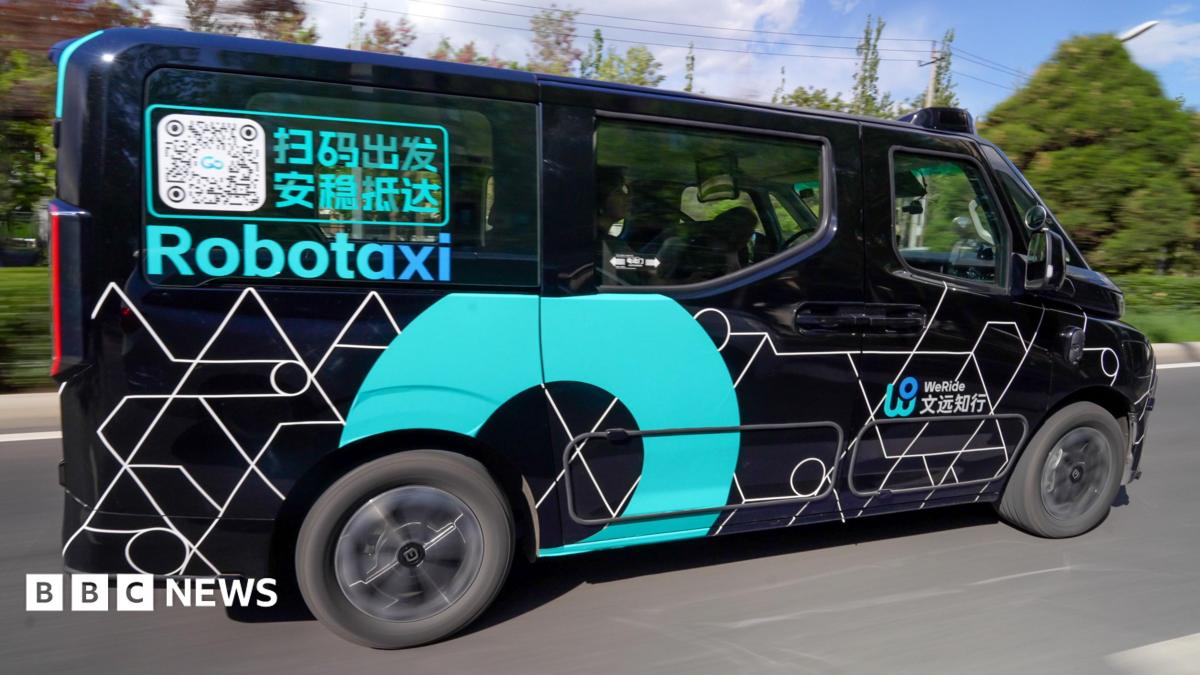
Although Chinese companies are able to manufacture cheaply, Waymo has spent years building expertise in customer service and the app technology.
“Having experienced Waymo and the WeRides and the Ponys… I would have to say the user experience for Waymo is much better than all the other competitors. I feel like Waymo is really becoming a standard mode of transportation for California,” says Tu Le.
Perceptions also differ across markets.
In the US, unions have warned robotaxis could displace taxi, delivery and freight drivers.
China’s policymakers present automation as a remedy for its shrinking workforce but government censorship of dissenting voices makes it difficult to gauge opinions in the wider population.
President Xi Jinping has promoted AI and robotics as part of China’s drive to develop “new quality productive forces” – that will create jobs and boost economic growth.
And so there are incentives and impetus for companies to invest in the technology and expand.
One of the industry’s arguments is that autonomous vehicles could improve mobility for people who cannot easily drive themselves.
“If we can bring the cost down for a robotaxi ride so that it’s as cheap – or maybe even cheaper – than hailing an Uber with a normal driver, then it really helps broaden mobility,” Le says. “Elderly folks, folks that are disabled – these robotaxis really allow them a lot more ability to travel.”