




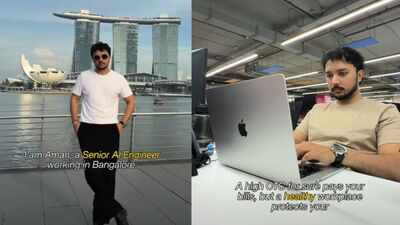
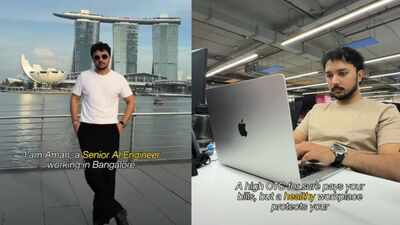
For many professionals, a dream job comes with a handsome salary, free meals, gym memberships and a stylish office. But Bengaluru-based AI engineer Aman Vaishnav believes the most valuable workplace benefit is something that cannot be measured on a payslip: the freedom to work without being constantly monitored or having to justify every personal decision.His take on corporate life has drawn attention on social media, where he described a work environment that gives employees greater control over their schedules and trusts them to complete their responsibilities. Instead of celebrating conventional office perks, Vaishnav said basic respect, flexibility and the absence of micromanagement are what make a job genuinely rewarding.In an Instagram video, he summed up his view with a simple message: “People flex free food and fancy gym memberships at work, but after years in tech, I’ve realised the biggest corporate flex is something else entirely, which is basic human dignity.”
No strict attendance routine or fixed desk
Vaishnav described a work routine that differs from the traditional office model, where employees may be expected to follow fixed schedules, record attendance and spend most of their working hours at assigned desks. According to his account, he visits the office around twice a week and chooses to go when he feels it is necessary. He also said he does not have to deal with biometric systems tracking his arrival and departure or follow an assigned seating arrangement.“I go to office twice a week and only when I feel like it. No biometric checking my check-in and check-out, and no assigned shift. I pick a random desk, open my laptop, and get to work,” he said. His experience highlights a different way of looking at productivity. Rather than treating physical presence as the main indicator of an employee’s contribution, the approach he described places greater emphasis on completing work and meeting responsibilities. However, this is Vaishnav’s account of his own workplace experience and does not establish that all employees or teams at the company follow the same arrangements.
Taking a day off without writing an explanation
One of the most relatable parts of Vaishnav’s video was his description of how he requests leave. Employees often find themselves explaining personal circumstances in detail when asking for time off, even when they simply need a break. Vaishnav said that, in his experience, taking leave does not involve lengthy explanations or elaborate excuses. He explained that he sends a short message informing his manager that he will be taking the day off, and the response is usually straightforward.“I just drop a message saying taking off today, and my manager says, ‘Enjoy, see you tomorrow,’” he said. He added a humorous line that quickly became one of the most memorable parts of his account: “I don’t have to write an emotional essay or kill my imaginary daadi, just to take a Friday off.” The remark struck a chord because it captures a familiar frustration in professional life: feeling that employees must provide a sufficiently serious reason to deserve time away from work. For Vaishnav, being able to communicate a leave request without unnecessary pressure reflects a workplace where managers trust employees to manage their responsibilities and personal time.
Why he values trust over workplace perks
Vaishnav also spoke about the relationships between employees and senior leaders, saying that his workplace has little of the rigid senior-junior hierarchy he associates with traditional corporate environments. “There is zero senior-junior ego. The person leading an entire org sits next to me,” he said. He described an atmosphere without constant supervision or what he called “fake urgency”. In his view, employees benefit when managers focus on the work being delivered rather than repeatedly checking whether someone is at their desk or appears busy.This distinction matters because workplace flexibility is not simply about working from home or having fewer office days. It also involves whether employees feel comfortable communicating with their managers, setting reasonable boundaries and taking breaks without unnecessary guilt. A flexible arrangement still requires accountability, coordination and clear expectations. But Vaishnav’s experience suggests that these responsibilities do not necessarily require constant monitoring. He put his argument plainly: “A high CTC for sure pays your bills, but a healthy workplace protects your peace.”
Social media users say dignity matters more than a salary hike
The video prompted reactions from people who related to his experience or hoped to find a similar work environment. One user described moving from a strict 8 am to 5 pm attendance routine to a schedule where office hours were optional, adding that dignity had been a bigger reward than a salary hike. Another commenter compared the experience with working in Berlin after seven years in India, saying that the change had felt liberating and expressing happiness that some Indian companies also offered such flexibility.“Literally that’s all I need in a work place,” another user wrote. The responses reflect a broader conversation about what employees expect from their jobs. Salary remains important, but the daily experience of working, including how managers handle leave, attendance and personal boundaries, can also influence job satisfaction.Vaishnav’s message is not that salaries and benefits do not matter. Rather, his account suggests that a good compensation package means less if employees feel constantly watched or pressured to explain ordinary personal choices. For workers weighing their next career move, his version of the corporate flex offers a different benchmark: a workplace where people are trusted to do their jobs, respected as individuals and allowed to take time off without turning it into a lengthy justification.