





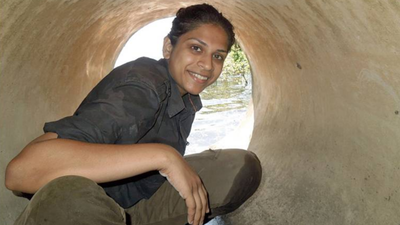
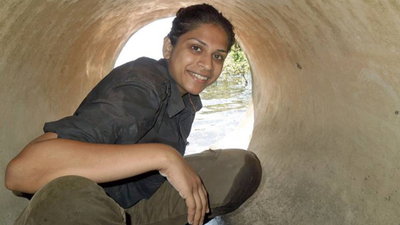
When Keerthi Krutha’s mother asked her to return home for festivals, the wildlife researcher often had a different answer. “Amma, I am already home. The forest is my home,” she told her. For Krutha, the forests of the Western Ghats became a workplace where she spent nights searching for frogs, collecting samples and recording observations. She walked through rain-soaked forests, crossed slippery rocks and streams, and dealt with leeches and unpredictable weather to investigate a fungus that has caused devastating losses among amphibians in other parts of the world.Over several years, Krutha surveyed 49 protected areas and 19 other landscapes in the Western Ghats, documenting more than 3,000 amphibians, according to a report by The Better India. Her work focused on detecting ‘Batrachochytrium dendrobatidis,’ commonly known as the chytrid fungus, which can cause a disease called chytridiomycosis.
A childhood spent around wildlife
Krutha grew up in Chennai, where an interest in animals and forests developed early. According to the official website of the Sanctuary Nature Foundation, she watched wildlife documentaries, read books about animals and went on family trips to forests rather than choosing conventional tourist destinations. In 2004, while still at school, she was selected as a Tiger Ambassador through the Kids for Tigers programme run by Sanctuary Asia. The experience introduced her to people working in wildlife conservation and helped her see it as a possible career.She also volunteered at the Madras Crocodile Bank, where she helped clean crocodile enclosures after the 2004 tsunami. After graduating in 2012, she joined a project investigating amphibian chytrid fungus in the Western Ghats. Sanctuary Nature Foundation, which recognised her with its Young Naturalist Award in 2014, also documented her work on amphibian disease monitoring and her earlier field surveys.
Why scientists are watching a fungus that infects frogs
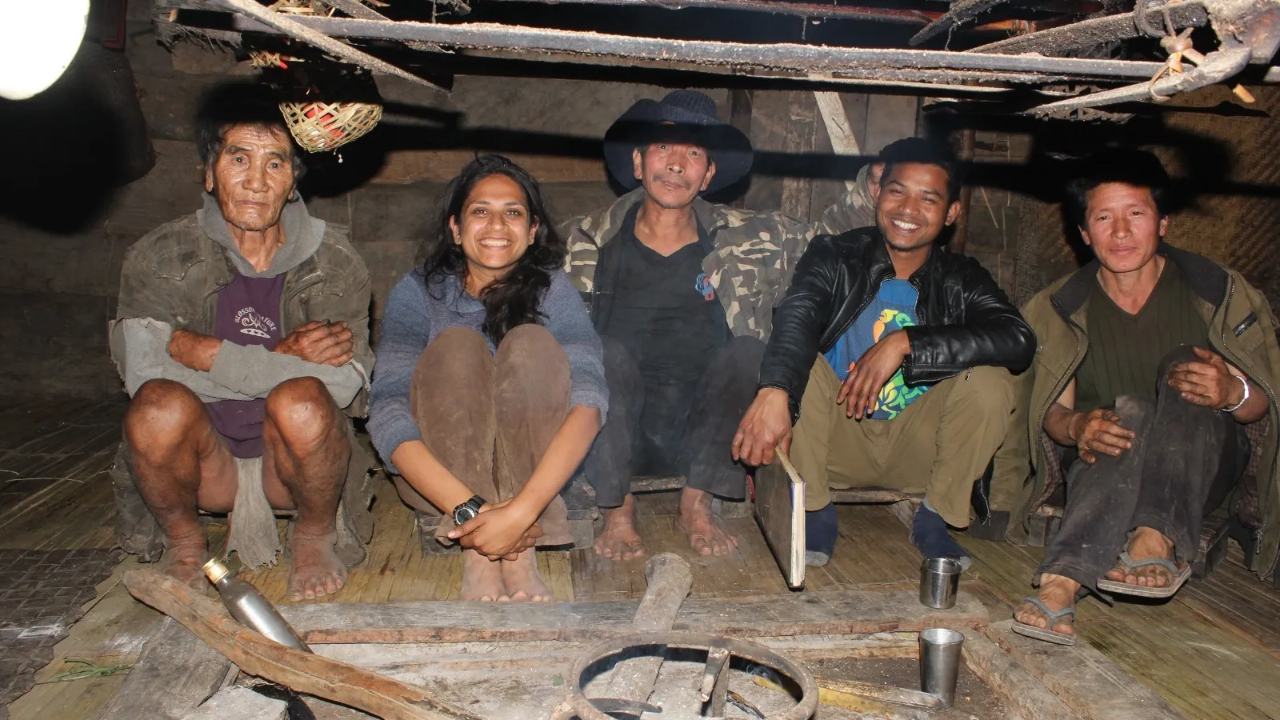
Photo credit: The Better India
The chytrid fungus is a concern because it affects the skin of amphibians. Frogs depend on their skin for important functions, including water and electrolyte regulation, and the fungus can disrupt these processes. Severe infections can lead to chytridiomycosis and death. The disease has contributed to amphibian declines around the world. However, detecting the fungus in a frog does not automatically mean the animal will develop severe disease or die. The effects can vary according to the host species, the fungal strain and other conditions.The Western Ghats is an important region for this research because it supports a high diversity of amphibians, including species found nowhere else. Changes in frog populations can also provide information about the condition of their habitats.As per the website of Zoo Outreach Organisation, when the research began, information about amphibian diseases in the Western Ghats was limited. The project therefore aimed to determine where the fungus occurred, develop consistent testing methods and establish long-term monitoring. The fungus had already been detected in the region before Krutha began her work. Its presence was reported in the Western Ghats in 2011, making further investigation important.
How she checked thousands of frogs without harming them
Finding frogs in dense forest is only one part of the work. Many are small, difficult to spot and most active after sunset, when researchers have to follow their calls through vegetation and along streams. Krutha searched different habitats, including rainforests, evergreen forests and shola grasslands. She carried a torch, sampling equipment and notebooks, often working late into the night.Once a frog was located, she collected a swab from its skin, recorded details about the animal and released it. The non-destructive technique allowed scientists to test for the fungus without killing the frogs or removing them permanently from their habitats.The process also required careful handling and consistent records. To compare results across different locations, researchers needed a standard method for finding frogs, collecting swabs and documenting samples. According to The Better India, Krutha helped develop procedures that could be used by other researchers for future surveys.
What the laboratory tests revealed
The fieldwork was followed by laboratory analysis. Researchers tested the collected material to determine whether the fungus was present and used molecular methods to examine the strain. The findings were published in a paper titled ‘Endemic Asian Chytrid Strain Infection in Threatened and Endemic Anurans of the Northern Western Ghats, India.’ Krutha was among the authors.The study reported the presence of an Asian strain of the fungus in three threatened and endemic frog species in the northern Western Ghats: the Bombay night frog, Leith’s leaping frog and Bombay bubble-nest frog. Some infected frogs showed no obvious external symptoms, underlining why visual inspection alone cannot reliably establish whether an animal carries the pathogen.The researchers concluded that amphibian diseases needed greater attention in conservation planning. The finding was significant because it added evidence about the fungus’s presence in the region, although it did not establish that a widespread outbreak was occurring in India’s forests.
She also helped identify a new frog species
The fieldwork led to another discovery. In 2017, Krutha and her colleagues described ‘Nyctibatrachus mewasinghi,’ commonly called Mewa Singh’s night frog. The species was found in Kerala’s Malabar Wildlife Sanctuary.
Why monitoring matters
The Western Ghats supports a large number of endemic amphibians, many of which face other pressures, including habitat loss and environmental change. Disease surveillance can help conservationists identify potential threats and decide where further investigation or monitoring is needed.Krutha received two research grants from the Mohamed bin Zayed Species Conservation Fund, according to Sanctuary Nature Foundation. The support helped extend the work and expand the surveys. Her research does not mean that a large-scale chytrid outbreak is inevitable in India. Instead, it provides a basis for checking the fungus’s presence and watching for changes, which is particularly important in a region with many species found nowhere else.