




Asia-pacific Images Studio | E+ | Getty Images
The Federal Reserve sets national interest rate policy. But the U.S. central bank isn’t the only major player in this arena: Bond investors also have a big influence on consumers’ borrowing costs.
Many types of consumer loans — such as mortgages and auto loans — often peg their interest rates to 10-year U.S. Treasury bonds. That means their rates move higher when 10-year Treasury yields increase, and vice versa.
Those bond yields have increased steadily over the past several months.
The 10-year Treasury yield was about 4.7% as of market close on Thursday, its highest level since January 2025.

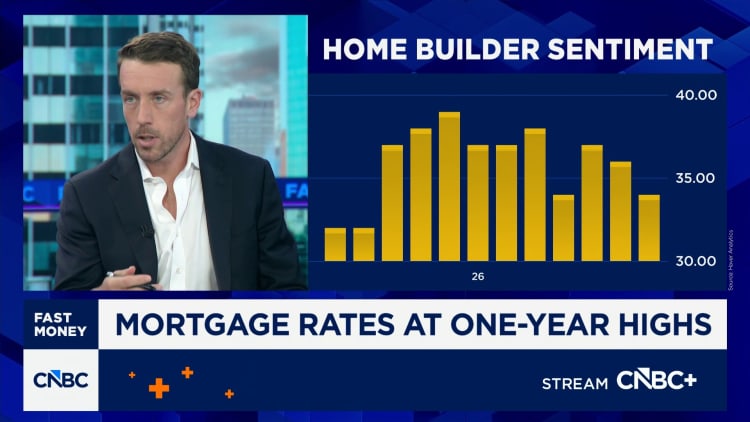
The rates on 30-year fixed mortgages on Thursday — about 6.6% — rose to their highest since August 2025, according to weekly data posted by Freddie Mac. Those on 15-year fixed-rate mortgages increased to about 6% this week, the highest since June 2025, Freddie Mac said.
Those price pressures come amid others for households, economists said.
Average gasoline prices topped $4 a gallon again this week amid renewed tensions in the Iran war, according to data from the Energy Information Administration.
The Trump administration also imposed a slew of new tariffs on dozens of countries on Friday. These import taxes raise costs for consumers and businesses, according to economists.
Inflation across the U.S. economy has also been above policymakers’ target for more than five years, and the financial cushion provided by relatively high tax refunds this spring appears to have waned, economists said.
The rise in Treasury yields is “just another drag for households when you’ve got affordability hits elsewhere,” said Thomas Ryan, a North America economist at Capital Economics.
“And we don’t see much relief in terms of the borrowing cost side of things,” he said.
Why have Treasury yields increased?
The Fed sets an interest-rate benchmark known as the federal funds rate.
That benchmark has a direct impact on shorter-term interest rates, like those for credit cards and other variable-rate loans, said Chad NeSmith, a certified financial planner and director of investments at Tobias Financial Advisors, based in Plantation, Florida.
But bond investors tend to have a much greater influence over the movement of 10-year Treasury yields and those of other longer-term bonds.
More specifically, it’s investors’ expectations for future inflation and the trajectory of Fed interest rate policy that guide bond yields up or down, experts said.
For example, if bond investors expect inflation to move higher, they will demand a higher yield on longer-term Treasury bonds to compensate for the risk of inflation eroding their future returns, experts said.
“It’s investors pricing their own reality, and that has a big knock-on effect on consumers in terms of what [rates] they can borrow at,” Ryan said.

In this case, many factors are feeding into investor anxieties about inflation, such as oil prices, which jumped sharply in July as tensions in the Middle East have ratcheted upward.
Sustained high oil prices can filter through to prices across the U.S. economy, for things like airline tickets, transportation and goods, NeSmith said.
Capital Economics expects the Fed to raise interest rates three times this year, not necessarily in response to high oil prices but more so “a broader view that inflation looks hot,” Ryan said.
Homeownership likely the biggest impact
Consumers will largely feel the impact of higher Treasury yields in their ability to buy or sell a home, NeSmith said.
Mortgage rates are more than double what they were during the Covid-19 pandemic, for example, and they could move above 7%, experts said.
“It will increase the lock-in effect in the housing market, where they feel trapped,” NeSmith said.
Consumers who can’t find an affordable rate for auto loans might forgo buying a new car, for example, he said.
“It just slows spending, because people have to borrow so much more,” NeSmith said.