




Looking for yield? Investing experts say now may be one of the best moments in recent market history to buy corporate bonds.
With the 10-year Treasury yield still flirting around 5% and the Federal Reserve expected to hold steady on rates at its FOMC meeting on Wednesday, fixed income experts say the environment for highly rated investment-grade corporates is attractive — some have called it a “generational opportunity.”
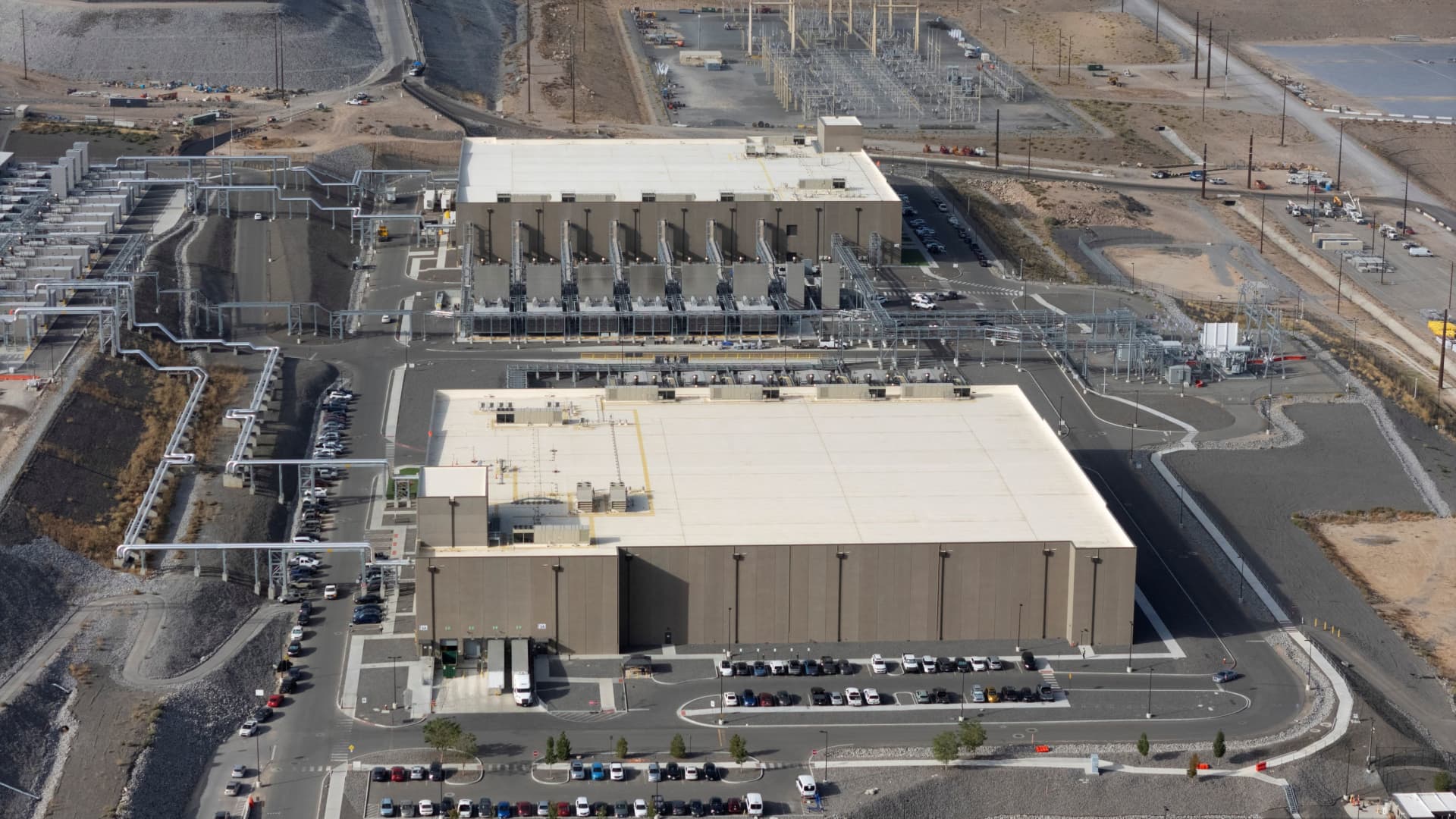
Leading the market are hyperscalers including Alphabet, Amazon, Meta and Microsoft, companies that have been aggressively issuing debt for artificial intelligence projects, including buying chips and building data centers and power plants to run them.
“You’re typically not able to buy AA [and similarly rated] companies at these attractive yields,” said Steven Purdy, group managing director and co-head of global credit at TCW in Los Angeles, which manages over $150 billion in fixed income investments.
Nevertheless, investors need to be cautious as cash flow is under pressure at even the most cash-rich companies in the market — Meta’s free cash flow just went negative for the first time since its 2012 IPO.
For investors looking to the bond market for income opportunities, here is what to know about the current situation with corporates.
Hyperscaler balance sheets and debt diverge
The major hyperscalers have strong balance sheets and highly manageable debt, even though it’s larger than it has been in the past, said Joseph Matus, principal in the West Conshohocken, Pennsylvania office of Cerity Partners. “It’s not very often that investors get a chance to invest in above-average credit quality at average or above-average yields. That makes this a unique opportunity,” he said.
The VettaFi AI Hyperscaler Bond Index, which tracks the debt of large tech giants like Microsoft, Alphabet, Oracle, Amazon and Meta, had a yield of 6.51% at the end of September.
While investors are normally cautious about large-scale debt issuance, they’re giving many large tech companies a pass — at least for now. “Investors are willing to give them a bit of a leash. The projects that they’ve put in place so far are proving to be quite profitable,” Matus said.
In 2025, hyperscalers issued $93 billion in debt to support capital spending on AI and other initiatives, and spending has continued this year, according to a blog post by Todd Rosenbluth, head of research and editorial at TMX VettaFi. By contrast, annual debt issuance from top hyperscalers averaged around $35 billion between 2020 and 2024.
“We are comfortable that they can service this amount of debt. It’s not a dangerous amount of debt, but it’s a significant amount of debt,” Purdy said.
Contrast that with the cloud-computing company CoreWeave whose shares are under pressure amid investors’ concerns about the company’s heavy debt-fueled AI infrastructure expansion. Its bonds plummeted in October, with spreads in its credit default swaps widening.
Oracle, meanwhile, saw its debt downgraded in July by S&P Global Ratings, to the lowest tier of investment grade.
While the issuance of debt from these specific companies is expected to slow right now, their earnings this week will be watched closely. While Oracle is not reporting, analysts will be looking at other tech giants for comparison.
“It’s the most important IG tech credit, just given how it’s a bit more stressed relative to the A-rated names,” CreditSights analyst Jordan Chalfin told CNBC this week. “It’s trading more like a high-yield credit, even though it’s IG, and so there’s just a lot of investor concern on that one.”
There may be as much as $4 trillion more in AI debt
Brian Barnhurst, head of global credit research at PGIM Credit in Newark, New Jersey, says that based on published estimates, he expects significant debt issuance linked to the AI ecosystem to continue over the next year.
JPMorgan forecast back in June that over $4 trillion in AI-related debt could be issued through 2030. But as competition over issuance and increasing skepticism from major institutional investors including insurance companies about taking on more AI project debt converge, the outlook is subject to significant pressures building up in the bond market.
Priya Misra, managing director and portfolio manager at JPMorgan Asset Management, recently told CNBC that 10- and 20-year hyperscaler debt is a way to pick up income as the yield curve steepens, and potentially also capture potential for capital gains if rates stop rising.
Whatever the exact amount of corporate debt issuance, investors should be deliberate about the opportunities, Barnhurst said. “You have all these choices, and you get to be very selective and deliberate and intentional about what you want to invest in.”
There’s also a good chance more companies will issue equity to fund their AI expansion, alongside debt issuance. This week, Meta announced a capital plan that includes selling up to $95 billion in various stock offerings to fund AI expansion. The company also said it intends “to fund investments through a balanced mix of operating cash flow, investment-grade debt, strategic partnerships, and equity capital.”
Hyperscalers “need so much money, they’re going to end up doing all of those things,” Barnhurst said.
Underscoring the importance of hyperscalers, ProShares has filed for an AI hyperscaler debt ETF expected to come to market by early 2027. The fund will track a VettaFi index designed specifically to isolate debt issued by the core companies financing global AI infrastructure.
“What makes this proposed ETF particularly exciting is how it marries high credit quality with meaningful yield generation,” Rosenbluth wrote.
Still, Matus cautions that while it is a “rare opportunity” to invest in companies with above-average credit quality, or even above-average yields, “most investors are already highly exposed to these same companies through equity markets.”
“Hyperscaler bonds may offer attractive value, but investors should ask if the extra yield is worth giving up diversification against one of the major risks in equity markets: cracks in the AI story,” he said.
Diversify within the bond market
The opportunity within the investment grade market is most attractive at the lower-end of the ratings spectrum, BondBloxx co-founder Joanna Gallegos recently told CNBC. She said within the BBB universe, the lowest grade in investments, bonds are yielding over 6%.
Of course, diversification remains important, so investors shouldn’t put too many eggs in corporate bonds versus other bonds in their portfolio. Big bond funds like iShares Core U.S. Aggregate Bond ETF (AGG) have nearly half their holdings in Treasuries, so there’s a balance. The AGG has a 30-day SEC yield of 5.06% and an expense ratio of 0.03%.
Some investment advisors and bond strategists are focusing on pockets of opportunity with the corporate market. For Bob Shea, chief investment officer of Dynasty in St. Petersburg, Florida, that means a focus on active management rather than passive index funds like AGG that worked well when interest rates were low.
One fund he likes is the iShares Flexible Income Active ETF (BINC), which provides exposure to a broad range of global fixed income sectors, including high yield, emerging markets and securitized assets. It’s got a 30-day SEC yield of 5.65% as of Oct. 23. Because it’s actively traded, the expense ratio of 0.52% is higher than many index-based bond funds.
Bond investors are also looking to diversify the maturities of corporates they invest in. Edison Byzyka, chief investment officer with Credent Wealth Management in Auburn, Indiana, said he is looking to add more long-term bonds, such that portfolios have an average maturity of seven to eight years.
In investment grade, hyperscalers now represent over 20% of the 10-year plus index, while other estimates show that more than 40% of hyperscaler issuance in 2026 has been conducted in maturities of 20 years or more.
One ETF to consider in the long-term category is the Vanguard Long-Term Corporate Bond ETF (VCLT). It has a 30-day SEC yield of 6.39% as of Oct. 23 and an average duration of 11.6 years.
Purdy said by looking longer out with investment-grade corporate bonds, investors can get 150 basis points or more above the 30-year Treasury. “That’s pretty unusual,” he said.
Matus said his firm is also moving a bit longer on duration in clients’ portfolios. They use the AGG as the benchmark for non-taxable investors, and are looking out a half a year longer than the AGG’s effective duration of 5.7 years as of Oct. 26. They do this by increasing exposure to long-term vehicles and reducing exposure to some shorter-term investments.
Think twice about risk vs. reward in junk bonds
While the yields on offer in the junk bond market may be attractive in terms of a greater spread between their yields and treasuries as compared to corporates, Byzyka is looking for bonds with a rating of BBB or better. Investors can still get 6% to 6.5% and a spread above Treasuries, without taking undue risk, he said. He sees lower investment-grade bonds as a “place to go hunting.”
If equity markets correct, which Byzyka predicts they will, junk bonds will feel more volatile than a high-quality corporate bond or even those at the lower end of investment grade. He’s looking for ETFs with a 7% to 10% total return profile over the next 12 months. “You can get a lot of great yield right now … but the probability of default is less likely.”