








The fight over who can lay claim to the Tangail saree has entered a fresh phase. The Madras High Court has cleared the way for Bangladesh to press ahead with its challenge to the Geographical Indication (GI) tag awarded to “Tangail Sarees of Bengal,” opening up a wider clash over heritage and traditional handloom weaving.In a November 20, 2026 order, Justice P.B. Balaji turned down a request from the West Bengal State Handloom Weavers Co-operative Society Limited – better known as Tantuja – to throw out Bangladesh’s plea before a full hearing.Nothing about ownership has been decided yet. All the ruling does is let Bangladesh’s petition go forward so both sides can argue their case on the merits.The 26-page order became public on Monday.
How the row started
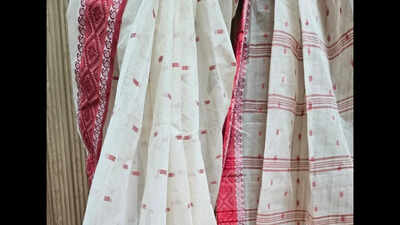
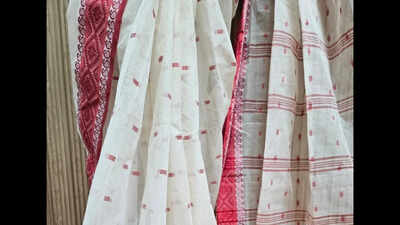
Tangail sarees go back at least to the late 19th century. Valued for their distinct handwoven motifs and patterns, the weave has long been tied to the Tangail district, which lies in present-day Bangladesh.Trouble flared after “Tangail Sarees of Bengal” received GI registration under India’s Geographical Indications of Goods (Registration and Protection) Act, 1999, with Tantuja listed as the registered holder.Bangladesh pushed back, arguing that the saree’s very name, weaving lineage, and reputation belong to Tangail district.In 2025, Tangail’s Deputy Commissioner moved the Madras High Court under Section 27 of the GI Act to seek cancellation or rectification of the Indian tag. The filing went through a power of attorney given to Bangladesh’s High Commissioner in New Delhi.Under Section 27, an existing GI registration can be cancelled or modified if valid grounds are made out.
Why West Bengal pushed back
Tantuja questioned Bangladesh’s right to bring the dispute to an Indian court in the first place. It argued that Tangail’s Deputy Commissioner is a foreign government official and lacks standing to pursue the plea in India.The co-operative society also contended that Bangladesh does not qualify as a “person aggrieved” under the GI Act. Beyond that, it raised doubts about the power of attorney and said Bangladesh had lost its chance by failing to oppose the tag when it was originally granted.On those grounds, Tantuja wanted the petition brushed aside at the threshold without digging into the underlying dispute.Justice Balaji was not ready to end it there.
What the court held
The judge noted that Bangladesh has its own Geographical Indications of Goods Act, 2013, which empowers government authorities to safeguard traditional goods and local communities.He also recognized the Deputy Commissioner’s role in looking after the economic and cultural stakes of Tangail’s weavers, producers, and traders.According to Justice Balaji, Bangladesh’s claims deserve a real look rather than an early exit before its side is heard.The court likewise rejected the claim that Bangladesh hadn’t shown how the Indian registration hurts its interests. Tangail sarees sell in international markets – India included, and Bangladesh has a legal right to seek GI protection for its own goods in India. If it ever tries to get a separate GI tag there, the existing Indian registration could get in the way.The bench also remarked that where a saree takes its name from Tangail district in Bangladesh, its reputation, quality, and traits could naturally connect back to that area.
Could Bangladesh go straight to the High Court?
Another key point was whether Bangladesh could file directly in the Madras High Court or had to go to the Registrar of Geographical Indications first.Tantuja pointed to Rule 65 of the GI Rules, 2002, arguing the plea belonged before the Registrar.The court disagreed. It ruled that Section 27 of the GI Act empowers both the High Court and the Registrar to hear rectification pleas. Procedural rules, Justice Balaji stated, cannot strip away powers given to the High Court by Parliament.The court also brushed aside objections over powers of attorney executed for successive Bangladesh High Commissioners, holding that moving from Md. Mustafizur Rahman to M. Riyaz Hamidullah did not invalidate the authorization. Nor does skipping an initial objection bar a later rectification plea, the order noted.
The bigger picture
Right now, nobody has decided whether the Tangail saree belongs as a GI product of Bangladesh or West Bengal. That call is still down the road.For the moment, Bangladesh gets its chance to put forward evidence on the weave’s history, craft traditions, and ties to Tangail. Beneath the legal arguments sits a thornier question: when an old craft spans history and borders, who gets to claim its geographical name? That is what the court will eventually have to sort out as the dispute continues.