


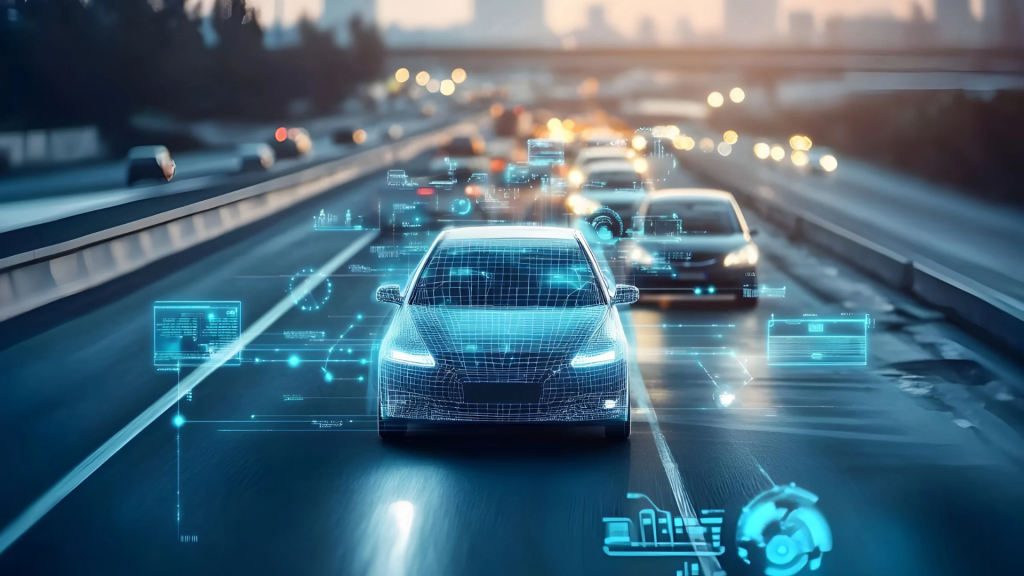
The autonomous vehicle industry is moving rapidly from testing to commercial deployment, with leading self-driving car companies expanding robotaxi fleets, developing advanced artificial intelligence (AI) systems and entering new international markets.
This article outlines five of the most prominent autonomous vehicle companies operating commercial robotaxi services right now, including Waymo, Tesla, Baidu Apollo Go, WeRide and Pony.ai. These companies are helping shape the future of driverless transportation through Level 4 autonomous driving technology, AI-powered vehicle systems and commercial robotaxi services.
Here is a closer look at their market valuations, operational scale, technologies and global presence.
| Company | Headquarters | Approx. Valuation / Market Cap | Fleet Size / Scale | Key Markets |
|---|---|---|---|---|
| Waymo | Mountain View, California, USA | $126 billion valuation | 500,000+ autonomous trips per week | United States, planned expansion to London, Tokyo and other international markets |
| Tesla | Austin, Texas, USA | ~$1.4 trillion market capitalisation | Robotaxi operations in multiple US cities; 1.64 million vehicles delivered in 2025 | United States |
| Apollo Go (Baidu) | Beijing, China | Parent company market cap ~ $27.2 billion | 350+ million autonomous kilometres across 28 cities | China, UAE, Hong Kong, UK and Switzerland |
| WeRide | Guangzhou, China | ~$1.3 billion market capitalisation | 3,400 Level 4 vehicles, including 1,800+ robotaxis | China, UAE, Switzerland, Spain and other global markets |
| Pony.ai | Guangzhou, China | ~$2.2 billion market capitalisation | 1,975 robotaxis and 1.5 million registered users | China, Singapore, Luxembourg and expanding European operations |
1. Waymo – Leading the Commercial Robotaxi Market
Headquarters: Mountain View, California, USA
Founded: 2009 (originally Google’s self-driving car project)
Valuation: $126 billion (February 2026 private funding valuation)
Parent company: Alphabet
Waymo is among the most established self-driving car companies, operating one of the largest commercial fully autonomous ride-hailing networks in the United States.
How big is Waymo? By September 2026, Waymo reported more than 400,000 autonomous trips per week across 15 major US cities, including San Francisco, Los Angeles, Phoenix and Las Vegas.
What is it developing? Its Waymo Driver system combines cameras, LiDAR, radar and AI-based decision-making to navigate complex urban environments without a human driver. The company has also introduced its sixth-generation autonomous driving platform.
Where does it operate? Commercial services are available across multiple US metropolitan areas, with international expansion being prepared in London, Tokyo, Munich and Singapore.
Waymo raised $16 billion in February 2026, securing a $126 billion valuation and reinforcing its position as a major player in autonomous mobility.
2. Tesla – Scaling AI-Powered Self-Driving Technology
Headquarters: Austin, Texas, USA
Founded: 2003
Market capitalisation: Approximately $1.4 trillion (October 2026)
CEO: Elon Musk
Tesla is one of the world’s most valuable automotive manufacturers and a major developer of AI-powered autonomous driving technology.
How big is Tesla? The company delivered approximately 1.64 million vehicles globally in 2025. Although this provides a substantial platform for collecting driving data, its commercial driverless robotaxi fleet is much smaller.
What is it developing? Tesla takes a camera-led approach to autonomy, using neural networks and real-world driving data rather than the LiDAR-heavy approach adopted by several competitors. Its autonomous vehicle strategy includes the Model Y Robotaxi and purpose-built Cybercab.
Where does it operate? Tesla’s Robotaxi service operates within designated areas of Austin, Dallas, Houston, Miami, Orlando and Tampa, with a separate supervised ride-hailing operation in the San Francisco Bay Area.
Importantly, Tesla’s consumer Full Self-Driving (Supervised) system still requires driver attention and is distinct from its fully driverless robotaxi operations.
Tesla is pursuing a different autonomy strategy centred on vision-only AI and neural networks rather than the sensor-heavy Level 4 systems used by most robotaxi operators.
3. Baidu Apollo Go – China’s Autonomous Driving Giant
Headquarters: Beijing, China
Apollo Go launched: 2019
Parent company: Baidu
Parent company market capitalisation: Approximately $27.2 billion (October 2026)
Apollo Go is Baidu’s autonomous ride-hailing platform and one of the world’s largest robotaxi operators by cumulative passenger journeys.
How big is Apollo Go? By August 2026, its autonomous driving footprint had reached 28 cities, with more than 350 million autonomous kilometres accumulated, including over 240 million fully driverless kilometres.
What is it developing? Apollo Go combines artificial intelligence, autonomous navigation and vehicle perception technologies to deliver driverless passenger services. Baidu is also developing its Apollo autonomous driving ecosystem for wider automotive applications.
Where does it operate? Its main commercial markets include major Chinese cities such as Beijing, Wuhan, Shenzhen and Chongqing. Apollo Go has also launched fully driverless commercial operations in Dubai, alongside testing activities in London, Switzerland and Hong Kong.
Its international expansion makes Apollo Go an increasingly significant competitor in the global autonomous vehicle market.
4. WeRide – Expanding Autonomous Vehicles Worldwide
Headquarters: Guangzhou, China
Founded: 2017
Market capitalisation: Approximately $1.3 billion (October 2026)
Stock listings: Nasdaq (WRD) and Hong Kong
WeRide is a global autonomous driving technology company specialising in robotaxis, autonomous buses and advanced driving systems.
How big is WeRide? As of July 2026, WeRide reported approximately 3,400 Level 4 autonomous vehicles worldwide, including more than 1,800 robotaxis. Its autonomous driving activities span over 60 cities across 13 countries, including testing and commercial operations.
What is it developing? The company develops Level 4 self-driving technology alongside advanced driver assistance systems. Its AI portfolio includes WeRide GENESIS, a simulation world model, and WeRide WITT, designed to improve the processing of real-world driving data.
Where does it operate? WeRide has commercial robotaxi operations in China and the UAE, including Beijing, Guangzhou, Abu Dhabi and Dubai. It is also active in Switzerland and pursuing further European deployment, including Spain.
WeRide’s international partnerships and diverse autonomous vehicle portfolio distinguish it from companies focused exclusively on passenger robotaxis.
5. Pony.ai – Developing Scalable Level 4 Autonomous Driving
Headquarters: Guangzhou, China
Founded: 2016
Market capitalisation: Approximately $2.2 billion (October 2026)
Stock listings: Nasdaq (PONY) and Hong Kong
Pony.ai is a specialist autonomous driving company developing Level 4 robotaxis, autonomous trucks and intelligent vehicle technologies.
How big is Pony.ai? The company reported a global fleet of 1,975 robotaxis at the end of June 2026, alongside more than 1.5 million registered users of its PonyPilot service in China.
What is it developing? Pony.ai uses its proprietary Virtual Driver technology and PonyWorld AI world models to support autonomous navigation, virtual testing and more efficient robotaxi deployment. It is also working with automotive manufacturers to scale production.
Where does it operate? Its primary commercial operations are in major Chinese cities, including Guangzhou, Shenzhen and Beijing. International activity includes Singapore, Luxembourg and partnerships aimed at expanding robotaxi services across Europe.
In October 2026, Pony.ai technology was also involved in early-stage autonomous vehicle testing in Manchester through an Uber partnership.
Which Self-Driving Car Company Is Leading in 2026?
Waymo stands out for its extensive commercial robotaxi operations in the United States, while Baidu Apollo Go has accumulated substantial autonomous driving mileage and passenger experience in China.
Tesla brings significant manufacturing scale and AI investment, while WeRide and Pony.ai are building dedicated Level 4 fleets and expanding through international partnerships.
The next phase of competition will depend not only on autonomous driving performance, but also on vehicle production costs, safety validation, regulatory approvals and the economics of running driverless fleets.
Frequently Asked Questions
What is the biggest self-driving car company?
By overall publicly traded company valuation, Tesla is the largest of these five, at approximately $1.4 trillion in October 2026. However, that valuation covers its entire business, not just autonomous driving.
Which company operates the most established driverless taxi service?
Waymo is a leading commercial robotaxi operator in the US, delivering more than 500,000 fully autonomous trips per week by September 2026. Baidu Apollo Go is another major operator, particularly in China.
What is Level 4 autonomous driving?
Level 4 autonomy allows a vehicle to drive without human intervention within defined operating conditions or geographical areas. Unlike Level 2 driver assistance, it does not require continuous human supervision when operating within those conditions.
Discover more about autonomous vehicles on our SDV & AV Technology Summit Europe event website.
Data note: Market capitalisations are approximate figures based on 16 October 2026 US market closing data. Waymo’s valuation is based on its February 2026 private funding round. Tesla and Baidu values represent their entire companies, not standalone autonomous driving divisions. Fleet and operational data reflect the latest cited company disclosures available as of 19 October 2026.