





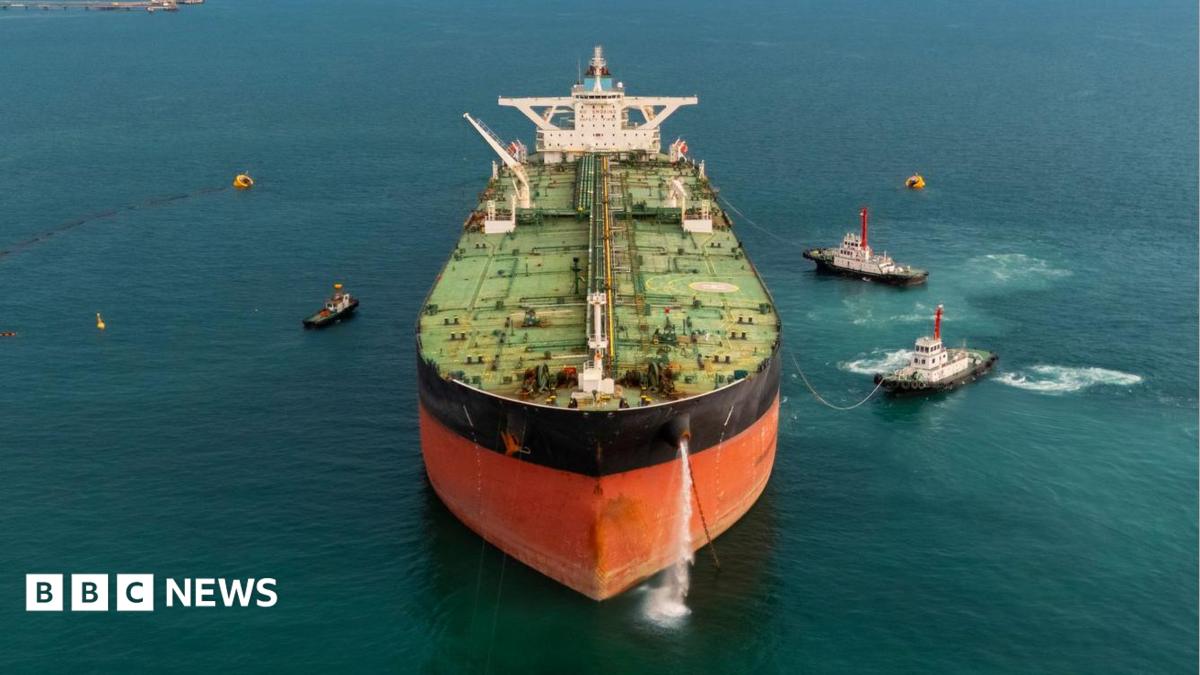
Not all vessels are deterred from passing through because the Houthi threat is only targeted at Saudi shipping, with the total number sitting at about 50% of pre-attack levels.
But the number of ships loading crude oil for export to Asia passing through has dropped to about four per day, Kpler added, the lowest point since the start of the war.
A spokesperson for Hapag-Lloyd, the global shipping giant, said some of its vessels were still passing through the Red Sea but that it would “monitor developments closely and will adjust the network if circumstances change”.
“If the Strait of Hormuz reopened, most ships could probably leave the region fairly quickly. However, restoring normal cargo flows would take much longer.
“Services have been suspended and ships redeployed elsewhere, so a return to normal flows would most likely take three to four months.”
Despite the talks with Oman, Iran has said that no deal is imminent that would reopen the strait to normal traffic.
Its foreign ministry ministry spokesman Esmaeil Baqaei said any agreement would not lift the current restrictions while US “aggression” continued.
Peter Sand, chief analyst at Xeneta, another ship-tracking company, said the fighting had taken the shipping industry “back to to square one” and that things were in “a terrible state, regardless of which shipping type you’re you’re looking at”.
“The alternatives for getting cargo, whether that’s hydrocarbons or container shipping, are really not great… it is really still troubling times with no clarity and no change of fortunes within sight.”