



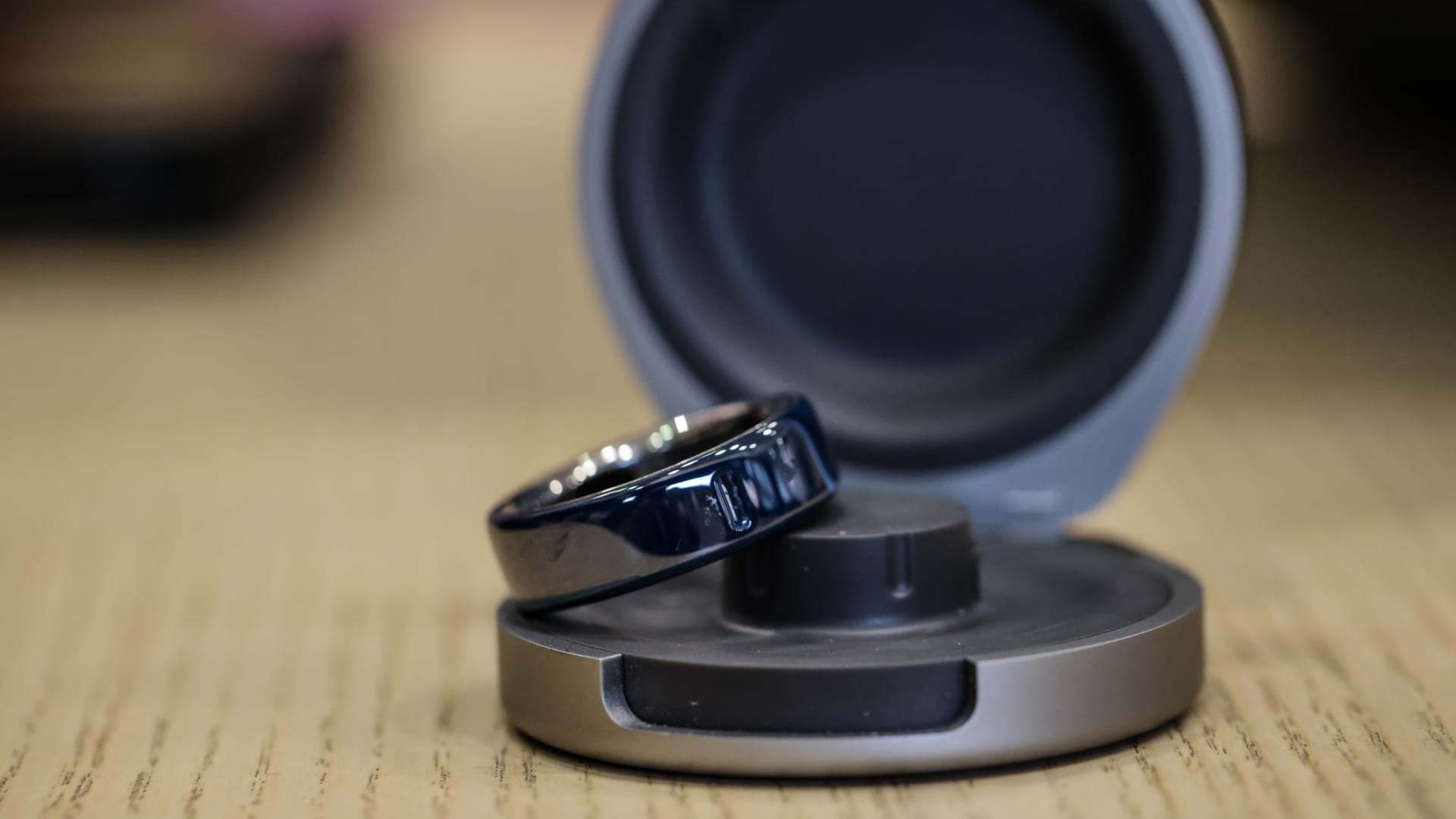
Oura has said that it is delaying plans for its public listing on the Nasdaq due to uncertainty in the IPO market.
The delay comes despite “strong demand” and a strengthening of the business since the start of the IPO process, the company said in a statement on Tuesday.
The company, which makes a smart ring that tracks wearers’ health and sleep, formally launched its IPO plans just last week on Sept. 21.
At the time, the company planned to raise up to $2.2 billion with the sale of 50 million shares.
“Our mission is to empower people to live healthier, longer, and an IPO is just one step in our journey,” said CEO Tom Hale on Tuesday.
“We aim to deliver an extraordinary IPO for our employees and investors and we have the luxury of choosing our moment,” he added. “In the meantime, we will execute against the opportunities ahead.”
Oura is profitable, the company said, with revenue expected to grow 90% year over year for the fiscal year 2026.
Launched in 2015, Oura’s smart ring has evolved well beyond sleep tracking and now features a variety of features focused on broader health and wellness. In recent years, it has increasingly focused on advancing preventative health through new capabilities, AI, analytics and other features.
Oura is the latest U.S. public market hopeful to delay an IPO in recent weeks. Holtec Nuclear withdrew its IPO earlier this month citing adverse market sentiment in equity markets.
Holtec said that uncertainty over data development compounded “pre-existing headwinds, including rising energy costs, elevated global trade tensions, ongoing military conflicts, and mounting inflation fears that have driven the central banks of major economies (EU, Japan and US) to raise their benchmark rates.”
Oura’s IPO postponement outlines the “challenges facing issuers in an increasingly turbulent market,” Samuel Kerr, global head of ECM at Mergermarket, told CNBC. “Rising sovereign debt yields are spooking investors and causing some to ask for far wider discounts to offset any pressure on future earnings from rising WACC [weighted average cost of capital].”