








In the heart of Delhi, a short distance from the Indian prime minister’s residence, a small mosque stands amid piles of rubble. Its pale walls and pointed arches remain intact, its courtyard still lined with green-and-white tiles.
But the people who gave life to the place are gone.
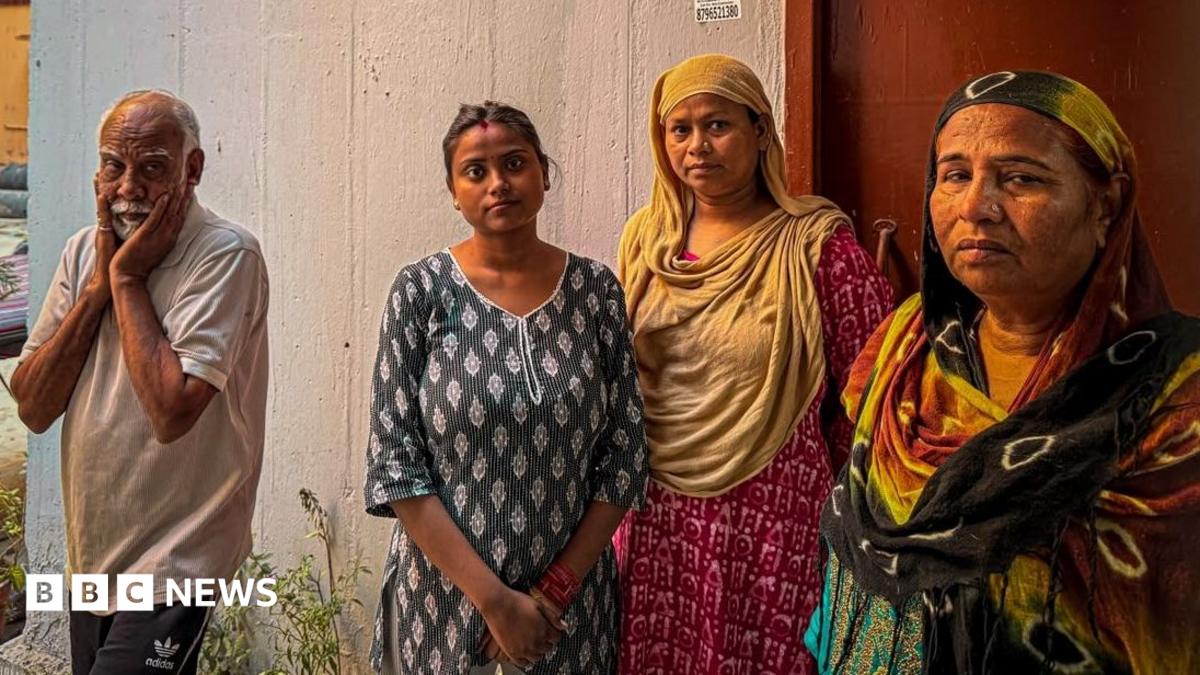
Mohammad Wasim, 50, points across the rubble to the spot where his house once stood.
“My father was married there, and, decades later, so was my daughter,” says Wasim, a driver.
Wasim and his family were among hundreds of people who lived around the mosque in a patchwork of modest homes tucked between military compounds, exclusive clubs and sprawling bungalows in Race Course, one of the Indian capital’s wealthiest and most heavily guarded neighbourhoods. Many of them had lived here for generations, working as drivers, cleaners and gardeners in the wealthy houses around them.
On 7 October, the authorities demolished their houses across three settlements, saying they had been built illegally on government land. They also raised security concerns because of the houses’ proximity to military installations. Some 717 families were relocated to Savda Ghevra, a colony nearly 31 miles away, on the city’s outskirts.
Residents had challenged the evictions in the Delhi High Court, arguing that moving so far from their jobs, schools and communities would upend their lives. But in August, the court allowed the relocation, accepting the government’s security concerns and noting that alternative housing had been provided.
Only the mosque and a nearby Hindu temple were left standing. But their water and electricity supplies were cut off that day, and access to the compound has since been restricted. Worshippers are generally turned away at the gates, though some are occasionally allowed through after pleading with guards.
The government says it owns the land on which the mosque stands, but mosque authorities say it was registered in 1977 as waqf property – land or buildings set aside under Islamic law for religious or charitable purposes – and is listed, external as a heritage structure. The Delhi Waqf Board says it is nearly 300 years old, though other estimates put its age at 125-150 years.
The board has written to the authorities seeking restoration of the mosque’s water and electricity and raising concerns about its future. Separately, a worshipper has petitioned the high court over restrictions on prayers and fears that the mosque could be demolished.