



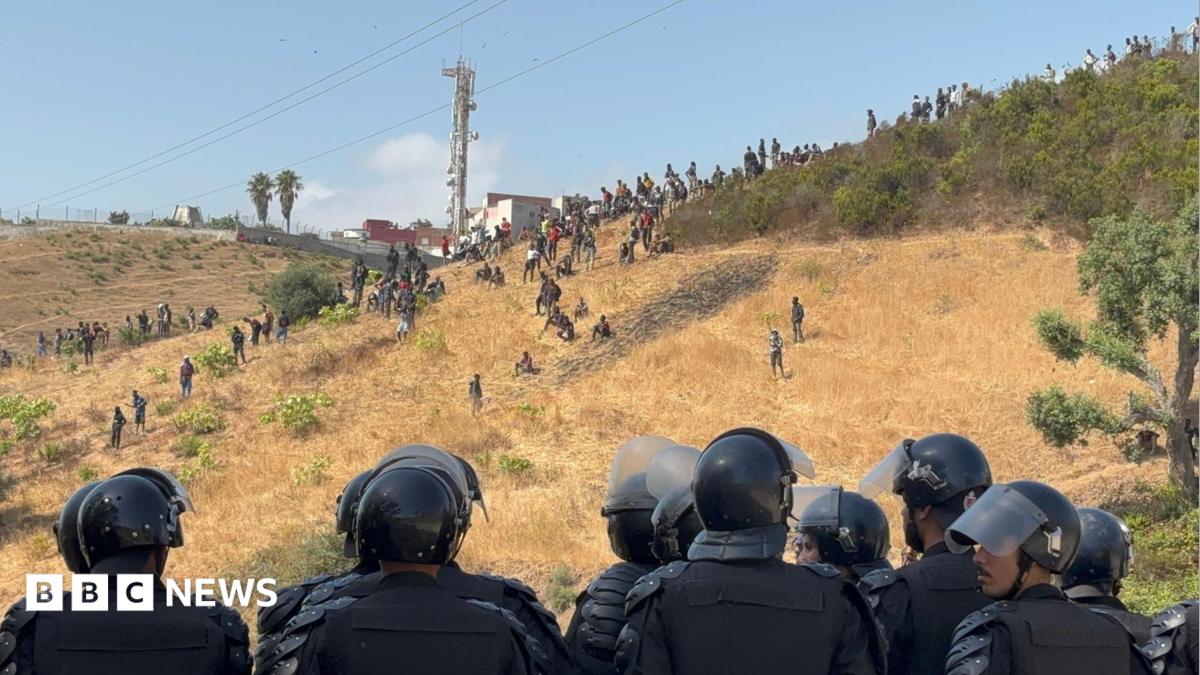
The crisis had calmed since breaking out in late July, but it has sparked tensions between EU nations which share open borders as well as criticism of the Spanish government.
Italy suspended the 29-member Schengen arrangement of free movement with Spain and introduced border checks on arrivals from Spain.
Italy was backed by Finland and Denmark, while the Czech Republic called for Spain’s membership to be temporarily suspended.
Spain reacted angrily, with Prime Minister Pedro Sánchez noting Ceuta was not part of the Schengen area – and the migrants, therefore, had not arrived on the Spanish mainland and could travel to any other European country.
It urged Italy to drop its border controls – and introduced its own when Rome refused, citing the possibility of a new influx on 15 August.
On Saturday, Italy’s Foreign Minister Antonio Tajani said his country had been afraid of a “risk of a new wave of arrivals in Ceuta”.
“We’re not waging any kind of ‘battle’ against Spain; we’re simply carefully controlling arrivals,” he said.
“Instead of worrying about us, Spain should worry about Morocco: that’s where the problems are coming from, certainly not from our controls.”