




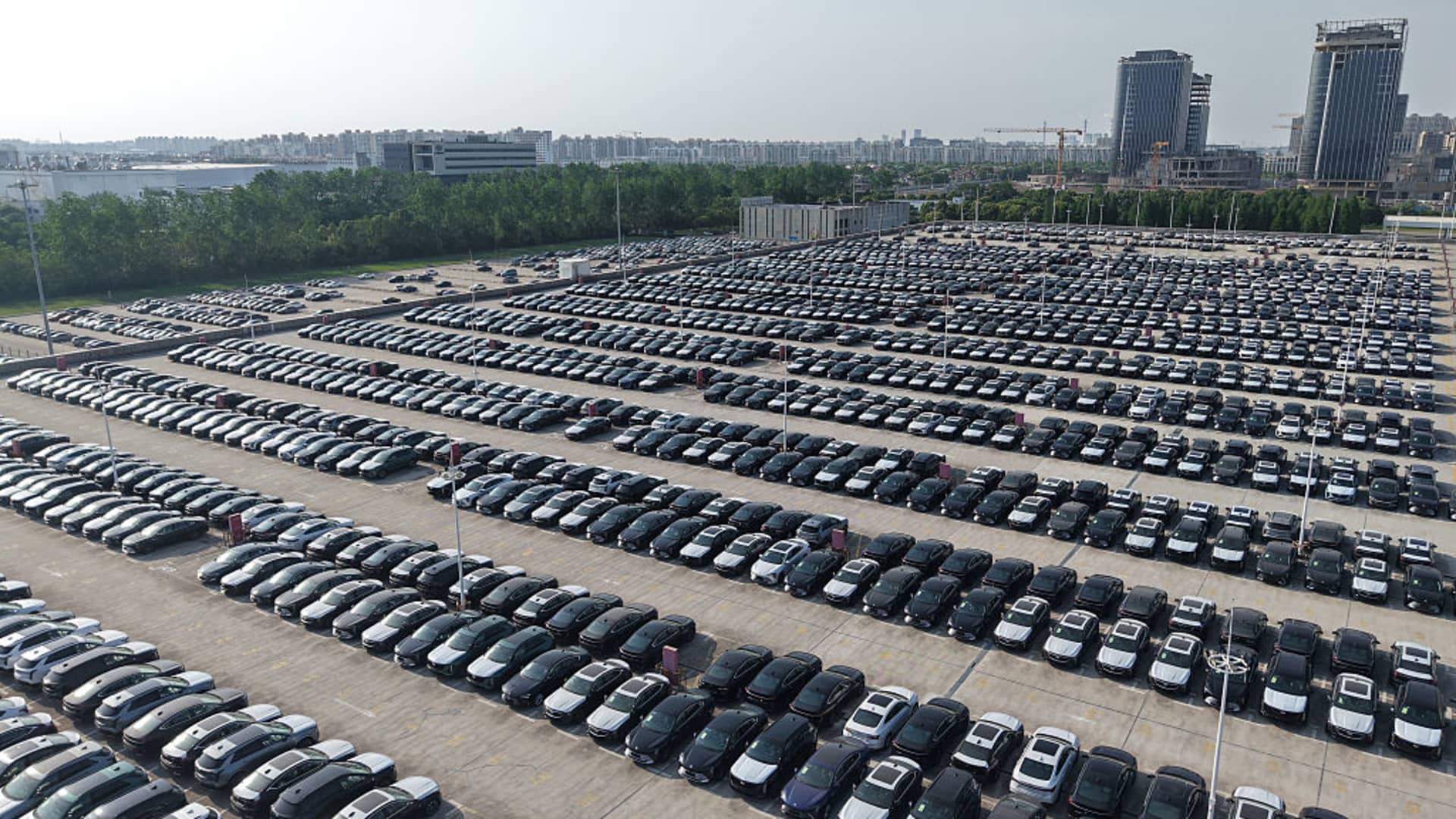
New vehicles parked at a production base of SAIC General Motors Corporation Limited on Sept. 11, 2025, in Shanghai, China.
Vcg | Visual China Group | Getty Images
A new report casts serious doubt on whether a wave of Chinese cars and SUVs will hit the U.S. by 2030, let alone well into the next decade.
“I think the near-term dynamics are relatively low, relatively unlikely to support an entry to the U.S. market,” said automotive analyst John Murphy, who is releasing his latest outlook for the U.S. auto market on Tuesday.
Despite growing speculation that it won’t be long until Chinese autos are sold in the U.S., Murphy said he believes there is little appetite among U.S. lawmakers to allow that to happen, mainly because of the impact it could have on U.S. automakers and domestic auto production.
“I think an entree of the Chinese with unfettered access in the U.S. market would be incredibly disruptive, even if they produced here in the U.S.,” he told CNBC.
Vehicles built in China and imported into the U.S. currently face a 100% tariff under the Trump administration’s trade policies. That has effectively kept almost all Chinese brands from selling their vehicles in the country.
Starting next year, the Commerce Department has said it will ban automakers from importing and selling vehicles in the U.S. that contain technology developed or manufactured by Chinese companies.
Beginning this fall, a small number of Chinese automakers, including BYD and Geely are expected to begin selling vehicles in Canada.
In part as competition from Chinese automakers grows worldwide, Murphy says he predicts that between five and 10 auto brands currently sold in the U.S. could disappear over the next decade. There are currently 38 auto brands in the U.S.
Murphy said he believes the industry’s shifting landscape means no brand is 100% safe, but some face a greater risk of dropping out of the U.S. than others.
The latest Murphy Automotive Product Pipeline lists Polestar, Maserati, Alfa Romeo, Jaguar and Fiat as five brands most at risk of being eliminated from sale in the U.S.
A Polestar car is displayed in the showroom at a Polestar dealership in Beverly Hills, California, June 26, 2026.
Justin Sullivan | Getty Images
Polestar, which is owned by Geely, will no longer be able to sell new vehicles in the U.S. starting in 2027 due to the connected-car rules issued by the Commerce Department. The four other brands have not indicated they are considering pulling out of the market.
Meanwhile, Murphy said he expects demand for gas-electric hybrids to surge over the next four years, eventually accounting for 34% of the market by 2030.
“A regular hybrid that doesn’t need to be plugged in [and] gets great fuel economy is being very well received by most mainstream consumers,” said Murphy.
More than 18% of vehicles sold in the U.S. this year through July were hybrids, according to the automotive research firm J.D. Power.
As for pure electric vehicles, Murphy said he sees the segment growing slightly in the U.S. through 2030. The industry is still adjusting to the dramatic shift in plans and the billions in capital it committed to new EV models that have been scrapped since the Trump administration ended federal tax breaks for the sale of the vehicles.
Murphy said the quick course correction explains the decline in vehicle rollouts between 2026 and 2028 — what he called “the worst three years on record” and a “product desert.”
“And I really do think it’s a significant function, or directly a function, of the EV head-fake that the industry fell for,” he said.