





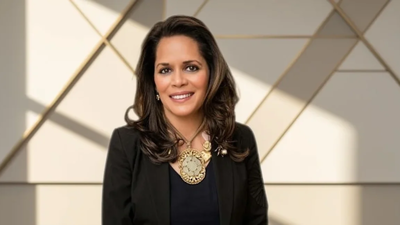
As a child growing up in Kolkata, Sharmila Mona Sinha often felt that being the third daughter in her family came with expectations she could never quite escape. She recalled wanting to be a boy and do the things boys did. Decades later, after building a career on Wall Street and moving into philanthropy and women’s rights, Sinha has been inducted into the US National Women’s Hall of Fame. Sinha, who leads the international women’s rights organisation Equality Now, received the honour on September 24 in Seneca Falls, New York. As reported by PTI, she is the second woman of Indian origin to enter the Hall of Fame, after former PepsiCo CEO Indra Nooyi. The institution recognises women’s achievements and is located in a town associated with the early American women’s rights movement.Her journey has taken her from Kolkata to an American women’s college, investment banking, corporate leadership and international campaigns for gender equality. Today, her work focuses on changing laws and systems that discriminate against women and girls.
3 Oct 2026 | 10:50
What price have women been taught to pay for success?
Growing up as the third daughter in Kolkata
As per a TOI report, Sinha’s childhood experiences shaped her understanding of gender inequality. Growing up in a society where sons were often preferred, she became aware of the expectations attached to being a daughter. “I wanted to be a boy and do what boys did,” she recalled. The experience did not define her entire childhood, but it remained an important part of how she understood the unequal treatment of women. Her later work would focus on addressing the same issue at a broader level, particularly through philanthropy and legal reform.Another early influence came from her time volunteering at a Mother Teresa orphanage in Kolkata. She was struck by what she learnt about the different prospects for abandoned boys and girls. She was told that boys were more readily adopted, leaving her with a troubling example of how gender could affect a child’s chances of finding a family.She also discovered during her teenage years that her grandmother had helped organise women during India’s freedom movement. That family history gave her another perspective on women’s participation in public life.
Leaving India at 18 to study in the US
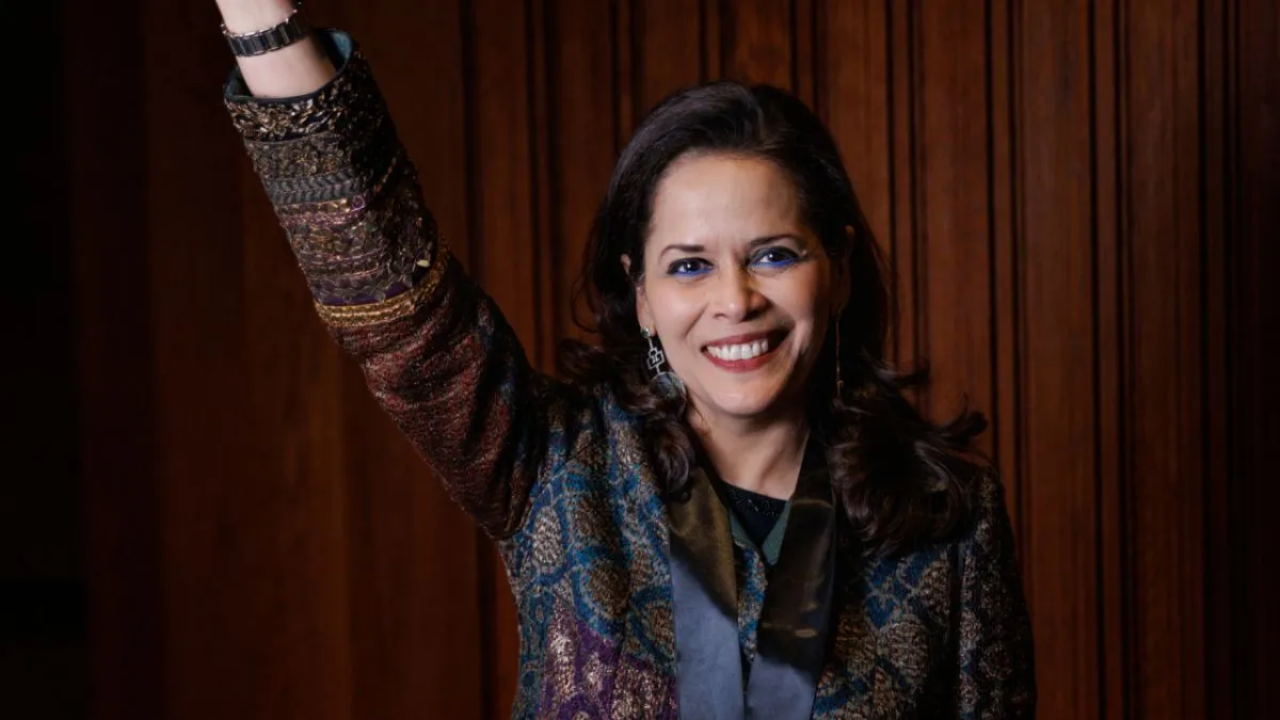
She later became an executive producer of ‘To Kill a Tiger,’ an Oscar-nominated documentary.
Sinha left India at the age of 18 to attend Smith College in Massachusetts. According to the official website of EqualityNow, she graduated with degrees in economics from Smith College and later earned an MBA in Finance and Marketing from Columbia University. She began her professional career as an investment banker at Morgan Stanley on Wall Street. She later worked with companies including Procter & Gamble, Unilever and Elizabeth Arden. Her early career placed her in the world of finance and business, where she gained experience in organisational strategy, management and fundraising. She would eventually use these skills to support organisations working on social issues, including women’s rights.
How she moved from corporate America to philanthropy
Sinha became a leader of Women Moving Millions, a network of women philanthropists whose members have committed around $1 billion to organisations supporting women and girls, according to her profile on Forbes. She also co-founded Raising Change, an organisation that helps social-impact groups improve their fundraising and organisational capacity. Her work has included supporting women’s leadership and helping build institutions that can sustain social change. At Smith College, her alma mater, she served as a trustee and helped lead the Women for the World campaign, which raised approximately $486 million. Her involvement also extended to documentary filmmaking. She became an executive producer of ‘To Kill a Tiger,’ an Oscar-nominated documentary, and supported efforts connected to the Equal Rights Amendment and the planned Smithsonian American Women’s History Museum.
Leading an organisation that fights discriminatory laws
Since 2022, Sinha has served as CEO of Equality Now, an international organisation working to advance the legal rights of women and girls. Her current role reflects a shift from supporting social-impact organisations to working directly on laws and legal systems that affect women’s lives. Sinha’s induction into the National Women’s Hall of Fame recognises her work across these different fields. She joins more than 300 women recognised by the institution, including civil rights leader Rosa Parks, author Maya Angelou and former US first lady Michelle Obama.
“Power shared is power supercharged”
At her induction ceremony, Sinha spoke about the lessons she learnt from her family, particularly her mother’s habit of setting aside a fistful of rice every morning for someone in need. The rice was collected over the course of a month and then given to someone who needed it more. The practice taught Sinha that helping others did not require having a great deal to give. “I don’t receive this extraordinary honor as mine alone. I receive it as a fistful of rice, placed in my hands with a responsibility to pass it on,” she said in her induction speech.“I have spent much of my life thinking about power. I’ve seen it on Wall Street, in business, in philanthropy, and in the fight for women’s equality, where power ultimately comes down to who has a voice, who has a choice, and who gets to shape our lives,” she added. She also challenged the idea that power is limited and must be guarded rather than shared. “We are taught that power is finite: that if I give you some of mine, I will have less. My life has taught me the opposite… At the core, power shared is power supercharged. I am standing here because so many people shared theirs with me,” Sinha said.