


CHICAGO – MARCH 28: Traders in the Ten-Year Treasury Note options pit at the Chicago Board of Trade signal offers in a flurry of activity following the announcement by the Federal Open Market Committee that it was raising short term interest rates another .25 percent March 28, 2006 in Chicago, Illinois. Trading in the pit was at a trickle in the moments leading up to the announcement. The raise was the 15th consecutive increase by the Fed and the first since Ben Bernanke took over as chairman of the FOMC.
Scott Olson | Getty Images News | Getty Images
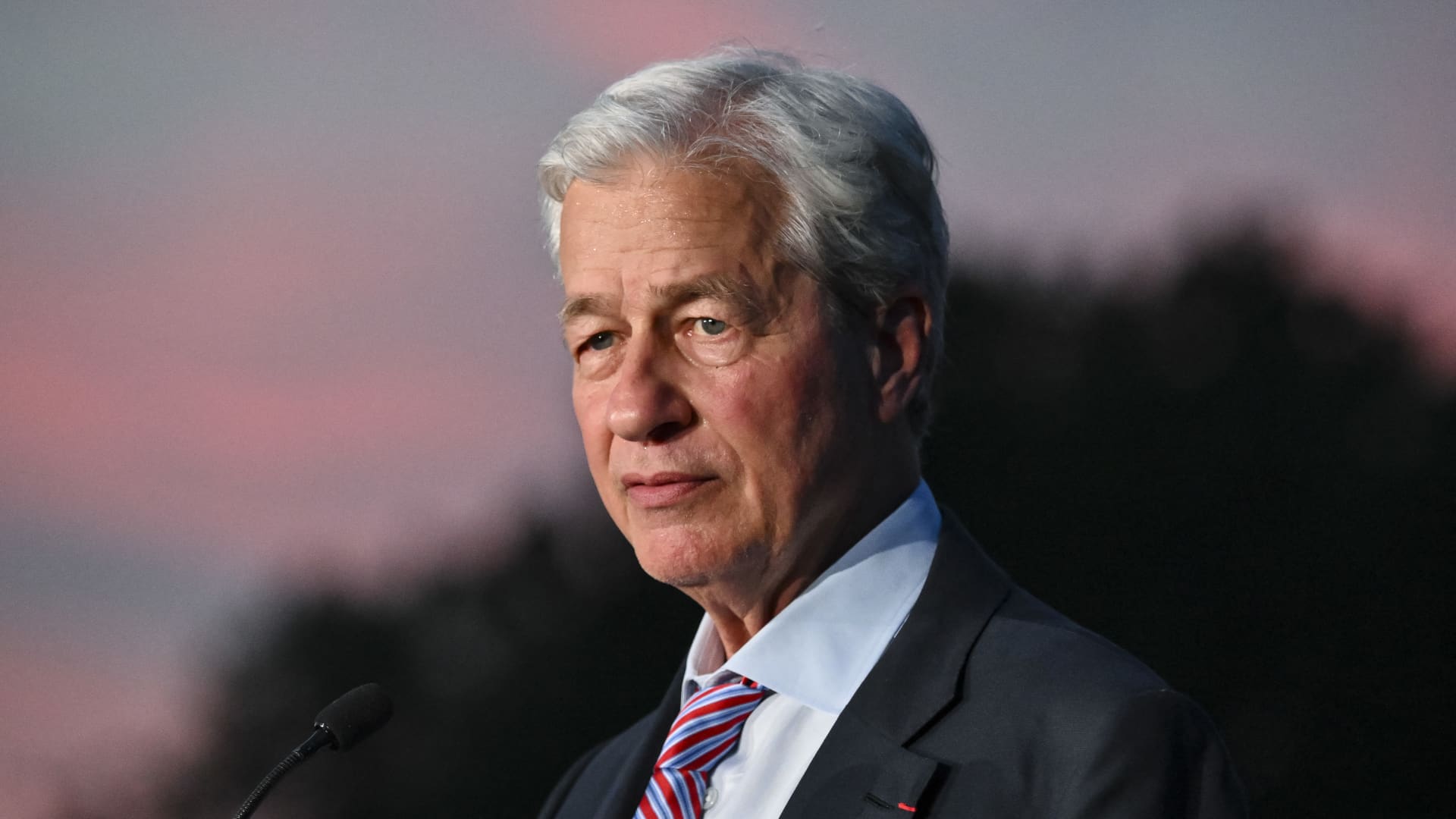
Investors concerned about the stock market and looking for ways to prepare their portfolio for a potential equities downturn typically turn to the U.S. treasuries market as a “flight to safety” allocation. But if you followed the dual stock and bond market warning issued this week by JPMorgan CEO Jamie Dimon, you better keep that treasuries exposure short.
In fact, that’s exactly what many investors already have been doing over the past year and continued to do in June and July. While investors continue to add record sums to equity ETFs — the U.S. ETF market reached over $1 trillion in assets at the mid-year mark and equity ETFs took in almost half of that total — many investors made their own call to stay at the short-end of the treasury market.
ETF flows data over the past one year shows that investors have been piling into short-term treasuries funds, with the iShares 0-3 Month Treasury Bond ETF (SGOV) taking in more money from investors this year than any other bond ETF. The ETF has added $47.5 billion in net inflows from investors, according to ETFAction.com. It has become the third-biggest bond ETF overall, at close to $100 billion in assets, surpassed only by the Vanguard Total Bond Market ETF (BND) and iShares Core US Aggregate Bond ETF (AGG).
In an interview with CNBC Contributor Wilfred Frost on Monday, Dimon said that in addition to stocks trading at values which he wouldn’t touch, he also wouldn’t purchase long-dated treasuries. “The 10-year bond should probably be at 4% to 4.5%,” he said.
Even if inflation begins to fall back closer to the Federal Reserve’s 2% target, the CEO of the nation’s biggest bank says he does not see much upside for prices in the long-dated government bonds.
The 10-year treasury is currently yielding 4.6%, and the yield has moved higher for most of the year as the market flipped from a view that the Fed would eventually lower rates to a view that a hike may be more likely. As long as the risk of a rate hike remains and the inflation outlook remains unclear, 10-year treasury prices, which move inverse to yields, should remain under pressure. Broader concerns about public spending and deficit levels also contribute to concerns about yields.
Over the past year, the Vanguard Total Bond Market and the iShares 0-3 Month Treasury Bond ETF are the only fixed-income ETFs to be among the top 10 ETFs for flows, according to ETFAction data. The iShares short-term treasuries fund is No. 5 overall, with its nearly $50 billion in net inflows. That is surpassed only by the biggest ETFs of all — Vanguard, iShares and State Street core S&P 500 funds, and the Vanguard Total Stock Market ETF.
The short-term treasuries momentum has continued throughout the year, with SGOV ranking No. 5 among all ETFs in flows for the month of June.
The idea that short-term treasuries are the place to be to smooth out market volatility is not new, and was most famously backed by Warren Buffett, who wrote in his 2013 annual letter to Berkshire Hathaway investors that his estate plan for his wife was 90% S&P 500 and 10% short-term treasuries, and that was likely good enough for most long-term investors.