







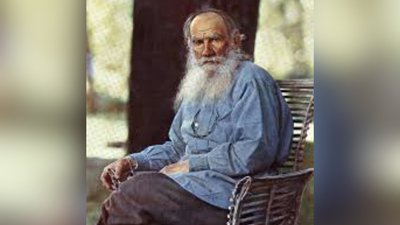
Leo Tolstoy was a Russian writer born into an aristocratic family. He is popularly known for the novels War and Peace and Anna Karenina. In the later years of his life, he turned to questions of morality, religion, and nonviolence, and his ideas had also influenced Mahatma Gandhi.He once said that each of us grows up inside a small world, consisting of a family, a language, a religion or the lack of one, and a set of habits about what is polite and what is shocking.But no one chooses to be born where they are; we simply wake up in it. Because it is the first world we encounter, and we tend to use it as the measuring stick for everything else.That is comfortable, but it has a cost. When a new idea knocks on the door, many of us check whether it fits the furniture. If it does, we welcome it. If it doesn’t, we get irritated, stop listening, or find a quick reason to laugh it off. Most of the time we don’t even notice we are doing it, and when we do change our thoughts, it almost feels like losing with ourselves.Let us read further to know what Tolstoy actually meant.
Quote of the day
Freethinkers are those who are willing to use their minds without prejudice and without fearing to understand things that clash with their own customs, privileges, or beliefs. This state of mind is not common, but it is essential for right thinking
Leo Tolstoy
What does the quote mean?
Tolstoy names three things that quietly drive our thinking: customs, privileges, and beliefs. Customs or practices are the habits of the society we grew up in. Privileges are the comforts we enjoy and rarely question. Beliefs are the convictions we hold onto dearly. But a freethinker, he says, can look at an idea without letting any of these three slam the door.We must take note of this: he does not say a freethinker must agree with the new idea, only that they should be willing to understand it. Understanding is not surrender. You can listen fully to an opposing view and still end up where you began, but at least you got there honestly. He also reminds us that this attitude is rare, even though most of us like to think we already have it.These words have been widely attributed to Leo Tolstoy and belong to him, according to Goodreads. He also discussed freethinkers in The Kingdom of God Is Within You, where he sorts the critics of his book into religious critics and secular ones, meaning freethinkers, so even though the exact wording might not be his, the spirit of the words hasn’t changed.
How does this idea hold relevance today?
Our lives are moulded by the algorithms of the highly digitalised world today. Our phones show us what we already like, and our feeds are filled up with people with whom we mostly associate and who think the way we do.And our dislikes are presented in such a manner that we often perceive them negatively instead of a patient explanation, so we learn to react instead of understand, and this in turn influences our ‘freethinking’.We must remember that open-mindedness is not a soft virtue. It is the ground that useful discussion stands on.