







The numbers bear this out.
According to calculations by Dharmakirti Joshi, chief economist at analytics firm Crisil, the bottom 20% of rural households faced inflation of 6.9% in October, against 6.5% for the richest 20%.
In urban India, the corresponding rates were 6.1% and 5.3%.
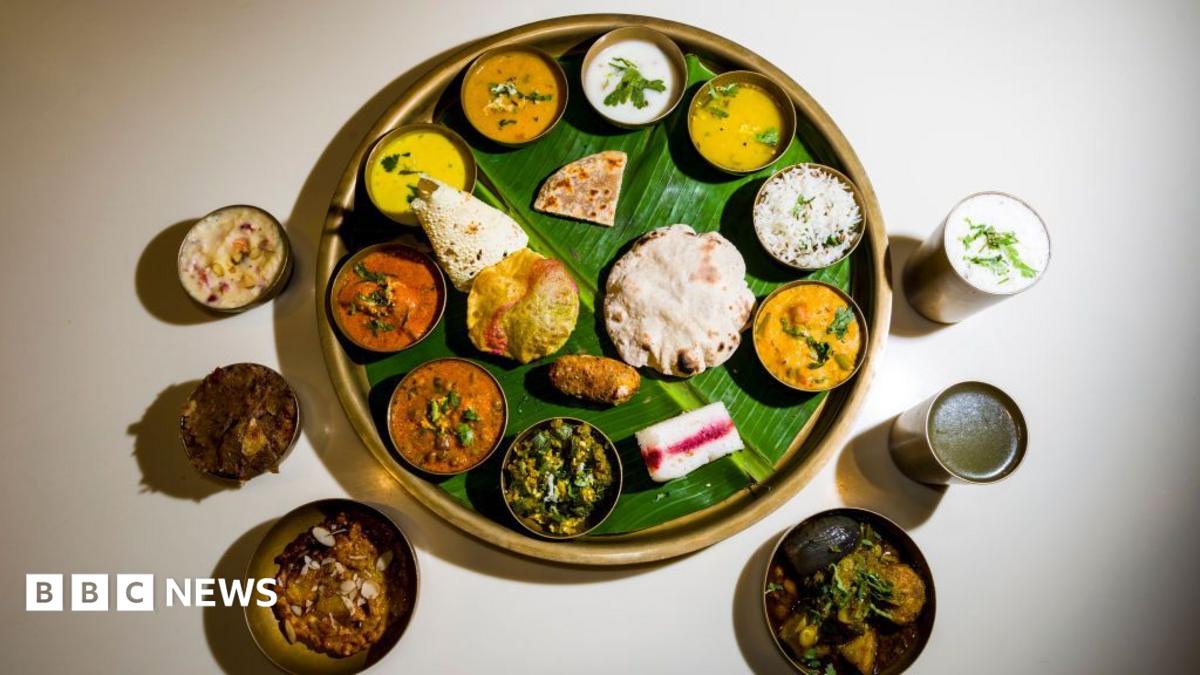
The pressure is visible even in the cost of a simple meal.
Crisil’s Roti Rice Rate analysis, external found that the cost of a home-cooked vegetarian thali – a meal platter – rose 12% year-on-year in October, driven by higher prices of onions, tomatoes, vegetables, edible oil, rice and cooking gas. A non-vegetarian thali became 9% more expensive.
Rice prices were up about 10% year-on-year, pulses 8%, edible oil 13% and LPG 10%, according to Pushan Sharma, director of intelligence at Crisil. “It’s no longer a few commodities that are driving this increase, it’s becoming a little more broad-based,” he says.
When onion prices spike, households can cut back on their consumption to some extent. But substituting rice, pulses and cooking oil is considerably harder.
And food inflation is not just about what farmers produce. It is also about how efficiently that food is stored, processed and moved to the market. Weaknesses at each stage can turn seasonal shortages into sharp price spikes – and gluts into waste.
Onions, for instance, are particularly susceptible to seasonal price swings.
The rabi crop – winter crops, sown after the monsoon and harvested in spring – which accounts for roughly two-thirds of onion production, is harvested in March and April and stored for several months. As stocks dwindle, prices can rise sharply before the next crop arrives.
Tomatoes, meanwhile, tend to see price spikes during the summer months, when arrivals decline in some markets or heat stress affects production.
Sharma says perishables are often responsible for the sudden spikes in food inflation, while prices of staples such as rice and wheat tend to rise more gradually but can stay higher for longer.
“The perishables are what caused the volatility. The non-perishables, like rice and wheat, are the ones that structurally increase the cost,” he says.
Economists say India still lacks adequate infrastructure to sort, grade, store and process much of its perishable produce.
Tomatoes, for example, can become so abundant during a glut that farmers struggle to sell them at remunerative prices, only for consumers to face sharply higher prices months later.