




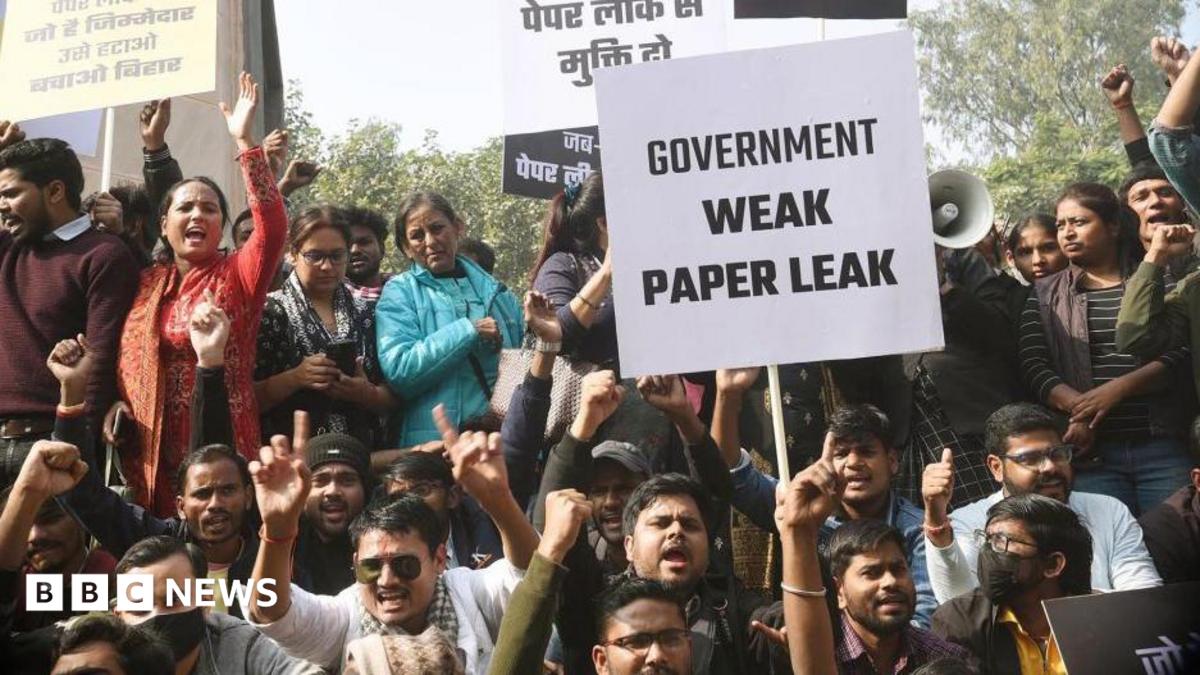
Investigators say that scarcity has fuelled increasingly sophisticated paper-leak rackets, linking teachers, middlemen and exam-centre staff. Computer-based testing closes some of those vulnerabilities. But it creates others.
Misra says even relatively minor technical failures can affect candidates in ways that are difficult to quantify.
“A non-functional mouse is not just about pausing the timer,” he said. “It is also about disruption to concentration.”
He also worries about equity.
He says success in CBT increasingly depends not only on subject knowledge but also on digital familiarity and opportunities to practise in simulated testing environments – advantages that remain unevenly distributed and may favour students attending coaching institutes over those from less-resourced schools.
More fundamentally, Misra argues, India’s examination system places too much weight on a single test.
“As long as a single test determines access to scarce opportunities, there will be strong incentives for exam malpractice, regardless of the testing format,” he said.
Misra argues that examination agencies need stronger governance through tighter procedures, regular audits, greater accountability and stricter enforcement. He also suggests multiple equivalent question papers allocated randomly, or localised papers, so that a breach in one location does not compromise an entire national examination.
Over time, he believes India should also reduce its dependence on “single, high-stakes entrance tests” by creating multiple opportunities for assessment and broader pathways into higher education.
“If the purpose is to generate a ranked list and match students to institutions,” he said, “perhaps we should also think about creating greater diversity on both sides.”