



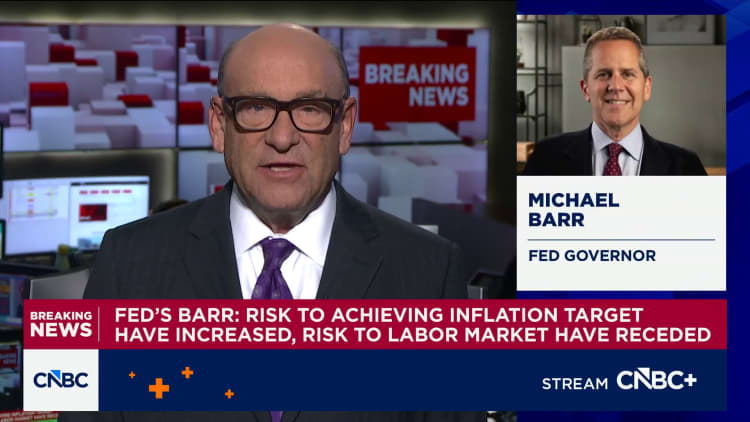

The Federal Reserve raised its benchmark interest rate at the conclusion of its September meeting and signaled another increase could be on the table this year.
For consumers, the moves may significantly impact borrowing costs and savings returns. Generally, short-term consumer borrowing rates closely follow the Fed’s benchmark, while longer-term loans are tied to the yield on the 10-year Treasury note, which also recently hit its highest levels in 19 years.
Treasury yields have been spiking on the expectation of that inflation will remain high, making additional rate hikes more likely, experts say.
Further, as inflation outpaces wage growth, workers lose purchasing power and have less financial breathing room. With affordability already a major concern, a prolonged squeeze could place added strain on many households — but not all will be affected equally.
“Higher rates naturally hit younger borrowers who have lower income… and help older savers who have higher income,” said Tomas Philipson, former chair of the White House Council of Economic Advisers.
“A rate hike is a blunt tool: It will make it harder for families to borrow, raising the cost of car loans, credit cards, mortgages, and more,” Heather Boushey, professor of practice at the University of Pennsylvania’s Kleinman Center for Energy Policy and former member of the Council of Economic Advisers, also said in an email.
In the short term, borrowing costs will rise
“The pain will be felt first by individuals with variable-rate debt,” according to Colin Slabach, a clinical assistant professor at New York University’s School of Professional Studies.
“Credit-card APRs, home-equity lines of credit, adjustable-rate mortgages and some private student loans could become more expensive relatively quickly,” Slabach said. “A quarter-point increase may appear small, but its effect accumulates for households carrying large balances or already struggling with monthly payments.”
For example, Americans are collectively carrying about $1.26 trillion in credit-card debt, according to the latest report by the Federal Reserve Bank of New York. About 60% of credit card users have revolving debt, which means they currently pay more than 23% a year, on average, on the balances they carry from month to month.
This 25-basis-point hike will cost credit card borrowers an additional $2 billion in interest charges over the next 12 months, according to a separate analysis by personal finance site WalletHub.
Whitebalance.space | E+ | Getty Images
Credit cards are often consumers’ first line of defense in an emergency, but the financial strain rarely ends there. Those who borrow heavily on plastic are more likely to have other unsecured debt, such as a personal loan or buy now, pay later payments, studies show.
Alternatively, wealthier households are generally better positioned to absorb higher interest rates, according to Mark Zandi, chief economist at Moody’s, “as they are less likely to need to borrow and, if they have any debt, it is a low-rate mortgage loan they locked in during the pandemic,” he said.
In fact, roughly 19.5% of mortgages currently have pandemic-era rates of 3% and below, barely budging from last year, according to the latest quarterly report from Realtor.com. And since 15- and 30-year mortgage rates are fixed, homeowners are somewhat shielded from rising rates.
In the long run, higher rates can cool inflation
Yet tighter monetary policy can also help curb spending and borrowing, effectively cooling the economy and easing inflationary pressures.
“History strongly supports the notion that in the long run, restoring price stability is more important than providing immediate but impermanent relief,” said Mark Higgins, senior vice president at Index Fund Advisors and author of “Investing in U.S. Financial History: Understanding the Past to Forecast the Future.”
“It is especially valuable to Americans in lower-income bands because persistent inflation erodes purchasing power, requiring more painful sacrifices from this group,” Higgins said.
After the Fed raised its benchmark rate and suggested there may be another increase to follow, Chairman Kevin Warsh said during a news conference that inflation has been “too high … for too long.”
“Assuming that Warsh follows through,” Higgins said, “I believe his approach is in the long-term interest of all Americans.”
However, “that doesn’t mean there will not be painful short-term costs from higher borrowing rates and increased pressure on labor markets across a variety of demographic segments,” he added.