







Maryvit Luna – CNBC | Getty images
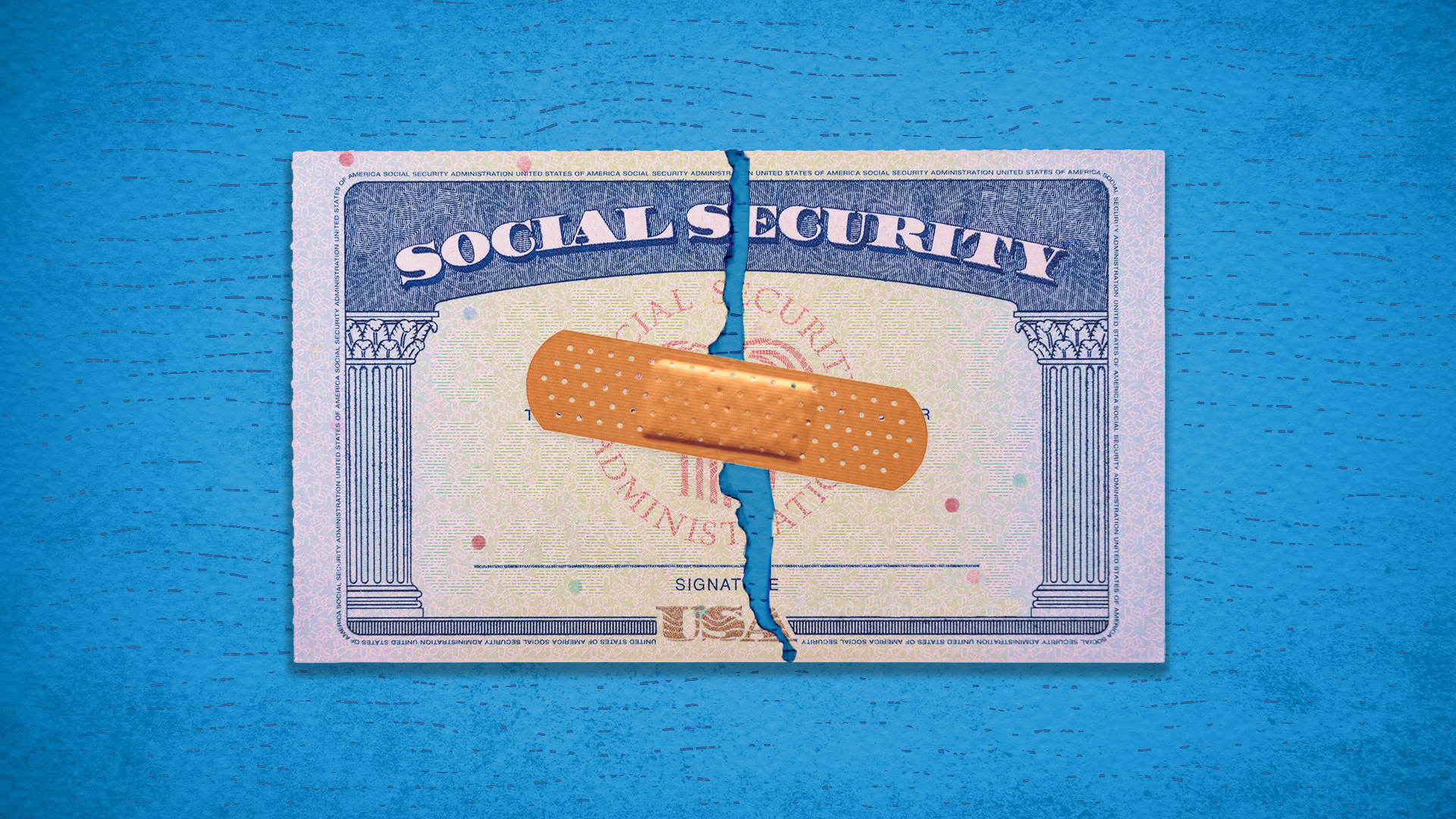
Social Security retirement benefits may face an automatic, across-the-board cut in just six years.
Without intervention before then, the Social Security retirement trust fund, formally known as the Old-Age and Survivors Insurance Trust Fund, which helps pay benefits to eligible workers and qualifying family members, will run out in the fourth quarter of 2032, the program’s trustees said in a June report.
At that time, the trustees project retirement benefits will be cut by 22%.
The Congressional Budget Office has a more dire forecast, anticipating the retirement trust fund may run out sooner, in mid-2032, and that retirees may see larger benefit cuts, at 26%, upon insolvency.
Beneficiaries may see an average $500 cut to their monthly benefits across the U.S. based on a 24% benefit cut, according to a June report from the Committee for a Responsible Federal Budget. In 29 states, retirees would see even bigger average reductions, according to the nonpartisan organization focused on educating the public on fiscal policy issues.
Senators elected this November will be in office in 2032, when the retirement trust fund depletion date hits. Their ability to right the ship is crucial for retirees and the economy. But it’s not a sure thing given the political climate inside the beltway.
“The attention on 2032 is appropriate in the sense that that is when beneficiaries and future beneficiaries will see and feel the consequences of inaction,” said Shai Akabas, vice president of economic policy at the Bipartisan Policy Center, a public policy think tank focused on promoting bipartisan cooperation.
“Nothing gets Congress to move like that type of deadline,” he said.
Of course, brinksmanship and political deadlock may stymie efforts. Congress could opt to kick the can down the road, rather than enact changes to shore up Social Security — which may require tax increases, benefit cuts or a combination of both.
If lawmakers decide to combine Social Security’s retirement and disability trust funds, the depletion date may move to the third quarter of 2034, when benefits may be cut by 17%, according to Social Security’s trustees.
Akabas said any delay by lawmakers would have consequences: Social Security’s shortfall would continue to increase.
There could also be consequences for the economy, he said.
In 2023, Social Security benefits generated $2.6 trillion in total economic output and supported more than 12 million jobs, according to 2025 research by the National Institute on Retirement Security, a Washington, D.C., based non-profit, non-partisan organization.
A 19% benefit cut could reduce gross domestic product by hundreds of billions of dollars, according to the NIRS research.
Moreover, failing to muster Social Security reform would prompt bond market strain, according to research published in June by George Mason University’s Mercatus Center.
Social Security is tied to the bond market because its trust funds are invested in special issue U.S. Treasury bonds.
If Social Security reform is delayed, that may put upward pressure on Treasury yields, with investors wanting higher returns for long-term bonds.
Delayed reform may either prompt higher interest rates and borrowing costs or inflationary adjustments that hurt the value of government liabilities, according to the Mercatus Center research. Those changes may affect household budgets through higher borrowing costs for mortgages, auto loans and other types of consumer credit, as well as student loans, according to the research.
If interest rates and prices rise, that will interfere with economic growth, Akabas said.
“Those effects are also ones that the American people feel, in addition to adjustments to their benefits,” Akabas said.
Heading to the midterms, some Democratic congressional candidates have said they would raise or eliminate the Social Security payroll tax cap so high earners pay more into the program. In 2026, the 6.2% tax paid by both workers and their employers applies to earnings up to $184,500.
Yet it remains to be seen whether Washington leaders will have the political will to address the problem soon. Tax increases, in particular, may not be viewed as politically popular heading into the 2028 presidential election.
As such, payroll taxes are “extraordinarily unlikely” to rise in the next couple of years, said Jessica Riedl, a fellow at the Urban-Brookings Tax Policy Center, which provides independent analyses of tax issues. If those tax hikes happen, it would likely be closer to 2032, she said.
“In Washington, they love to wait until the last minute,” Riedl said. “There’s no interest on either side for these sorts of tax increases in the short term. In the long term, I think everything is on the table.”
The National Committee to Preserve Social Security and Medicare, founded by President Franklin Delano Roosevelt’s son, former Congressman James Roosevelt, has scored incumbent lawmakers on whether their votes have protected those programs.
The advocacy organization has also endorsed candidates that support raising payroll taxes and protecting Social Security benefits from cuts. With those endorsements, NCPSSM gives candidates a set of boxing gloves as a symbol of the fights they’ll face in Congress, according to Dan Adcock, NCPSSM’s director of government relations and policy.
The organization is also working to educate voters that the senators elected this year will be among those to deal with Social Security, he said.
“We’ve been trying to impress upon voters why this is an issue that should be top tier,” Adcock said. “They need to be asking candidates about what their plans for the program would be.”