








“I was kind of at the mountaintop I’d wanted to climb since high school,” he told NBC News, “and now that I’m here … is this really what I want my life to be?”
The path from aerospace engineer with an advanced degree to member of an NFL coaching staff was perhaps even more circuitous, and astronomical, than one might expect.
Funari was roughly 18 months into his tenure at SpaceX and not even 30 years old when he abruptly decided to give it up. He said many people in his orbit tried talking him out of it.
“The question was always like, ‘Are you crazy?’ Or a statement like, ‘What is wrong with you?’” Funari said with a laugh as he recalled the reactions of friends and family. Someone who did support him was his mother, who told him, “‘YOLO,’ you only live once.”
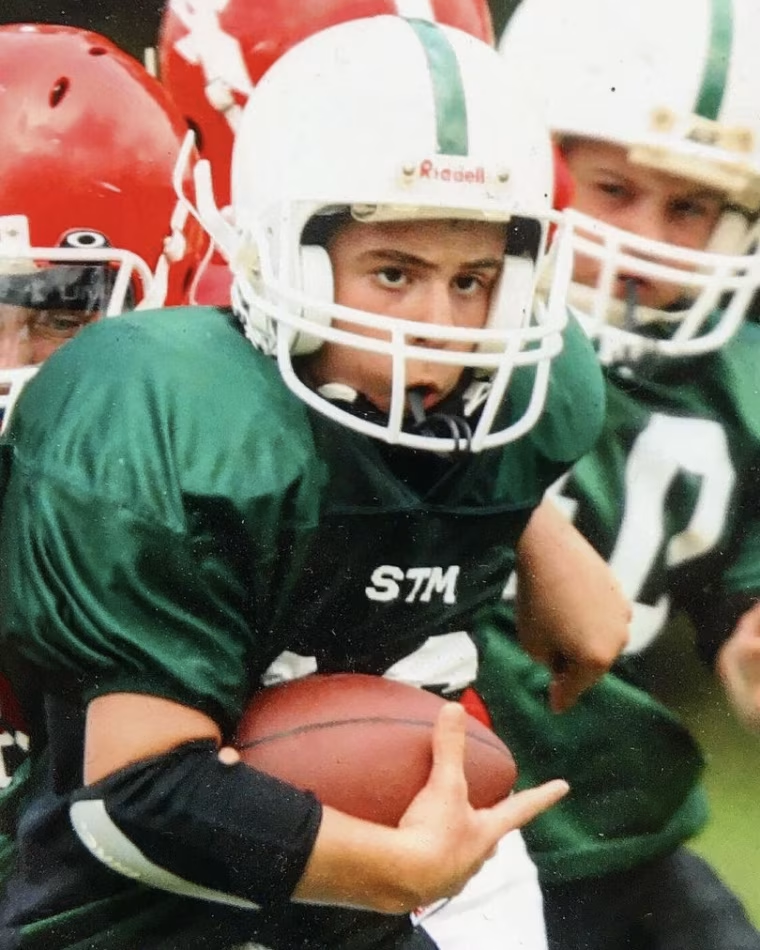
The Cleveland native — whose first love was football until he suffered several significant knee injuries as a teenager (and came to grips with his 5-foot-5 frame) — first left SpaceX for a job at TaylorMade Golf, then a couple of months later applied for a volunteer coaching position at Youngstown State University in Ohio.

It involved plenty of nights sleeping on air mattresses and a complete lack of certainty about what came next in his professional journey. But Funari said he saw one thing clearly: Working on defensive schemes was similar to working on rockets. And his background allowed him a unique perspective to deliver some valuable insight to teams.
“Something starts as an idea, a concept,” he said. “Then you design it on the computer, you get it manufactured, built and then you test it. So there’s a big process of the idea and the final product that you see on the rocket.”
“And to me, I view it as the same [with football], what these guys are able to do and the life that they bring to our defense,” he added. “Everyone calls it chaos, and schematically it’s, ‘How do we take those ideas and communicate them in a way that allows us to bring that to fruition?’”
The early returns have been eye-opening.

Vikings head coach Kevin O’Connell called Funari “our genius” and said they are wielding his ability to identify and translate an opposing team’s offensive tendencies as “a superpower.”
“We’re having some conversation, and he will have a pause,” O’Connell said with a smile. “It’s not that he needs to have a pause because he’s thinking of something. He’s trying to figure out just what layer of his brain he’s going to have to go to, so it can make sense to somebody like me.”
As for Flores, the defensive guru known for his exotic blitzes and frenetic schemes that catch teams completely off guard, he was taken aback a couple of years ago when the fresh-faced analytics hire with a science background handed him a research packet on an opposing quarterback.
“I think some of the information can be overwhelming and hard to really drill it down,” Flores said. “But when I got this information from Chenzo, it made a lot of sense. He’s got a football background, as well, and he’s able to tie the whole thing together.”