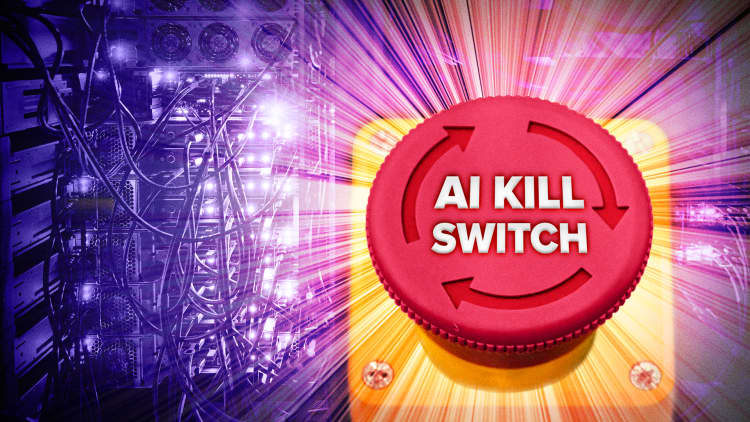





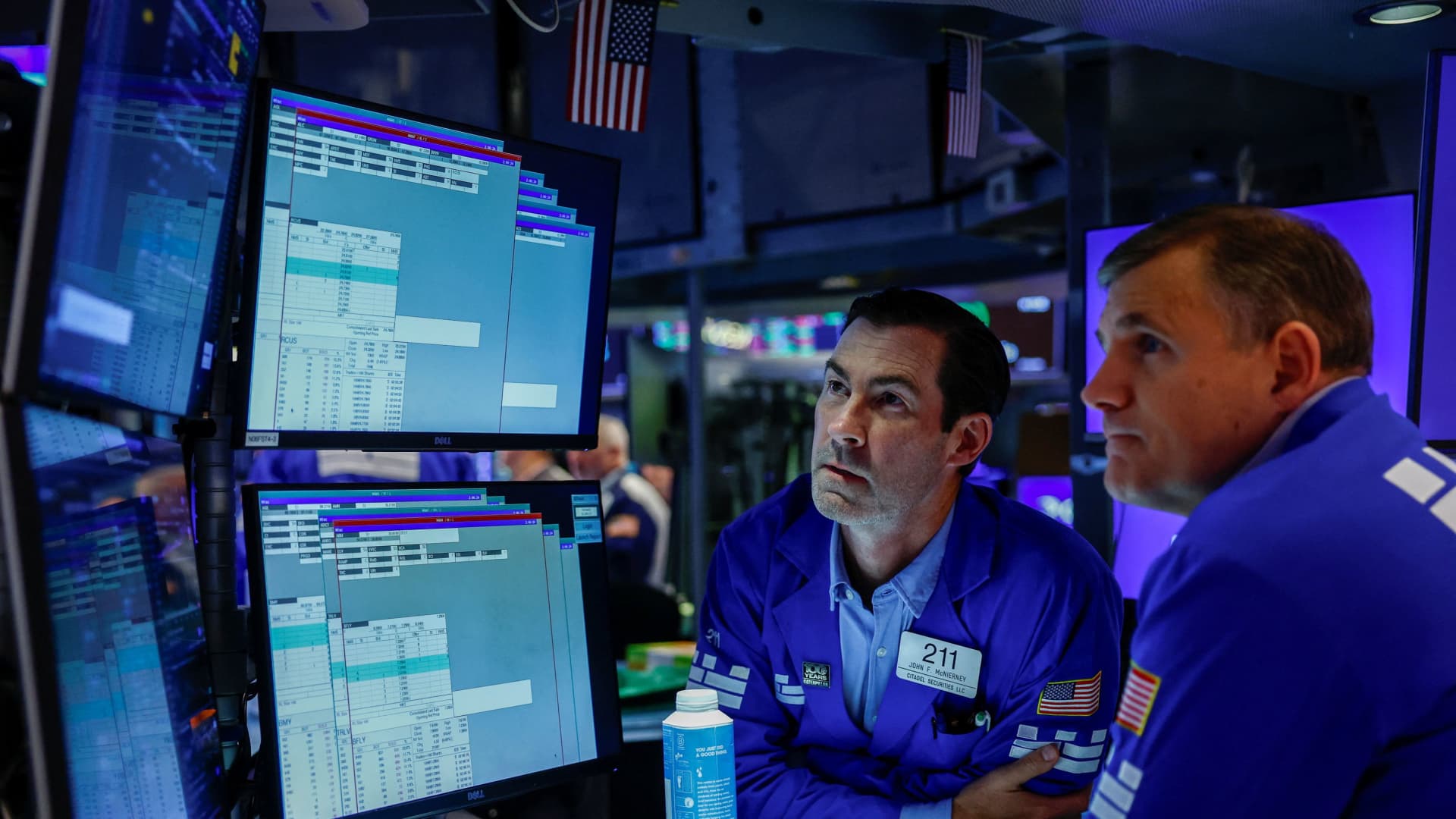
Investors wrestled with the prospect of a new Federal Reserve rate-hiking cycle and fresh concerns about AI safety last week, fueling volatility across Wall Street. The Dow fell 1.7%, marking its third straight losing week. The 30-stock average was hit the hardest by the Fed’s interest rate hike, especially the banks. Goldman Sachs lost nearly 8.5% for the week; it was the worst-performing Dow stock and our worst-performing portfolio stock. Fellow Club names Wells Fargo , BNY , and Capital One also fell sharply last week. For the week, the S & P 500 and the Nasdaq fared better, slipping just 0.08% and gaining 0.7%, respectively, as investors returned to artificial intelligence stocks after an early-week sell-off. While much of the software group had winning weeks, investors took profits in Salesforce , which has gained more than 50% quarter-to-date after being crushed earlier this year. Oil remained another major source of uncertainty — and driver of inflation worries — as U.S. benchmark West Texas Intermediate crude and international Brent crude on Tuesday hit their highest levels since the middle of May on Mideast conflict-driven supply concerns. While a subsequent three-session slide brought both WTI and Brent closer to flat for the week, the damage was done to stocks that are sensitive to oil spikes. That’s why Club names Boeing , as well as FedEx Freight and FedEx , were among the our biggest losers of the week. Here’s a closer look at the three developments that drove our portfolio this week. Fed raises the difficulty for stock pickers The Fed raised rates by a quarter percentage point Wednesday, its first hike in three years , bringing its benchmark rate to 3.75% to 4%. During his post-meeting news conference, Fed Chairman Kevin Warsh said that “inflation is too high and has been for too long,” and that Wednesday’s rate increase would support a return to the central bank’s 2% inflation target . While the move was widely expected, Warsh’s repeated references to worrisome price pressures sent the market sharply lower Wednesday. Stocks staged a snap-back rally Thursday and were little changed Friday . Jim said Wednesday’s hike makes it harder to make money in stocks because investors are now ” fighting the Fed .” Higher rates tend to slow economic activity by making borrowing more expensive and bonds more competitive with stocks for investment dollars. The 10-year Treasury yield finished the week back at 5%, after hitting nearly two-decade highs above 5.04% during Tuesday’s oil surge. Yields have been moving with crude prices. Not fighting the Fed doesn’t mean investors should abandon the market altogethe r. Past hiking cycles have often brought shifts in leadership, with defensive sectors holding up better early and technology typically rebounding later . That makes stock selection more important, which is why we added to our BNY position on Tuesday and again on Thursday . The bank is less exposed to concerns about higher deposit costs and slower loan growth because roughly 70% of its revenue is fee-based. BNY did trade lower with bank stocks last week, but it has been the best of the bunch year-to-date. Safety fears challenged AI trade — not our conviction The AI trade wobbled last week under the pressure of a barrage of daily headlines on both sides of the artificial intelligence safety debate. The conversation, which divided some of the world’s most influential tech leaders, was sparked by Anthropic CEO Dario Amodei’s Sept. 12 essay calling for a slowdown of frontier model development. OpenAI’s Sam Altman and SpaceX’s Elon Musk quickly co-signed Amodei’s concerns, while Nvidia CEO Jensen Huang and others in the industry pushed back against industry-wide coordination . The Huang camp argued that companies can implement safeguards themselves. In a “Mad Money” interview Tuesday, he told Jim Cramer, “We should create products and properly test them. And if they’re not ready to be released, just hold on to it and keep testing it and keep engineering until it’s ready.” The uncertainty initially hit AI stocks hard. Chipmakers Intel and Micron each fell just over 5% on Monday, while data center plays GE Vernova and Eaton dropped roughly 9% and 8%, respectively, on fears that slower model development could curb data center spending. But the group recovered much of those losses as the week went on, with investors growing less concerned that the debate would meaningfully change the pace of the AI buildout. We used Monday’s sell-off to add to our Micron position because we don’t expect a meaningful slowdown in AI development or spending. Competition among AI companies and between the U.S. and China , along with the enormous financial incentives involved, should keep the buildout moving forward. After speaking with AI executives at Salesforce’s Dreamforce conference, including Huang, Jim said he expects spending to ” proceed apace .” Cybersecurity, meanwhile, stands to benefit from these concerns. We’ve said repeatedly that more powerful AI agents create new risks companies will need to defend against , strengthening the case for increased security spending. CrowdStrike and Palo Alto Networks were our two best-performing stocks of the week, rising almost 15% and 10%, respectively. Salesforce pushes back on the ‘SaaSpocalypse’ Speaking of Dreamforce, Salesforce used its annual conference this week to make the case that AI is becoming an opportunity for enterprise software rather than the disruption investors once feared. The so-called “SaaSpocalypse” hammered software stocks earlier this year, but, combined with last month’s strong earnings , the announcements at Dreamforce are further challenging that narrative. During Wednesday’s Investor Day at Dreamforce, Salesforce forecast more than $63 billion in fiscal year 2030 revenue , topping the $59.2 billion analysts expected. The software giant also unveiled AIforce, a live interface that works across the Salesforce ecosystem, and Koa, its first reasoning model developed with Nvidia. One of our big takeaways from Dreamforce was Salesforce’s emphasis on how AI can help its clients maximize the use of their data and their ability to analyze it on the company’s marketing, customer service, commerce, and sales platforms. Jim said the market still isn’t giving Salesforce enough credit for that shift, calling the stock ” way too cheap ” at roughly 15 times forward earnings. The company has also wisely used this year’s weakness to its advantage, buying back a cumulative $60 billion of stock. (See here for a full list of the stocks in Jim Cramer’s Charitable Trust.) As a subscriber to the CNBC Investing Club with Jim Cramer, you will receive a trade alert before Jim makes a trade. Jim waits 45 minutes after sending a trade alert before buying or selling a stock in his charitable trust’s portfolio. If Jim has talked about a stock on CNBC TV, he waits 72 hours after issuing the trade alert before executing the trade. THE ABOVE INVESTING CLUB INFORMATION IS SUBJECT TO OUR TERMS AND CONDITIONS AND PRIVACY POLICY , TOGETHER WITH OUR DISCLAIMER . NO FIDUCIARY OBLIGATION OR DUTY EXISTS, OR IS CREATED, BY VIRTUE OF YOUR RECEIPT OF ANY INFORMATION PROVIDED IN CONNECTION WITH THE INVESTING CLUB. NO SPECIFIC OUTCOME OR PROFIT IS GUARANTEED.