




It was debate night in Georgia, but President Donald Trump and former President Joe Biden seemed to be on stage.
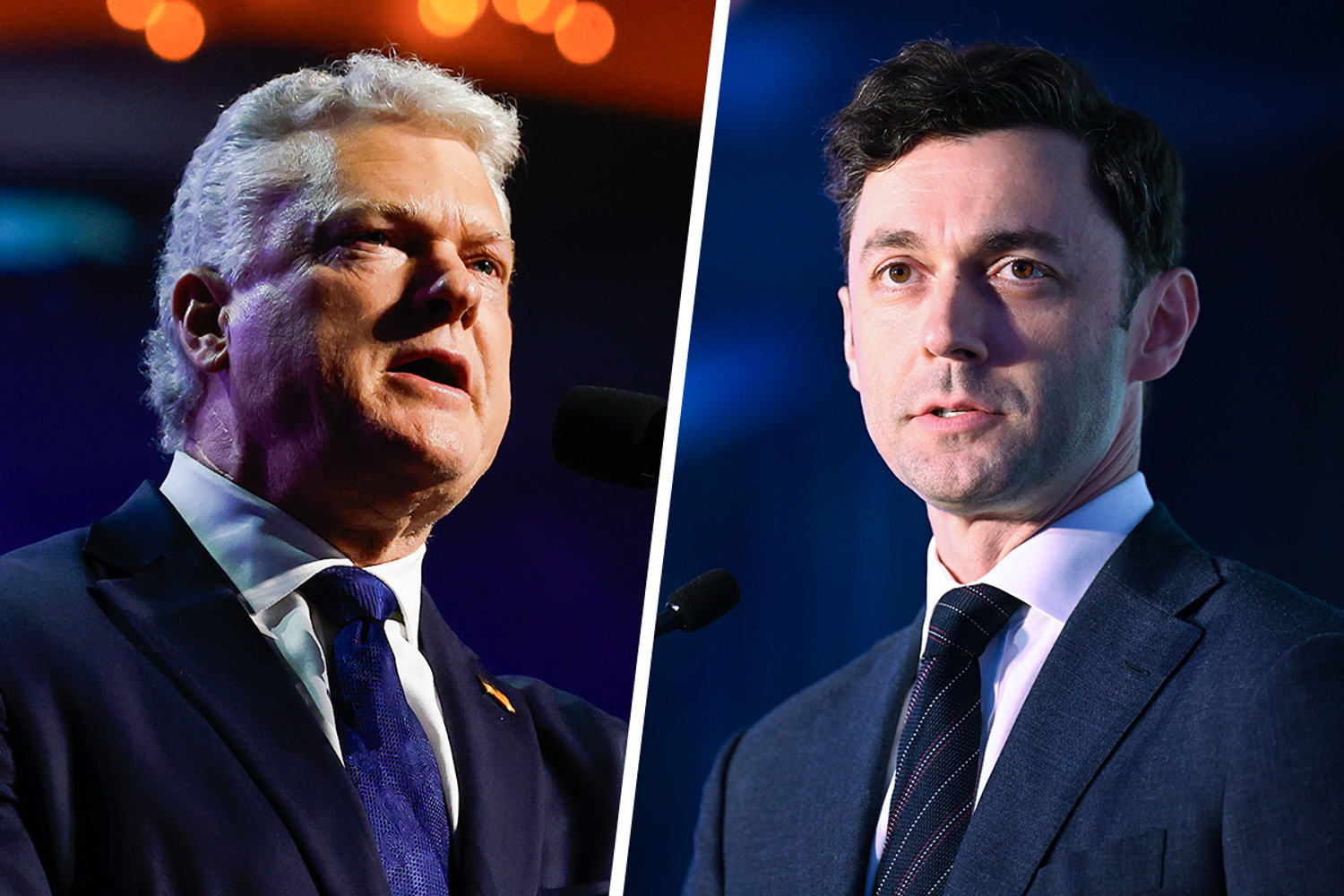
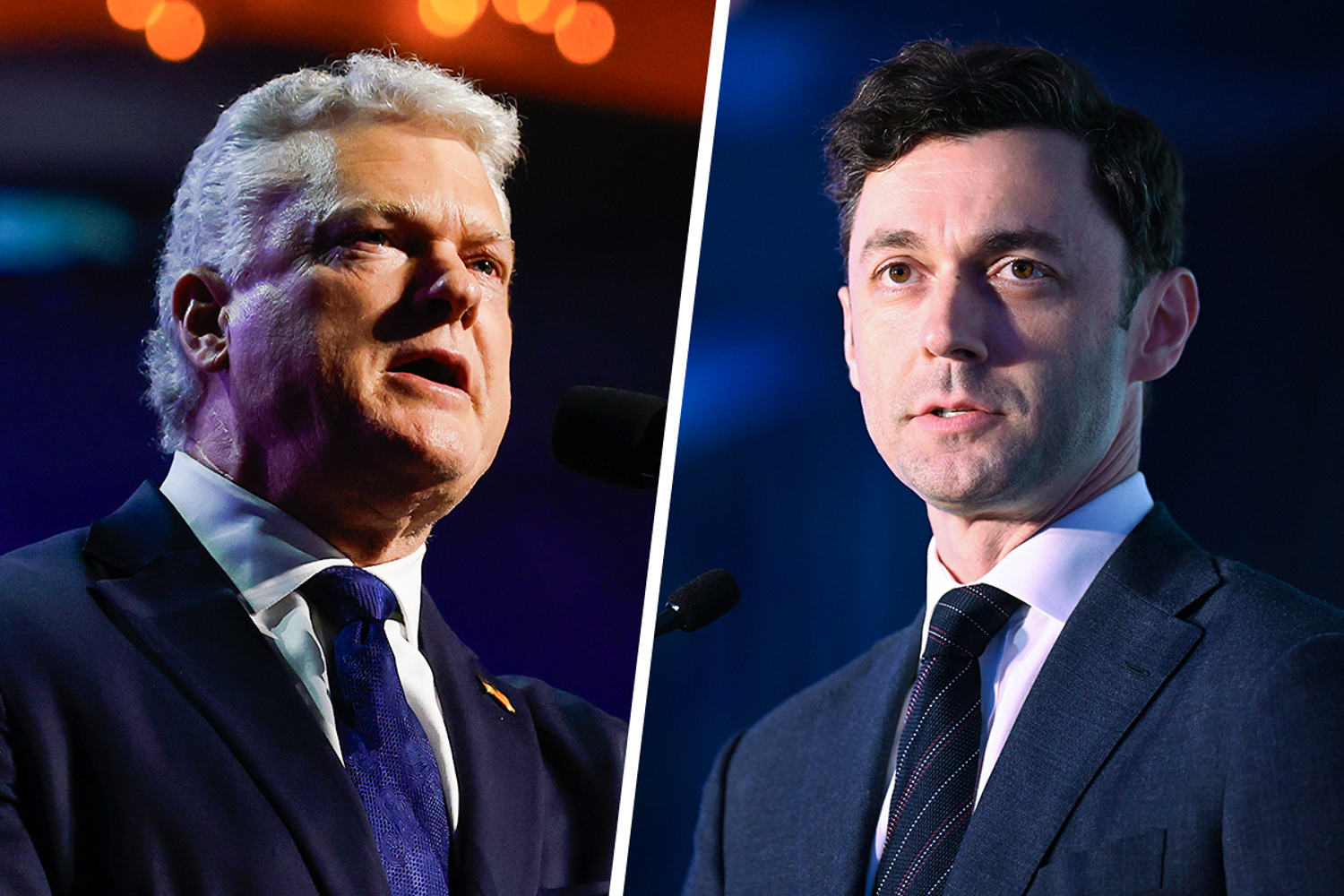
Incumbent Democrat Sen. Jon Ossoff and Republican Mike Collins, a member of Congress, squared off Thursday in the first debate in this nationally consequential Senate race, with both trying to hit the other for policies implemented by the current and former president.
Ossoff repeatedly asked why Collins supported tariffs that have been a key factor in the rise in consumer goods that have kept Trump’s approval ratings at historically low levels, a question Collins never directly answered.
“Still have not heard an explanation for the tariffs,” Ossoff said after already asking about Trump’s tariff regime several times.
Collins spent the hourlong debate, hosted by Atlanta First News, not directly answering questions about the unpopular war in Iran or Trump’s economy, but rather trying to saddle Ossoff with votes he took under Biden to make the case that the former president is the reason for the current state of inflation and high prices.
“That Bidenomics, that Green New Deal my opponent voted for, that’s where this inflation came from,” Collins said.
The debate was broken up into four segments, but each was dominated in some form by the economy and consumer prices, issues that an NBC News poll showed are the most important issues on voters’ minds in the lead-up to Election Day.
Collins voted to support the so-called One Big Beautiful Bill, Trump’s biggest legislative achievement of his second term. The bill included provisions including no taxes on tips for hospitality workers and Social Security, regular midterm talking points for Republicans. But Democrats have consistently highlighted how the sweeping tax proposal disproportionately benefits the wealthy, and increased the federal deficit by $1.4 trillion.
“Tax cuts are the answer to keeping more money in people’s pockets,” Collins said. “That creates…more tax-paying people, and businesses grow.”
As Trump’s approval rating has tanked, helping Democrats overcome the GOP’s huge national financial advantage, Republican candidates across the country have distanced themselves from Trump on key policies ranging from tariffs to the war in Iran. Collins, however, has not been among them, keeping his place as one of Trump’s staunchest allies in key midterm Senate races.
Ossoff pressed Collins several times on why he supports Trump policies on the economy and foreign affairs.
He did say that Trump’s tariffs make things “fair” in the context of trade with China and helping Georgia’s ports, which are key to the state’s economy.
“Savannah port and Brunswick port have been on my mind,” he said, without offering specifics on how the tariffs have helped them.
When pressed on the Iran war, which is increasingly unpopular, Collins defended Trump’s decision to begin bombing raids with Israel in February.
“The president had every right to make sure Iran does not get a nuclear weapon. Jon Ossoff knows this,” he said.
Ossoff has also regularly attacked Collins for continuing to support Trump’s insistence, without proof, that the 2020 presidential election was stolen, an issue that also took center stage during the debate.
“Mike Collins and Donald Trump, they are still obsessed with overturning the 2020 election,” Ossoff said.
Collins did not back down from the idea the 2020 election was stolen, but focused on GOP election measures and that Ossoff opposes the SAVE Act, a Trump-backed bill that, among other things, requires proof of citizenship to register to vote.
“Voters need confidence,” Collins said. “We live in the best country in the world, and no reason we should not have the most secure elections in the world.”
The bill has been passed in the House, but has not had enough support in the GOP-led Senate.
Each candidate also tried to frame the other as scandal-plagued.
Ossoff hit Collins over a series of social media posts where his son-in-law promoted white nationalist posts.
“Imagine running for the U.S. Senate while neo-Nazi propaganda is disseminated to an audience of millions from your house,” Ossoff said. “Mike Collins is a bigot.”
Collins said he does not support racism or anti-semitism, and said he has told that to his family.
“I don’t care where the source is, and I tell him that,” Collins said of his son-in-law.
In contrast, Collins said that billionaire Reid Hoffman, whose name appeared in the Epstein files, is an Ossoff donor.
“Billionaire Reid Hoffman, also one of Epstein’s buddies out there, has funneled money into his campaign,” Collins said.
Authorities have not accused Hoffman of wrongdoing in connection with Epstein. Hoffman has said he regrets having associated with Epstein.
Ossoff has been the subject of significant national speculation about whether he wants to run for president in 2028, something he has said he has “no interest” in, but that has not kept him off early shortlists.
That idea is bolstered by the fact that of his more than $100 million raised, $50 million is from so-called small dollar donors, which are relatively small contributions typically raised through email and other digital means from supporters across the country. An ability to digitally fundraise at that clip is generally a sign of a candidate’s national name identification and support among the party’s most intense base voters, which often play an outsized role in helping choose presidential nominees.
Collins has raised more than $7 million for his campaign, according to the most recent campaign finance reports, and has gotten his biggest boost, $25 million, from the Senate Leadership Fund, a national group that supports GOP Senate candidates.
At the beginning of the 2026 midterm cycle, the Georgia contest was seen as likely to be one of the closest contests in the country, and a key component for Republicans as they try to hold onto their slim majority in the Senate.
The race, however, has slowly trended Ossoff’s way. Most public polling has him with a sizable lead, including a YouGov poll released last month that had him topping Collins by 10 percentage points. The poll, which has a margin of error of 2.7 percentage points, was conducted Sept. 15-18.
Georgia is still seen as a key midterm Senate battleground contest, but many Republicans see it slipping away and are focusing on other states like Texas, Maine, North Carolina and Alaska to try and maintain control of the Senate.
Each candidate used their finishing remarks to attack the other.
Ossoff said Collins, who runs a trucking company started by his father, a former congressman, misleads on his professional record.
“Mike has called himself a trucker,” Ossoff said. “This is a congressman’s son who inherited a seat in Congress.”
Collins got the final word, once again hitting Ossoff for voting on Biden-era policies.
“We still have not heard why Jon Ossoff votes the way he does,” Collins said. “Why he voted against our farmers…why he voted against hard working Georgians out there.”