









As President Donald Trump campaigned for the nation’s highest office in 2024, he regularly blamed Democrats for the country’s economic anxiety.
During campaign stops across the U.S., Trump frequently asked voters if they were better off than they were four years prior. At the time, his message appeared to land: In an election centered on inflation and the cost of living, Trump won every swing state and the nationwide popular vote.
Two years later, voters grappling with those same kitchen-table issues took away much of his party’s power in Washington and in states across the country.
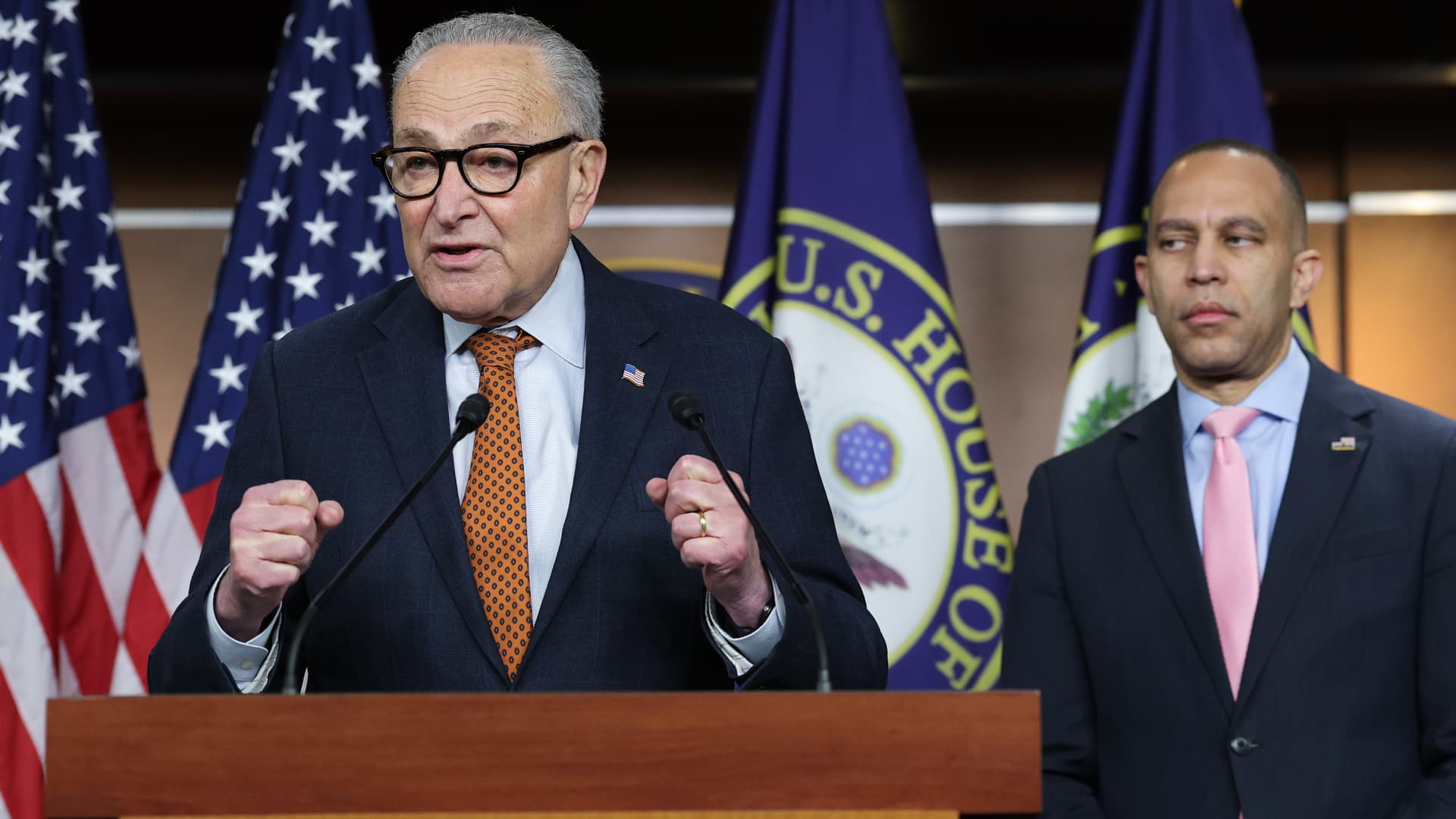
Democrats rode a blue wave of historic proportions in Tuesday’s midterm election to flip everything from battleground congressional seats to long-held Republican governorships. The Democratic Party will now have control of both the House and Senate, ending the Republican Party’s trifecta of power in the federal government.
Nearly nine out of 10 voters in the CNBC Voter Poll said the cost of living was a crucial or major factor in their vote for Congress. Participants in the poll ranked the economy as the most important issue facing the country during the midterm election, ahead of topics like the state of democracy and immigration. Three out of every four survey participants rated the economy as “poor” or “not so good,” compared with just 2% who described it as “excellent.”
And perhaps most telling of all: Fewer than one out of every five voters said their family’s financial standing was better than it was two years ago.
Much of their dissatisfaction was centered on Trump himself, with about two out of every three voters saying his policies worsened economic conditions in the country.
“It was all about the economy,” said Mark Zandi, chief economist at Moody’s Analytics. “Most Americans are struggling with the high inflation and have been for quite some time, and they’re just angry.”
A ‘breaking point’
Tuesday’s election played out against the backdrop of a war with Iran that has been politically unpopular and exacerbated the inflationary pressures facing everyday Americans. The CNBC Voter Poll found nearly three out of every four people said the war was a crucial or major factor in their vote for Congress.
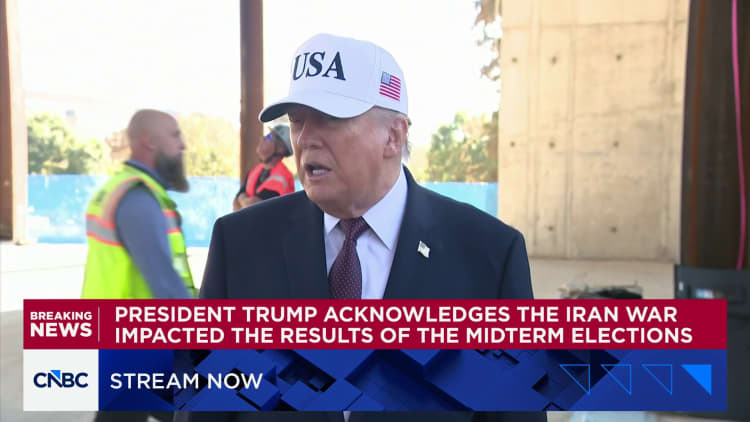
Trump told Fox News that voters were presumably unhappy with the surge in gas prices, even if they generally agreed with the need for military action against Iran. Vice President JD Vance said on social media that some voters who backed him and Trump in 2024 likely supported Democrats in the midterms as a result of the war.
U.S. drivers paid about $4.15 for an average gallon of gas on Tuesday, the highest of any midterm or presidential election day since at least 2000, according to AAA. Gas prices have surged about 37% over the past year as the Middle East conflict crippled the global crude trade.
“America sent a very clear message,” said Patrick De Haan, head of petroleum analysis at GasBuddy, a fuel price tracking platform. “Going into an election with prices that on Election Day have never been higher is something that garners a lot of frustration from consumers.”
Higher prices for gas and other energy products have cost the average American household nearly $1,230 since the start of the Iran war, according to an analysis from Zandi. The financial pain felt by U.S. consumers from the conflict has spilled into other areas. Rising borrowing costs and expanded military services roughly cost households more than $900 in addition, according to Zandi.
The consumer price index, a broad basket of goods and services tracked by the Bureau of Labor Statistics, reaccelerated during the war with Iran. Increases in consumer prices have outpaced wage gains in recent months, leaving consumers with less purchasing power.
Prices for diesel, the fuel type used by truckers and trains, climbed to records that transportation executives have said feel “like science fiction.” In the latest producer price index report, the BLS said that rising diesel costs pushed up prices for many goods.
The CNBC Voter Poll found more than three out of every five people believed that Trump’s policies led to higher prices. Almost nine out of 10 said they were very or somewhat concerned about the prices for a variety of goods such as utilities, food and oil. The poll was a collaborative effort across several news organizations that drew on about 100,000 interviews conducted by phone, online and in-person at polling locations with a margin of error of 0.6%.
Trump took over an economy coming out of the pandemic that was caught in a “vibecession,” the term used to describe the disconnect between sour consumer confidence and positive economic fundamentals. With consumer prices now on one of their longest streaks of higher-than-preferred inflation readings on record, the average American’s economic sentiment is even worse today.
The University of Michigan’s consumer sentiment survey in 2026 fell to the worst levels in its seven-decade history. The Conference Board, meanwhile, said its consumer confidence gauge in September slid to 14-year lows.
Inflation pushed voters to a “breaking point,” said Francesco D’Acunto, a Georgetown University professor who researches behavioral economics. “If consumers become angry voters, they vote against the status quo — in this case, the Trump administration.”
Unpopular policies
Before the U.S. began its war with Iran in late February, economists and monetary policymakers were already sounding the alarm about what Trump’s policies could mean for the economy.
Trump pitched his plan for broad and steep tariffs as a way to revive domestic manufacturing, but the policy sent financial markets reeling and raised the prospect of a potential recession. Researchers at the New York Federal Reserve said that many consumer prices would have fallen if not for Trump’s tariffs, many of which were later struck down by the Supreme Court.
In the CNBC Voter Poll, 64% said Trump’s tariff policies hurt the economy in their area. Just 14% said they helped.
Trump’s White House also oversaw mass deportations in major cities that gave way to large-scale protests and the death of two U.S. citizens by federal immigration agents. A University of Pennsylvania study found that the cities experiencing immigration surges collectively saw decreasing foot traffic and billions of dollars in lost consumer spending.
About three out of five voters said they disapproved of how Immigration and Customs Enforcement handled its job and that the Trump administration had gone too far on the issue, according to the CNBC Voter Poll. Still, voters were more likely to say the Republican Party was better at handling immigration.
To be sure, some policies under Trump’s White House have been better received. The Internal Revenue Service said in October that the average tax refund grew by 11% following the passage of Trump’s “big beautiful bill.” So-called Trump Accounts are allowing parents to tap into government and donor funds to build nest eggs for children.
But on Tuesday, voters showed that affordability remained a leading concern as the Iran war continues and inflation pinches pocketbooks. What changed compared with the 2024 presidential election was who they believed could fix it.
In 2024, more voters said they thought Trump was better equipped to handle the economy than former Vice President Kamala Harris. This week, voters said Democrats were better equipped than Republicans to handle the economy.
But the party will have a lot of work to do. Seven out of 10 respondents in the CNBC Voter Poll said they felt the U.S. economic system generally favored the wealthy.
“We know pretty clearly what is making Americans upset,” said Zandi, who has advised politicians from both parties. “There’s another election coming up in two years. Hopefully, policymakers are listening to all this.”