




Welcome to From the Politics Desk, a daily newsletter that brings you the NBC News Politics team’s latest reporting and analysis from the White House, Capitol Hill and the campaign trail.
In today’s edition, Bridget Bowman explains that Florida’s primary underscored how the Democratic base has changed since President Donald Trump’s first term. Plus, Andrea Mitchell digs into Trump’s push to hold another meeting with North Korea’s Kim Jong Un.
Sign up to receive this newsletter in your inbox every weekday here.
— Adam Wollner
Florida upset is the latest sign Democrats want to transcend Trump
Analysis by Bridget Bowman
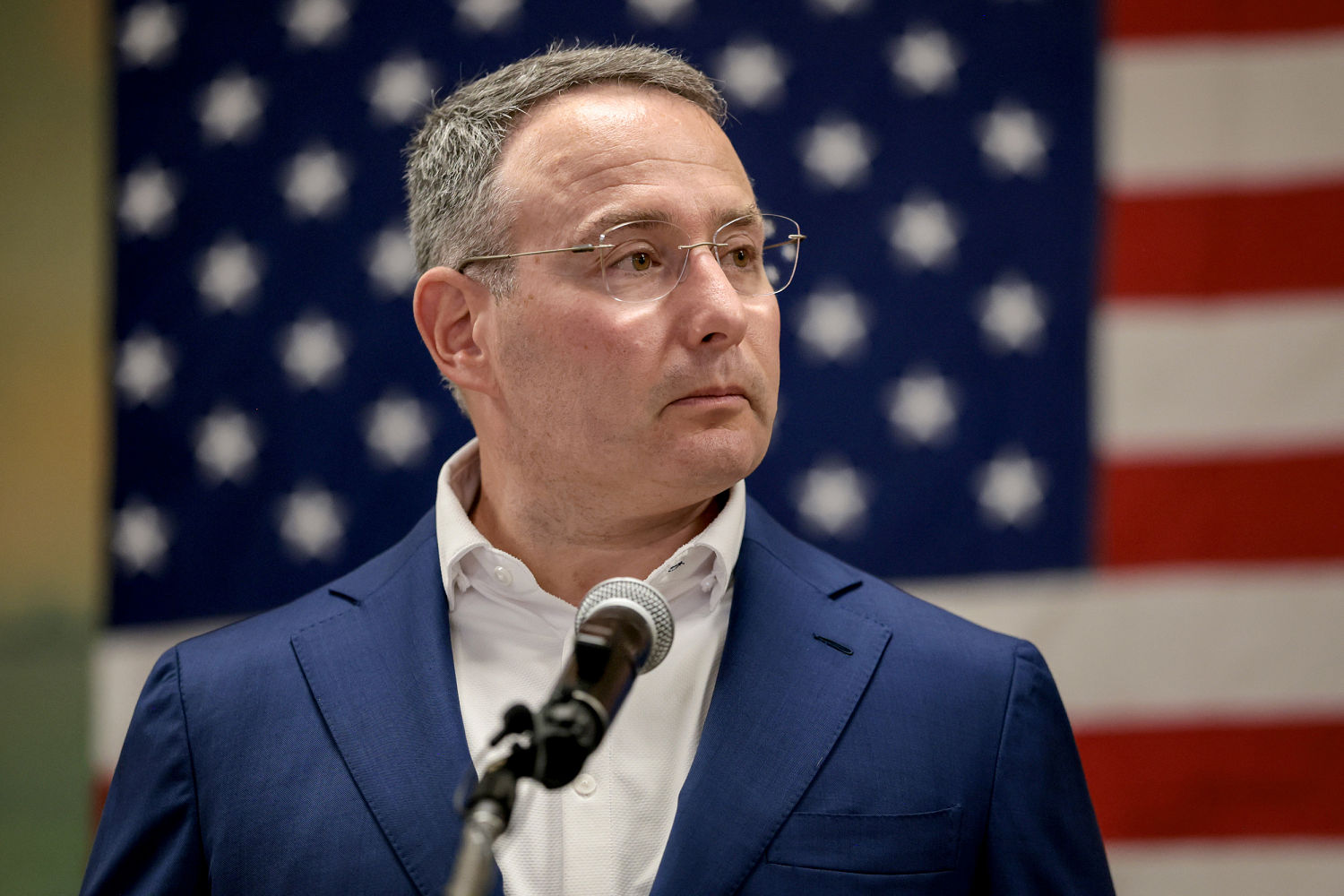
Alex Vindman’s stunning loss in the Florida Senate primary last night is the latest sign that Democratic voters are itching for a fight — and not just against President Donald Trump.
Vindman is the third Democrat to have lost a primary this year after having had a starring role in Trump’s impeachments during his first term. He fell to state Rep. Angie Nixon, a democratic socialist.
Rep. Diana DeGette of Colorado, who was a Trump impeachment manager after the Jan. 6, 2021, Capitol riot, also lost to a democratic socialist opponent, Melat Kiros, this summer. And Rep. Dan Goldman of New York, Democrats’ lead counsel during Trump’s first impeachment in 2019, lost his primary to progressive former New York City Comptroller Brad Lander.
All three Democrats highlighted their impeachment roles in their campaigns.
“When Donald Trump abused power, Vindman stood his ground and called him out,” a narrator said in a Vindman campaign ad. Vindman, an Army veteran who worked at the National Security Council, testified during Trump’s first impeachment that he witnessed Trump pressuring Ukrainian President Volodymyr Zelenskyy to investigate Joe Biden and his son.
“Diana DeGette is fighting Donald Trump to protect our democracy,” a narrator said in an ad for the congresswoman, followed by video of DeGette speaking on the House floor during Trump’s second impeachment trial.
And a campaign ad for Goldman touted him as “the man who impeached” Trump and featured Goldman saying, “When we take back the majority, I will not rest until we hold Donald Trump accountable once again.”
Their primary opponents, meanwhile, made the case for sweeping change and took on Democratic leaders they viewed as too passive.
Nixon didn’t mention Trump at all in her lone TV ad of the primary.
“When people in our state are working hard every day and still can’t get ahead, something has to change,” she said in the spot.
While Kiros called for fighting back against Trump in one of her campaign ads, she also promoted progressive policies like “Medicare for All” and abolishing ICE, lamenting, “Establishment Democrats have failed us.”
Lander told “Meet the Press NOW” that his win showed that Democrats “want leaders who put their bodies on the line and fight hard for working people on the things that matter on housing and health care, and they don’t want to compromise on anyone’s humanity.”
Other issues loomed large in these races, particularly the future of U.S. aid for Israel, health care and immigration. And while there’s no doubt that Trump is energizing Democrats, the former impeachment stars’ losses suggest that energy has shifted since his first term.
Trump’s 2016 victory sent shock waves through the Democratic Party, motivating its voters to the polls in the 2018 midterms. But his return to the White House ignited a new anger toward party leaders and spurred calls for change. Those voters are clamoring for candidates with forward-looking policies who want to take on the whole political system.
🗺️ Related: New maps make Florida a key player in the fight for the House majority, by Matt Dixon
Trump bets again on personal diplomacy with North Korea while pushing allies away
Analysis by Andrea Mitchell
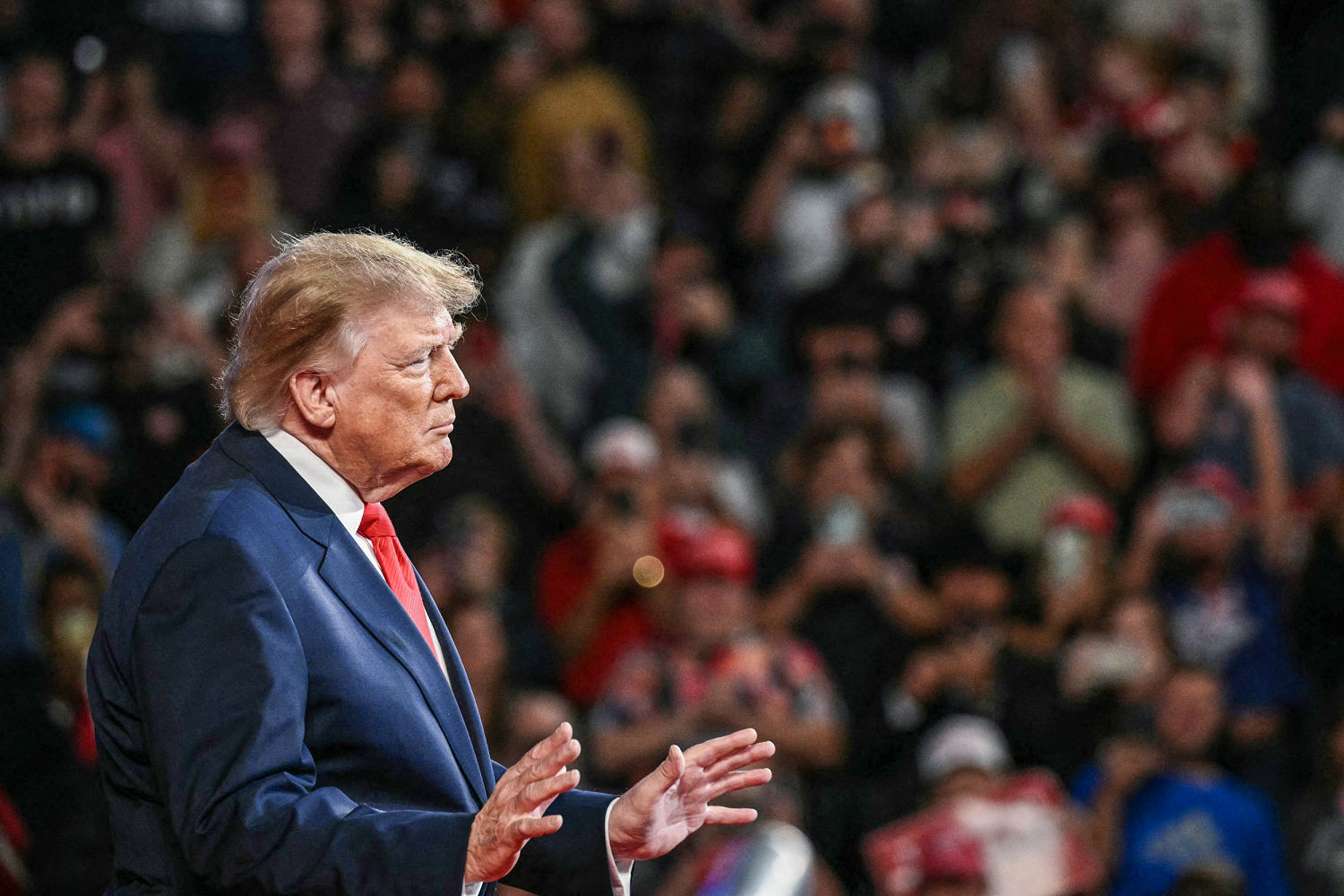
President Donald Trump’s acknowledgment today that he is seeking another meeting with North Korean leader Kim Jong Un before the end of the year partly explains his sudden decision this week to cut short the annual U.S. joint military exercises with South Korea that have been conducted for 50 years.
Trump explained it as a response to South Korea’s refusal to join his war against Iran. He has also long complained about the cost of maintaining 38,000 troops at the Demilitarized Zone between North and South Korea, as well as other bases in the region.
During Trump’s first term, Defense Secretary James Mattis strongly argued against his attempt to downgrade the joint exercises with South Korea. Now, Trump does not appear to be encountering such resistance from his Cabinet. Separately, South Korean analysts say Trump is also angry that Seoul has not delivered on $350 billion in new investments in the U.S.
But the decision also risks another error in strategic planning. In the 1990s, President Bill Clinton dispatched former President Jimmy Carter to North Korea to try to negotiate with Kim’s grandfather Kim Il Sung to no avail. The U.S. then launched six-party talks involving China, Japan, South Korea and Russia that were also fruitless. In October 2000, Secretary of State Madeleine Albright achieved a tentative agreement with Kim’s father, Kim Jong Il. But after George W. Bush took office, his White House rejected the proposal the following spring.
After having disparaged Kim Jong Un as “rocket man” and threatened him with fire and fury when he first took office, Trump pivoted to extolling him once they met for writing “beautiful” letters. Now, he has posted pictures of the two, writing, “Kim Jong Un and I get along GREAT!”
But reports that Trump hopes his personal diplomacy can persuade Kim to give up his nuclear program appear to be wishful thinking on a global scale. By his own account today, Trump acknowledges Kim now has 57 nuclear weapons in his stockpile, a number in the same range as published accounts. Since Trump’s first summit with Kim in Singapore — followed by another in Hanoi, Vietnam, and a third at the Demilitarized Zone — NBC News and other news organizations have reported that Pyongyang has greatly advanced its nuclear and missile capacity, producing long-range weapons now capable of reaching the American mainland. And Kim has provided critical military help to Russia in its war with Ukraine.
Scaling back U.S. support for South Korea and holding a hurriedly planned meeting with the North Korean leader could also reverberate with other American allies around the world already doubting Trump’s reliability. Foreign leaders have been rattled by Trump’s favorable treatment of Russian President Vladimir Putin. They resent his punitive tariffs. And he alienated European leaders with his claim on Greenland, a territory of Denmark, which is a NATO member. He has angered Canada with his taunts that it should become a 51st state.
And Monday, he threatened to “bomb the s— out of” Oman, a key U.S. mediator with Iran on the Strait of Hormuz. Clearly eager to find a way out of the stalemate with Iran, Trump has also stepped back from protecting Persian Gulf partners from Iran’s retaliatory attacks.
It all adds up to a poor track record for Trump diplomacy, especially when the White House has yet to find a way out of the war with Iran and Israel continues to attack Iranian proxies in Lebanon and Gaza. It’s not an ideal backdrop for another high-stakes summit with little chance that Kim has any incentive to abandon one of the world’s most advanced nuclear weapons programs.
🗞️ Today’s other top stories
- 💸 New record: U.S. debt crossed the $40 trillion threshold for the first time. Read more →
- 💲 Bond watch: Longer-term U.S. Treasury yields dropped sharply after the Treasury Department announced it would increase the size of its government debt repurchases by “at least double” in a surprise move. Read more →
- 🇨🇦 On second thought: Trump last night paused the 50% tariffs on Canada that were set to take effect at midnight. Read more →
- 🎤 Debate fallout: GOP Sen. Darline Graham’s performance at a debate last night brought a fresh round of questioning in South Carolina — a state with a proud military tradition and several key bases and installations — after she whiffed on a question about Taiwan and acknowledged that she doesn’t know much about national security. Read more →
- 🤖 Shifting winds: Pennsylvania Gov. Josh Shapiro announced significant restrictions on data center projects, signing an executive order to stop “predatory” backers and “bad proposals from infecting our commonwealth.” Read more →
- 💊 Next up: Trump will nominate Dr. Heidi Overton to be commissioner of the Food and Drug Administration. Read more →
That’s all From the Politics Desk for now. Today’s newsletter was compiled by Adam Wollner.
If you have feedback — likes or dislikes — email us at politicsnewsletter@nbcuni.com
And if you’re a fan, please share with everyone and anyone. They can sign up here.