





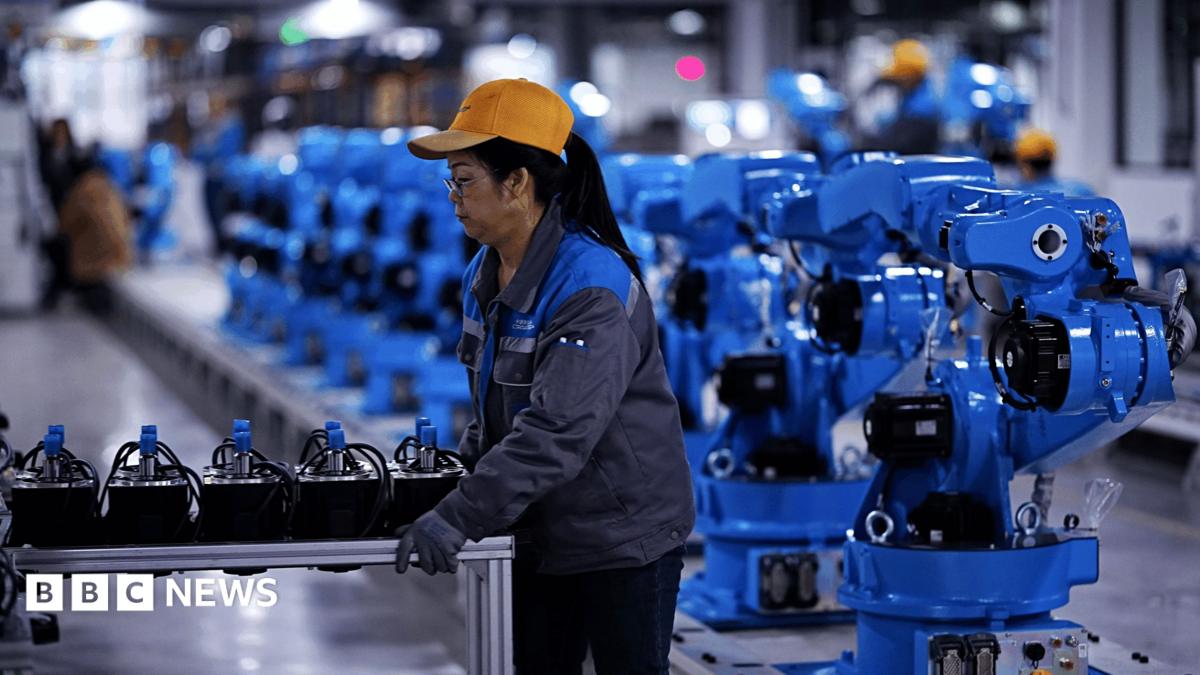
On a factory floor in the southern city of Chengdu, the old and and the new are working side by side.
An assembly line of around 30 middle-aged men and women is screwing, drilling and polishing CRP Technology’s signature product: a robotic arm which performs various industrial tasks. Also in the room are four young engineers crowded around a console, trying to crack the code for a prototype, a new robot that they hope will help build other robots.
One of them, 31-year-old Pang Kai, who is part of the research and development team, pushes the sleek skeleton across the room. Because China’s future workforce is not quite ready to strut out. For now, it can only do simple repetitive movements, such as scan a QR code.
“Maybe in another half year, it can do another task,” Pang says, smiling wistfully. It’s a long road and the team are celebrating every small win.
CRP Technology, which employs around 300 people, has been building robot arms for nine years. Each arm can be tailored to a factory’s needs to help build cars, electronics or wind turbines. The firm says a single arm can be programmed to perform more than 90% of repetitive tasks.
The engineers also wonder if, one day, they can replace the company’s workforce. “We want our new robot to be like human beings. We hope it can think by itself,” says Pang. “We need these kinds of robots because maybe in 10 years, we won’t have enough workers in China.”