





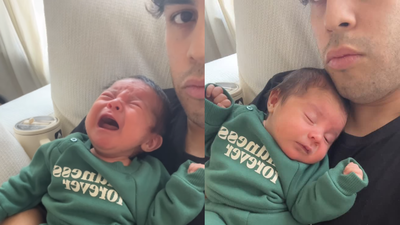
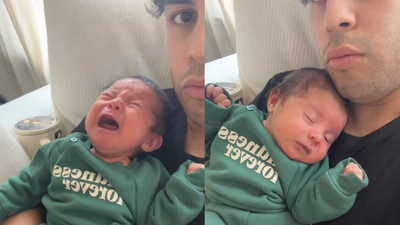
There are few sounds that can test a new parent’s patience quite like an inconsolable baby. You feed the baby, check the nappy, burp them, dim the lights, rock them, walk around the room- and still the crying continues. Then, sometimes, something unexpectedly simple works.A recent Instagram video has captured exactly that moment. In the clip, a father uses a long, low-pitched “Om” sound while holding his crying baby. Within moments, the baby appears to settle, turning a simple act of soothing into a viral parenting hack. The video has now gained over 17 million views, and is winning hearts of millions.
28 Jul 2026 | 16:27
What was the most useful baby product during the first six months?
“Om” is a sacred syllable and mantra deeply rooted in Indian spiritual traditions. For Indian families, the viral video carries another layer of familiarity. “Om” has a long history in Indian spiritual and yogic traditions, where it is used as a mantra and during meditation. That cultural familiarity may make the technique particularly appealing to Indian parents.Many in the comments were awestruck. One user wrote, “Got headphones on. It relaxed me!” another wrote, “Oh I’m so trying this when my son is born.” The video has also sparked a familiar question among parents: is there actually something about the sound that calms a baby?While there is very little direct scientific evidence that chanting “Om” itself stops infant crying. But there is interesting research on rhythmic sounds, repetitive sensory input, movement and the calming effects of a caregiver’s presence. Thus, the answer is more nuanced.
Why might a low, repetitive sound help?
Research on “Om” chanting has largely been conducted in adults, not babies. In a 2022 study published in Frontiers in Psychology, researchers studied 33 adults with no meditation experience and found that Om chanting altered how participants processed emotionally negative images; participants also rated the unpleasant images as somewhat less unpleasant while chanting. The researchers recorded changes in electrical brain activity as well.While the study does not prove that Om has the same effect on a crying newborn, what it does suggest is that repetitive vocalisation can influence a person’s emotional and attentional state. Whether that translates into a direct calming effect in babies remains an open question.
So, should parents try it?
Perhaps the most important distinction for parents to keep in mind is that there is currently no strong clinical evidence that Om specifically treats colic, excessive crying or sleep problems in babies. Nor is there enough evidence to say that the sound has a unique effect on an infant’s nervous system.

File Photo
What science does say is that babies are highly responsive to their caregivers’ voices and to rhythmic sensory experiences. A soft “Om”, a lullaby, humming or even a gentle “shhh” may therefore work as a predictable auditory cue.There is no harm in trying a gentle, low-volume “Om” as part of a soothing routine if the baby is otherwise well. But parents should think of it as one possible calming cue, not a magic solution.