




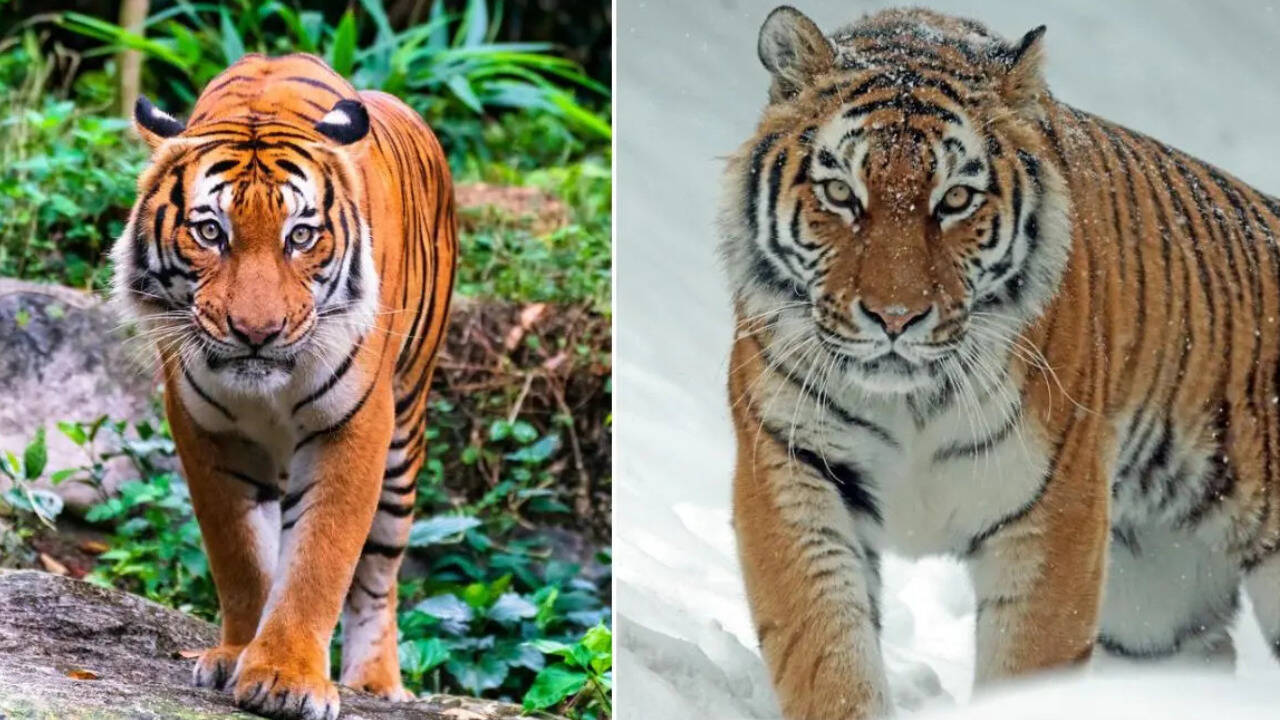
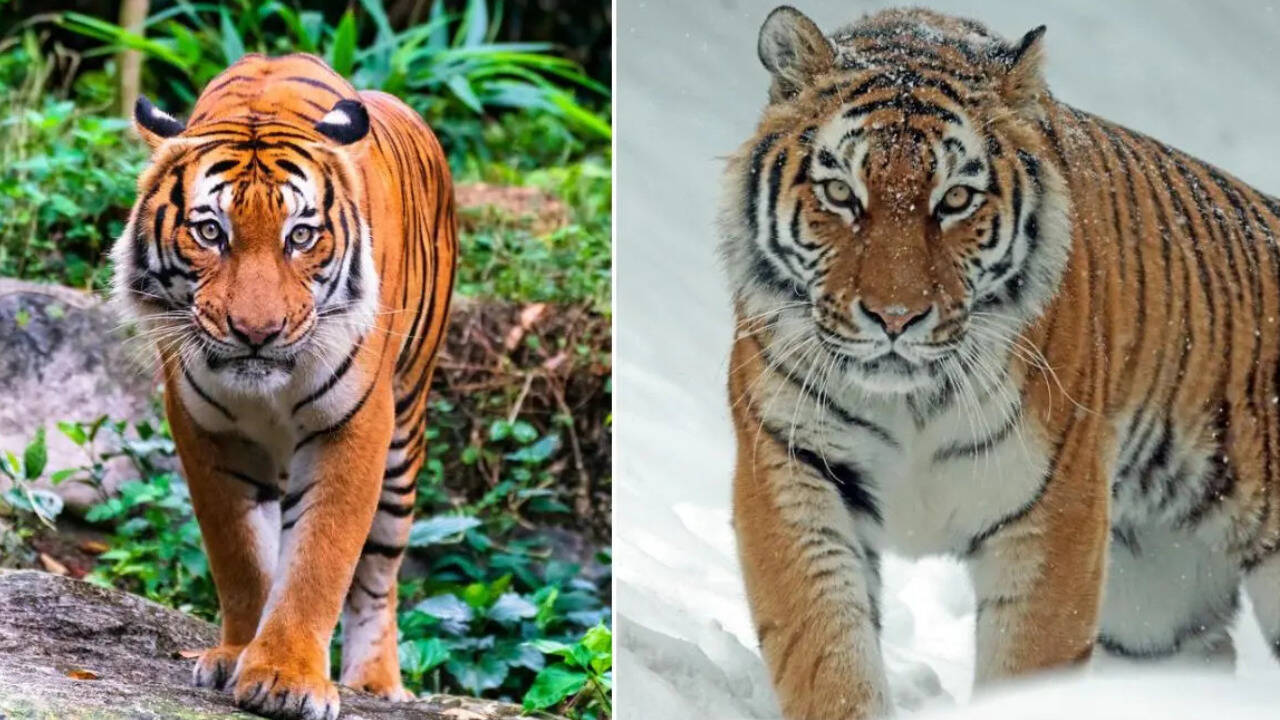
Although Bengal and Siberian tigers are closely related subspecies, there are still several biological and habitat-specific differences between them. Since there are global plans for wildlife conservation for the tiger subspecies, it is important to understand what differences exist between these big cats and what similarities.
Bengal Tiger
This tiger subspecies is also known as the Indian tiger. It should be noted that among all tiger subspecies, this one is represented by the greatest number of individuals and occupies the most extensive area of South Asia. This subspecies accounts for about 70% of the world’s tiger population.
According to WWF (World Wildlife) data, there are over 5,500 tigers in the world. At the same time, the largest number of representatives are in Bengal, which also indicates that this region is one of the most successful in tiger conservation. Thus, the most numerous tiger subpopulation is part of the forest-savanna complex of Sundarbans.
Siberian (Amur) Tiger
The Siberian tiger is also known as the Amur tiger. This subspecies is represented by the greatest number of individuals among the northern tiger subspecies and occupies the territory of the Russian Far East. According to National Geography, these big cats lead their lives in extremely remote forested areas. Moreover, tigers usually avoid areas of high human density.
According to the reports, the number of Amur tigers is significantly lower than the number of Bengal tigers and continues to be lower for all tiger subspecies.