
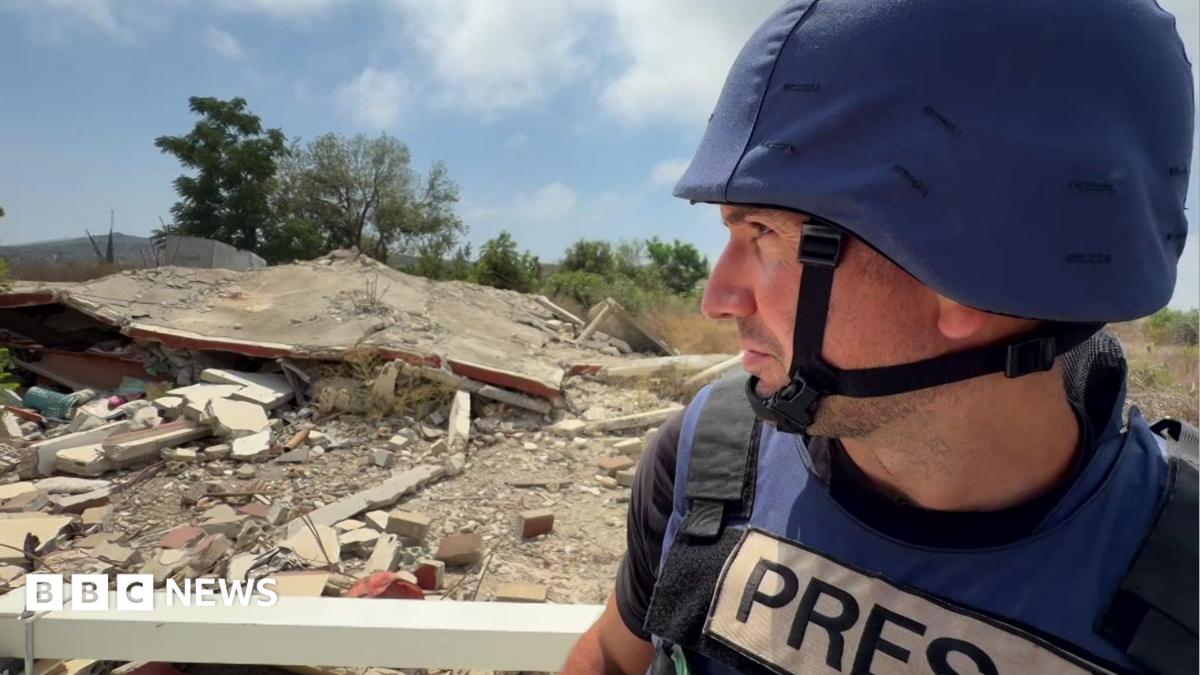
The drive on the highway by the Mediterranean in southern Lebanon, near the border with Israel, is scenic and, these days, desolate. Crops lie abandoned and buildings destroyed by Israeli air strikes, too many to count, are in ruins.
Near the town of Naqoura, a Lebanese military checkpoint, painted in the white-and-red colours of the national flag, is the last visible sign of the state’s presence. Soldiers are positioned behind concrete walls, but the road is empty. A few minutes further south, around a dozen Israeli flags indicate the start of occupied territory. Unless authorised by Israel, no-one can enter.
This part of the country is the heartland of Lebanon’s Shia Muslim community, from which Hezbollah, the Iranian-backed militia and political party, gets most of its support. It has seen three invasions by the Israeli military in wars against the group in the last two decades alone. The most recent started in March, after Hezbollah fired rockets into Israel following the killing of the Iranian supreme leader, at the start of the US and Israel’s war against Iran.
Last month, a BBC team joined a humanitarian mission of the UN peacekeeping force in Lebanon, known as Unifil, which is one of the only ways to visit the area under Israeli control. There, as it did in Gaza, Israel has flattened entire villages, and air strikes and demolitions have continued even after a ceasefire was announced in June.