



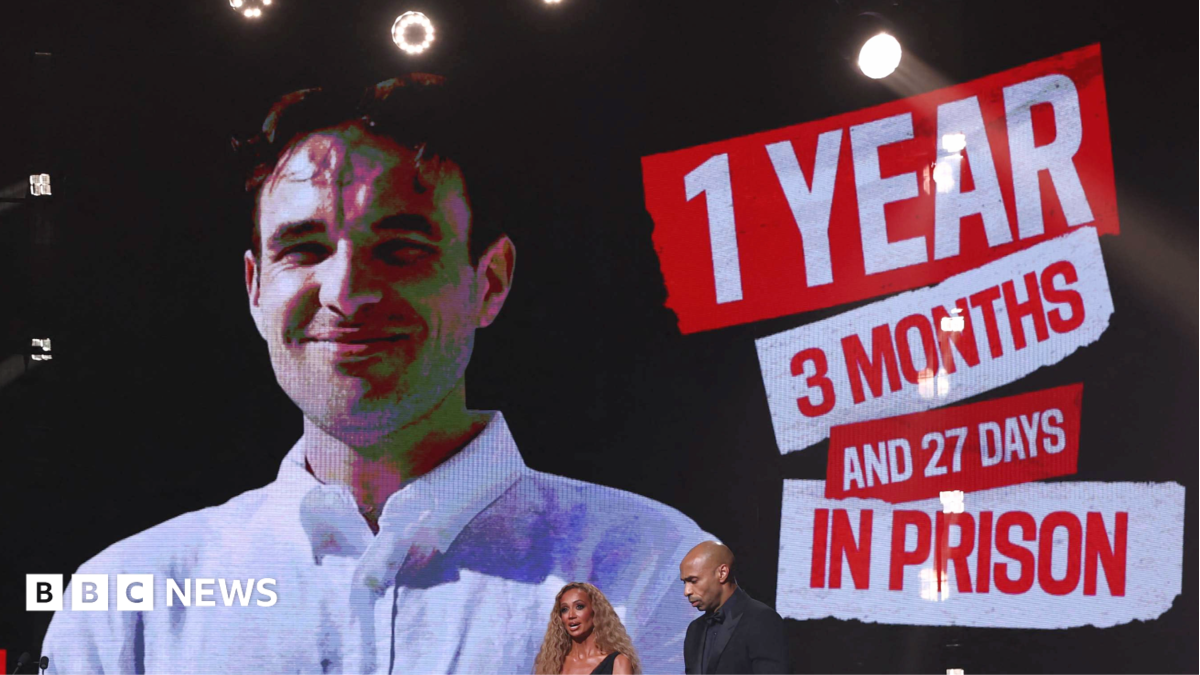
Gleizes, who contributes to French magazines So Foot and Society, travelled to Algeria in May 2024 to report on Jeunesse Sportive de Kabylie (JSK), one of the country’s best-known football clubs.
It is based in Tizi Ouzou, about 100km (62 miles) east of the capital Algiers, in the mountainous Kabylie region, which is mainly home to the ethnic Amazigh people (historically known as Berbers).
It is also the base of the Movement for the Self-Determination of Kabylie (MAK), which Algeria designated a terrorist organisation in 2021.
Gleizes was accused of possessing publications deemed harmful to national security.
The case centred on his contacts with a JSK official who was also associated with the MAK.
Reporters Without Borders (RSF), which has campaigned for his release, says the exchanges took place in a journalistic context and that some contacts predated the outlawing of the group.
During his appeal hearing last December, Gleizes acknowledged mistakes in his reporting and said he should have applied for a journalist visa rather than entering Algeria on a tourist visa.
“I beg your mercy so that I can be reunited with my family,” he told the court.
Prosecutors argued that he had not travelled to Algeria to carry out journalistic work, but to commit a hostile act.
The Algerian authorities have yet to commented on the decision by the Ballon d’Or, which is organised by France Football magazine in partnership with European football governing body Uefa, to dedicate the ceremony to Gleizes.
RSF has announced a solidarity football match for 11 November, marking Gleizes’s 500th day in detention, as part of its campaign calling for his release.
Former France internationals Robert Pirès and Vikash Dhorasoo, along with Paris Mayor Emmanuel Grégoire, are among the first participants announced.
Gleizes’s case comes amid wider concerns over the prosecution and imprisonment of writers and other public figures in Algeria.
Franco-Algerian writer Boualem Sansal was sentenced to five years in prison for undermining national security before receiving a pardon from President Abdelmadjid Tebboune following mediation by Germany’s president in 2025.
Gleizes’s arrest also came during a period of heightened diplomatic tensions between France and Algeria, marked by the withdrawal of ambassadors and reciprocal expulsions of diplomats.
Relations deteriorated further after France recognised Moroccan sovereignty over Western Sahara in July 2024. Algeria supports the pro-independence Polisario Front, which seeks independence for the disputed territory.
As relations began to improve in May, France’s Justice Minister Gérald Darmanin visited Algiers and urged the Algerian authorities to allow Gleizes to reunite “not with France, but with his mother”.
He said that he believed President Tebboune would be receptive to the request.