








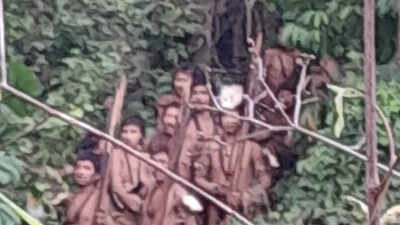
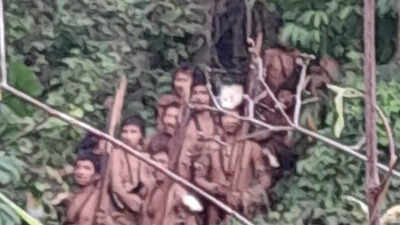
For a community that has spent generations living away from the outside world, stepping into a village is not an ordinary encounter. It can be a sign of trust, curiosity, need, or even desperation.Around 20 members of the Awá Indigenous people, who live in voluntary isolation in Brazil’s Amazon rainforest, recently emerged from the forest and approached a village in Maranhão. The encounter has drawn attention to the growing threats faced by Indigenous communities whose survival depends on protecting their forests from outside interference.According to Survival International, the group met a government team in a historic encounter. The villagers offered food, and the Awá reportedly asked for yams before carrying them back into the forest.The encounter may have lasted only a short while, but it has raised serious questions about what is happening to the land these people call home.
Who are the Awá people?
The Awá are among the most threatened Indigenous peoples in the world. Many members live as hunter-gatherers, depending on the forest for food, shelter and everyday survival.They have chosen to remain isolated from mainstream society, making their own decisions about how they live and whom they interact with. Their lives are closely tied to the Amazon’s natural resources, which provide everything from food to materials for daily living.But their isolation does not mean they are untouched by the outside world. Illegal logging, hunting and cattle ranching have increasingly threatened the forests they depend on.
Why their emergence is raising concerns
The encounter also brought concerns about the group’s physical condition. Coapima, an organisation representing Indigenous communities in Maranhão, reported that some members, particularly children and older people, appeared severely undernourished.Unplanned contact can also expose isolated communities to infections. Their immune systems may have little experience with diseases circulating outside their territories, making even common illnesses potentially dangerous.Brazil’s Indigenous affairs agency, Funai, said its teams were monitoring the situation and reviewing information about the group’s health.
A forest shrinking around them
The Awá have faced invasions of their territory for generations. European settlers began encroaching on their lands during the 19th century, pushing many members towards a nomadic lifestyle to escape outside threats.Their struggle continues today. Illegal loggers, hunters and cattle ranchers are steadily eating into the forest. Fires, deforestation and climate change are adding to the pressure, disturbing the balance of a landscape that has sustained them for centuries.The Arariboia Indigenous territory is also home to the Guajajara people. Some Guajajara community members have formed Forest Guardians, who risk their lives to protect Indigenous lands from illegal invasions. Several have reportedly lost their lives in the fight.For the Awá, every lost patch of forest can mean fewer places to hunt, gather food, move freely and stay safe.
Why protecting their isolation matters
Isolation is often misunderstood as a lack of development. For Indigenous communities who have chosen to remain uncontacted, however, it can be a way to protect their freedom, culture and physical survival.Their decision to live away from modern society deserves respect. Contact should never be forced, and their health and safety must remain a priority. Protecting their land is equally important because it allows them to continue living on their own terms.The Awá’s recent emergence is a reminder that the biggest threat to some isolated communities may not be their distance from the modern world, but how rapidly that world is moving into their forests.Disclaimer: This article is based on reports by Survival International and information shared by Indigenous organisations and Brazilian authorities. Details about the encounter and the group’s health have not been independently verified.