




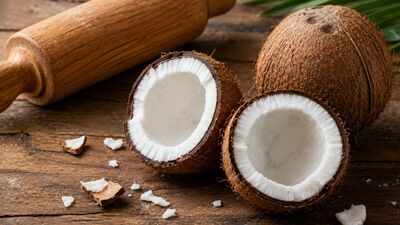
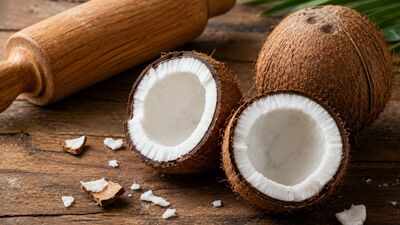
A whole coconut can seem almost impossible to open without brute force. Its shell is hard and thick. The fruit inside is soft and full of water. Yet there is no need for a hammer to get through it. A few everyday tools and the right technique can do this task easily. A rolling pin can weaken the shell. An oven can make the shell easier to separate from the flesh. Even a sturdy outdoor surface can help when used with care. The key is not to hit harder but to work around the shell. Before beginning, the coconut water should be drained through one of its three eyes. The coconut should then be placed on a stable surface before opening it. Here are five simple ways to open a coconut without a hammer.
5 simple ways to open a coconut without a hammer using everyday household tools
1. Use a heavy rolling pin
Start by draining the coconut water. Then place the coconut on a folded kitchen towel so it does not roll across the area. Use a heavy rolling pin to tap the shell around and rotate the coconut. The aim is to weaken the shell along one line rather than smash one spot repeatedly.After several rounds of tapping, a crack should begin to appear. Keep working around the shell until the crack becomes longer and deeper. Once the coconut starts to split, stop striking it. Pull the pieces apart carefully.A solid wooden or metal rolling pin works better than a lightweight one. Do not use excessive force, as the coconut can shift suddenly, and the rolling pin can slip. Once the shell is open, use a sturdy spoon to loosen the white flesh from the inside.
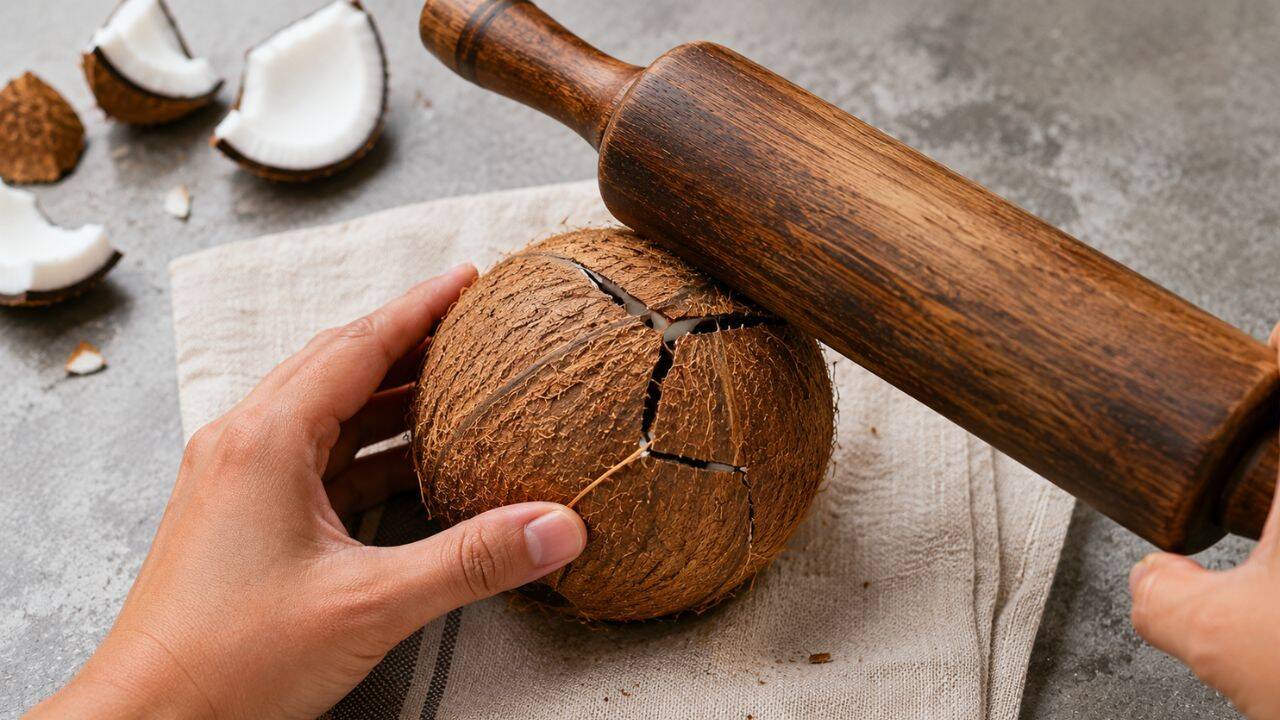
Use a heavy rolling pin ( PC: AI Generated)
2. Use the blunt side of a sturdy knife
A sturdy kitchen knife can help crack a coconut, but the safest approach is to use its blunt side. Do not try to stab the shell with the blade.Drain the coconut and place it on a stable chopping board. Hold it firmly with one hand while keeping fingers away from the area being struck. Use the blunt back of the knife to tap around the shell’s middle. The shell should gradually develop a crack. Once that happens, put the knife aside and open the coconut by hand.This method needs more care than a rolling pin. A knife can slip if too much force is used. If the coconut keeps moving or the shell does not respond to gentle tapping, switch to another method.
3. Use oven heat
Heat can make the shell easier to separate from the coconut flesh. Start by draining all the coconut water through one of its three eyes. Place the whole coconut on a baking tray and heat it in an oven for 10 to 15 minutes. Keep an eye on it while it heats. The shell may begin to develop cracks. Use oven gloves when removing the tray.Let the coconut cool until it is safe to handle. You can then tap it gently against a sturdy surface or use a blunt utensil to help separate the cracked shell. The heat may also make the white flesh easier to remove. Do not place a coconut containing liquid in the oven. Heating a sealed coconut can allow pressure to build inside. Draining it first is an important safety step.
4. Use a hard outdoor surface
Sometimes gravity can do what a hammer cannot. Drain the coconut first. Wrap it in a thick kitchen towel or place it inside a strong bag. This helps contain broken shell pieces. Drop it from a low height onto the hard surface.Check the coconut after each attempt. Once a crack appears, open the coconut carefully. Collect the broken pieces before removing the flesh. Do not throw the coconut or drop it from a great height. A controlled drop is enough to test the shell.This method is best treated as a last resort. If the coconut does not crack easily, use a more controlled technique instead of increasing the height.
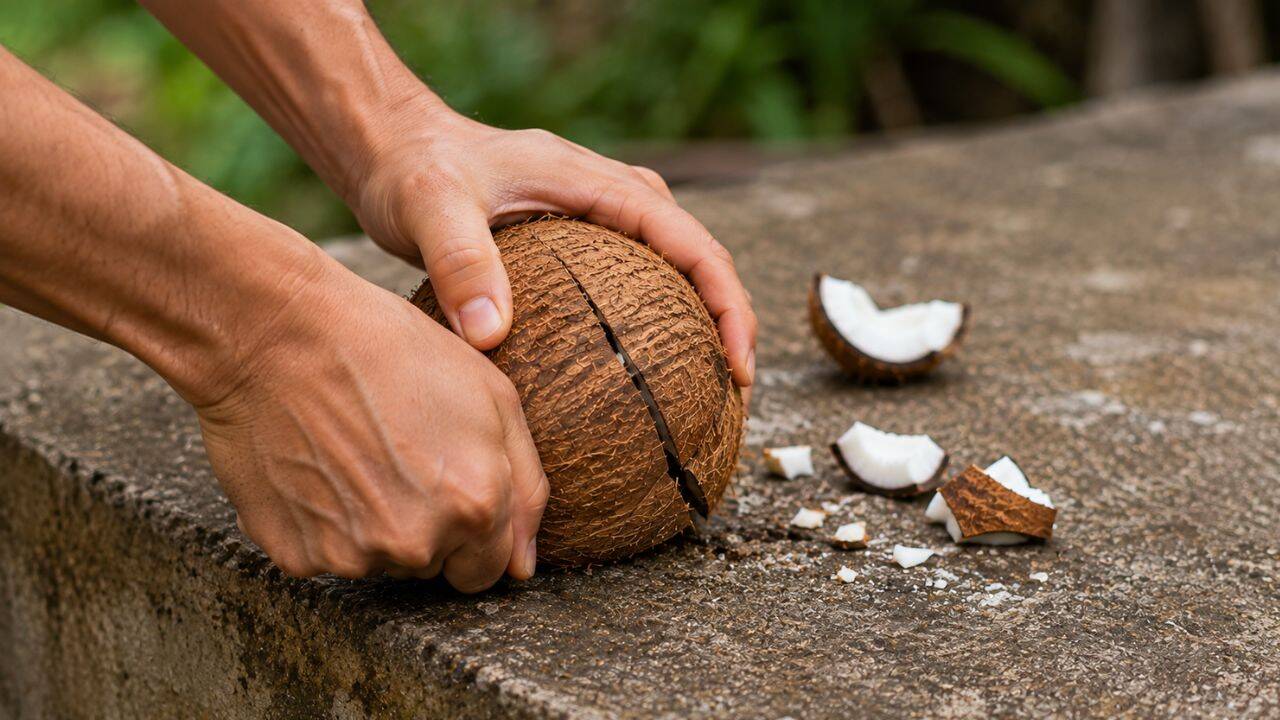
Use a hard outdoor surface ( PC: AI Generated)
5. Tap the coconut against a sturdy stone or doorstep
A solid, blunt surface can create the same kind of repeated impact as a hammer. Drain the coconut and wrap it in a thick towel first. Hold the towel-covered coconut firmly. Tap one section against a sturdy stone, concrete doorstep, or another surface that can withstand the impact. Rotate the coconut after each tap.The shell should gradually weaken until a crack appears. Avoid glass, delicate tiles, and fragile tops. They can break under heavy impact. An outdoor concrete surface is a better choice.Once the coconut cracks, place it on a stable surface. Separate the pieces carefully and watch for sharp shell edges. This method provides more control than simply throwing the coconut.