




People shop for groceries at a Wegman’s store in Brooklyn on July 13, 2026 in New York City.
Spencer Platt | Getty Images
Cooling inflation has also chilled some experts’ expectations for the 2027 Social Security cost-of-living adjustment, which may be between 3.7% and 3.8%, according to new estimates.
The Social Security COLA may be 3.7% in 2027, estimates Mary Johnson, an independent Social Security and Medicare analyst. That figure is one full percentage point below the 4.7% COLA for 2027 Johnson estimated last month.
“This is a significant drop in inflation, and one that we’ve rarely seen in the June CPI data over the past five years,” Johnson said in a statement.
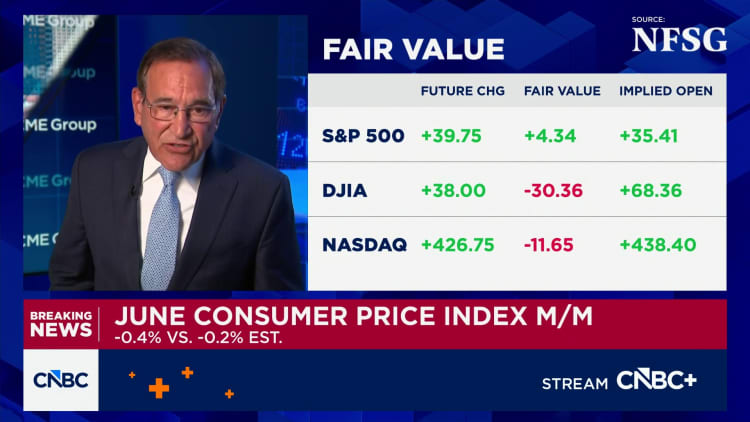
New government data released on Tuesday shows the consumer price index increased 3.5% over the past 12 months as of June. That was lower than expectations due to a decline in energy prices.

Meanwhile, the Senior Citizens League, a nonpartisan senior group, estimates the Social Security COLA for 2027 may be 3.8%, unchanged from its projection from last month.
To be sure, those estimates are subject to change. The official COLA for the following year is typically announced by the Social Security Administration in October.
Social Security benefits are adjusted annually through cost-of-living adjustments to help those monthly checks keep pace with inflation.
The annual COLA has averaged 3.1% over the past 10 years, according to the Social Security Administration. In 2026, more than 75 million Social Security and Supplemental Security Income beneficiaries saw a 2.8% increase to their benefits.
How Medicare premiums may change in 2027
Retirement confidence among retirees has declined, according to a January survey fielded by the Employee Benefit Research Institute, a nonprofit, nonpartisan research firm; and Greenwald Research, a research consulting firm.
Retirees’ confidence fell 5 percentage points to 73%, the survey, which included 1,045 individuals in retirement, found. Top worries included inflation, debt, healthcare costs, housing expenses and potential changes to the retirement system, according to the results. Two in five retirees said their healthcare costs have been higher than expected, the survey found.
One healthcare expense — standard premiums for Medicare Part B, which covers medically necessary and preventive services — may be $209.50 per month in 2027, according to estimates in the annual Medicare trustees report released in June. That is down from $202.90 per month in 2026 — a decline of $6.60 or 3.3%. Higher-income beneficiaries may pay additional surcharges.
“That’s relatively low,” Johnson said. “The average increase in Part B is usually about 5.4% per year, and that’s what it’s been over the past 10 years.”
The initial deductible for Medicare Part D, which covers prescription drugs, will be $700 in 2027, up from $615 in 2026, according to the trustees report. Meanwhile, the catastrophic threshold, or out-of-pocket spending limit, will be set at $2,400 next year, up from $2,100 in 2026. Those new thresholds have been finalized, according to the report.