



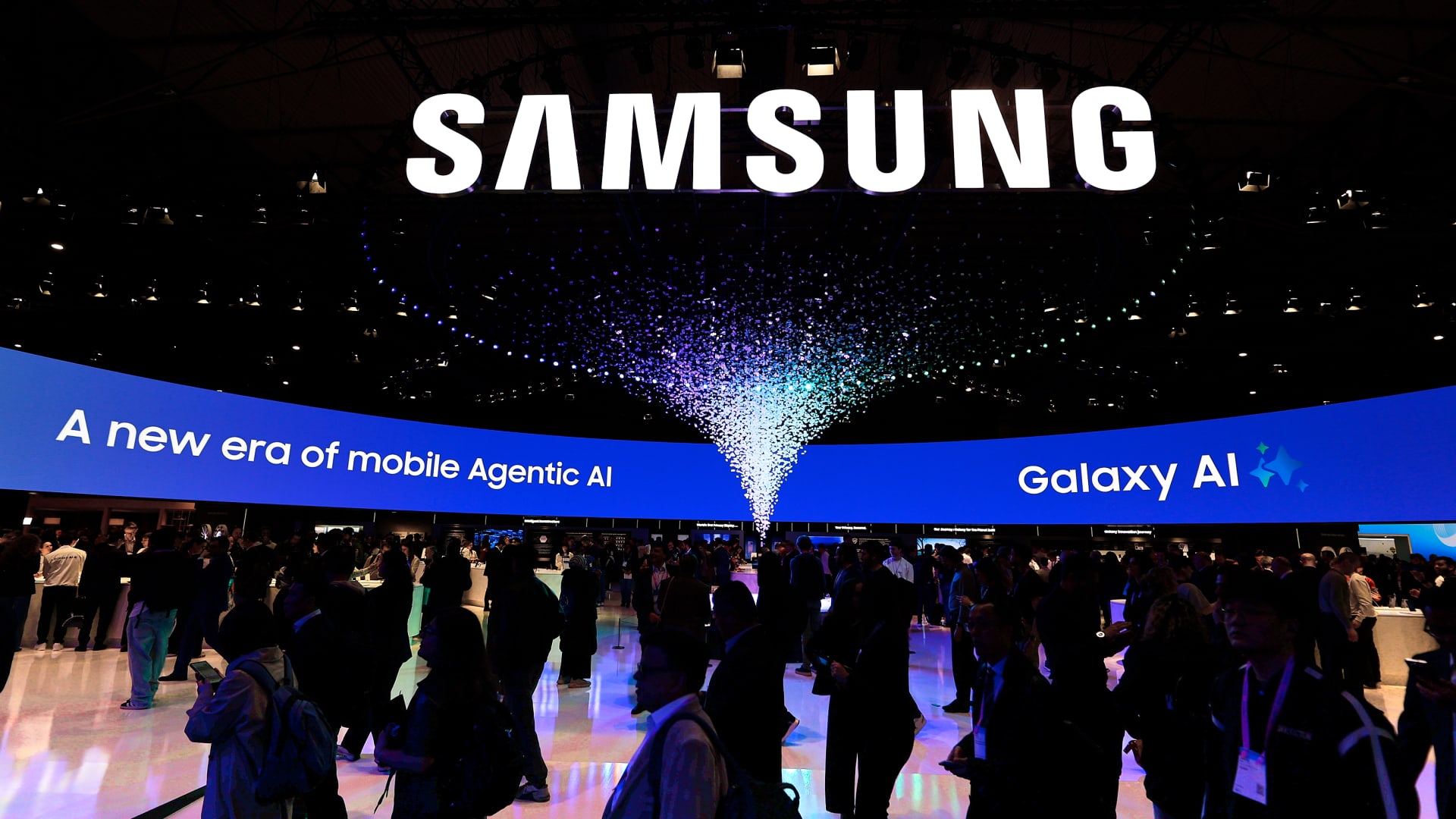
The Samsung exhibition stand features the prominent ”A new era of mobile agentic AI” slogan by the South Korean company Samsung Electronics.
Joan Cros | Nurphoto | Getty Images
Shares of Samsung SDS surged as much as 21.3% on Wednesday after global private equity firm KKR agreed to invest 1.22 trillion won ($820 million) of newly issued convertible bonds from the South Korean IT solutions and logistics provider.
The deal comes as technology companies ramp up spending on AI infrastructure and digital transformation, with Samsung SDS positioning itself to capture surging demand for artificial intelligence services.
Samsung SDS, part of Samsung Group and affiliate of Samsung Electronics, said in a statement that KKR will advise on mergers and acquisitions, capital allocation, artificial intelligence offerings and global expansion.
“Through this strategic collaboration, we will actively explore a wide range of growth opportunities, including M&A by leveraging KKR’s expertise accumulated in global capital markets,” Jun Hee Lee, President and CEO of Samsung SDS, said.
The proceeds will also accelerate Samsung SDS’s investments in AI infrastructure and strengthen its expansion as a full-stack AI solutions provider.
A full-stack AI solutions provider builds and delivers every part of an AI system — from the basic computers and data storage all the way to the ready-to-use AI tools that companies actually run their business on.
Samsung SDS also provides traditional cloud, digital transformation and logistics services to a global customer base across industries.
Shares of Samsung Electronics were trading up nearly 4% in South Korea on Wednesday, helped by a rally in U.S. technology stocks overnight.
“Against a backdrop of increasing demand for digital transformation and AI solutions, we have strong conviction in Samsung SDS’ market leadership and growth potential by playing a critical role in advancing Korea’s digital capabilities and infrastructure,” said Chung Ho Park, Partner and Head of Korea at KKR.
KKR said the investment will mainly come from its Asia Fund IV, and the transaction is expected to close in the second quarter.
— CNBC’s Justina Lee contributed to this report.