




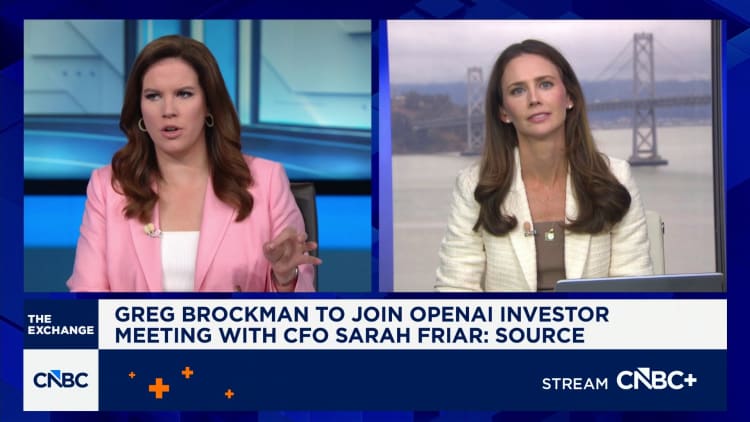
Sarah Friar, CFO of OpenAI, speaking on CNBC’s Squawk Box at the World Economic Forum in Davos, Switzerland on Jan. 21st, 2026.
Oscar Molina | CNBC
At the end of a week of turmoil in OpenAI’s C-suite, finance chief Sarah Friar held a meeting with investors on Friday, and touted the company’s growth in enterprise, which she said now accounts for more revenue than the ChatGPT-led consumer business.
“We entered the year at 60-40, but enterprise has accelerated much faster than expected and those lines have now crossed,” Friar said, according to a person who was in attendance but asked not to be named due to confidentiality. “The majority of our revenue is now enterprise.”
That puts OpenAI ahead of its previous forecast, as Friar told CNBC earlier this year that the company expected those businesses to reach parity by the end of 2026. OpenAI’s annualized revenue run rate has hit $40 billion, CNBC confirmed, after Bloomberg was first to report on the figure.
OpenAI’s run rate increased 20% month over month in July, and business customers “grew even faster,” up 32%, according to slides viewed by CNBC.
Friday’s meeting was planned before this week’s executive departures and was held with current shareholders, the person said. It came a day after revenue chief Denise Dresser stepped down just eight months into the job. Dresser spent more than a decade at Salesforce and was most recently CEO of Slack. She said in a LinkedIn post that she was leaving to pursue other opportunities.
Two days earlier, longtime executive Brad Lightcap said he was ending an eight-year stint at the ChatGPT creator to “start something new.”
Greg Brockman, OpenAI’s president and a co-founder, also joined Friday’s meeting, the person said. Brockman thanked Dresser for her contributions and for building the enterprise foundation, the source said, and expressed excitement at her replacement, Dali Rajic, who was operating chief at cybersecurity company Wiz, now owned by Google.
Rajic was introduced to OpenAI through Thrive founder Josh Kushner, according to a person with knowledge of the matter who asked not to be named because he wasn’t authorized to speak about the recruiting process.
The executives fielded questions about the rise of open-source Chinese models, the source in attendance said. Brockman brushed off the competitive threat, and said there’s a misunderstanding around open source being cheaper, the person said. Executives were also asked about IPO timing, and said they couldn’t talk about it due to the confidential SEC filing, the source added.
Friar emphasized revenue growth, and said that the company is adjusting to a change in customer behavior. The era of so-called tokenmaxxing is gone, meaning companies are no longer allowing employees to rack up huge AI bills without showing sufficient output.
“Enterprise customers have moved from tokenmaxxing to focusing on cost per unit of intelligence,” Friar said, according to the person at the meeting. She highlighted the newest model being “54% more efficient” on agentic coding tasks, and recent price reductions in the company’s suite of models.
Friar also said OpenAI “made great strides” in advertising, said the person, adding that advertising is approaching a $1 billion run rate. The company began testing ads in ChatGPT in February.
WATCH: OpenAI sees talent exodus