




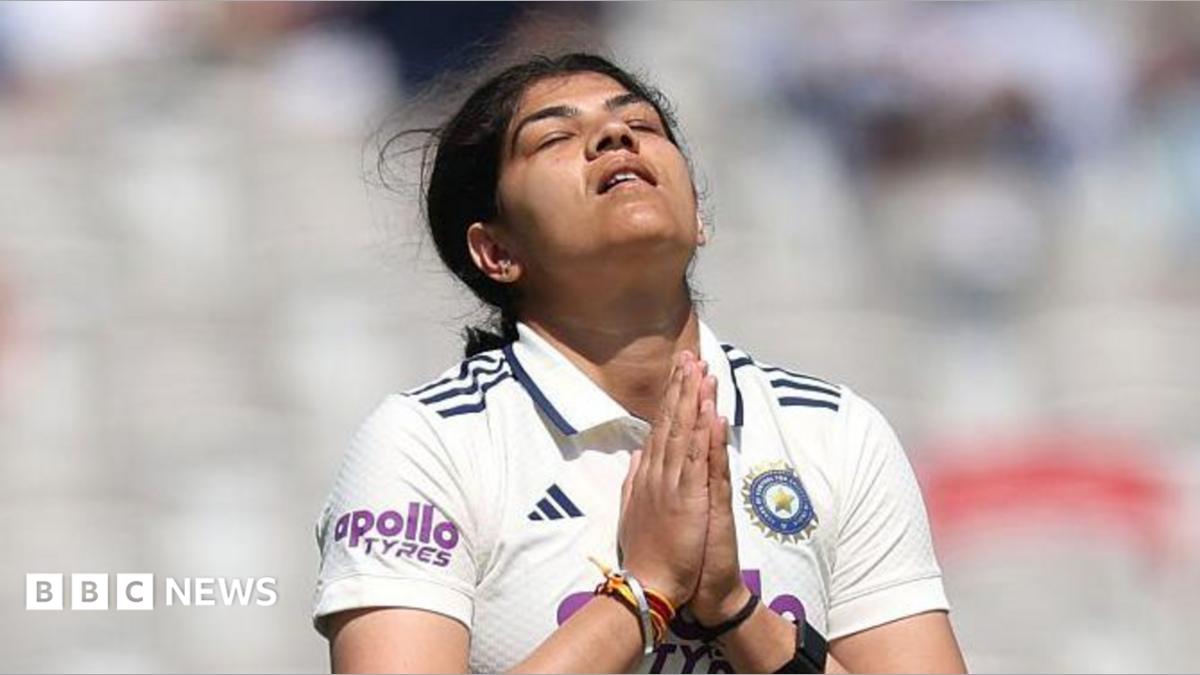
The 37-year-old was playing only the eighth Test of her 17-year-long international career, a reminder of the few opportunities her generation has had in the longest format.
At the pre-match press conference, she had reflected on what it meant to still be present for the occasion: “Maybe it’s late but not too late. Still I’m playing and still getting this opportunity to be part of this historic day.”
History was made in other ways too. The first women to earn places on Lord’s famed Honours Boards were Indians.
On Saturday, 22-year-old seam bowler Kranti Gaud became the first woman on the bowling board after taking five for 37 in England’s first innings. Gaud comes from Ghuwara, a small town in central India, and her mother once pawned her jewellery to buy one of her first cricket kits.
A day later, Yastika Bhatia, the left-handed batter from Vadodara, another small town in western India, followed. Her confident 113, the first international century of her career, made her the first woman to score a Test hundred at Lord’s and placed her on the batting board.
Yet, in her own moment of history, Bhatia looked back at those who made it possible.
“I think they [the pioneers of women’s cricket in India] have done an invaluable contribution because Test cricket is, like you said, [been going on for] 50 years,” Yastika said at the post-play press conference.
“Their contribution has inspired us to take up cricket and to perform the way we are doing today, so their role is very crucial and they have laid the foundation,” she said.
She added that the pioneers of women’s cricket in India hadn’t received the recognition they deserved.
“So we should now take a moment to thank them for their contribution and what they have done for Indian cricket, for world cricket, and inspired so many young cricketers,” Bhatia said.