



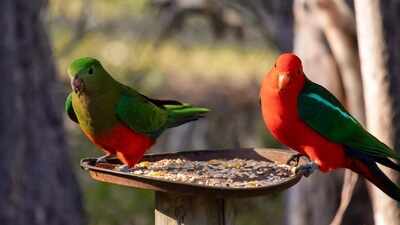
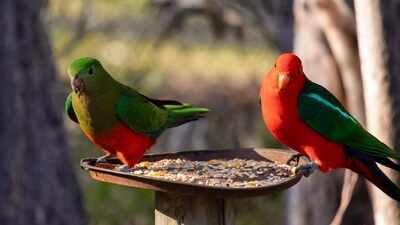
Feeding birds in your backyard may seem like a harmless way to connect with nature. But amid Australia’s growing H5 bird flu outbreak, experts are raising concerns that bird feeders could unintentionally create places where the virus spreads more easily among wildlife. According to a report by, ScienceDaily researchers warn that backyard bird-feeding can lead to disease being passed on from one species to another since the birds that would not necessarily have interacted with each other are now forced to share the same space.
Why bird feeders could lead to disease outbreaks
Birds that would have searched distant parts of the forest for sustenance and potentially interacted with a range of other animals are instead brought together at a single location where they have to compete for the available food.This is especially concerning for the H5N1 strain of the virus, which is highly contagious and can lead to deadly infections in both birds and mammals. According to the authorities, the H5 bird flu has been detected in wildlife in several states, with 341 positive wildlife surveillance events across the country as of 26 August.This includes the first recorded case of H5N1 detection in a mainland Australian mammal, with the long-nosed fur seal in South Australia testing positive for the virus.
Wildlife is at much greater risk than the general public
Although the general public does not face any significant risk from the H5N1 virus, the situation is much more serious for Australia’s wildlife.The infected birds can pass the virus to other birds, especially since the virus can survive in the environment for a long time, and potentially to scavengers that interact with the remains of animals that had succumbed to the infection.According to BirdLife Australia, the H5 strain of the virus poses an especially significant threat to the local wildlife, with the rate of extinction of Australian birds already being alarmingly high.
Should backyard bird-feeding be stopped?
The official advice to the Australian public is to avoid supplementary feeding of wild birds, as it creates the conditions for disease outbreaks. If people want to encourage birds to visit their gardens, they should consider growing native plants instead of using bird feeders.Those that wish to continue feeding birds are advised to only offer limited amounts of food so as to not create a congregation. Likewise, direct hand-feeding should be avoided, as it exposes people to a much greater risk.Additionally, bird feeders should be kept clean in order to avoid disease transmission facilitated by the accumulation of animal matter around them.Also read:Put a towel under your cutting board: The tiny kitchen trick that makes chopping saferTurn an empty tissue box into a plastic-bag dispenser: A clever clutter solution
What to do if I find sick or dead birds?
In the case that a person discovers a number of sick or dead birds, they should not attempt to handle them or allow their children or pets to interact with them. For the birdwatchers among us, this serves as an important reminder that sometimes leaving well enough alone is the best way to contribute to conservation efforts. After all, while a small gesture of good will on the part of the birdwatcher might seem like it could not hurt anything, a crowded feeder in the times of a rampant disease outbreak can lead to hundreds of birds getting infected.Disclaimer: This article is for general informational purposes and is based on available research and expert guidance. It is not intended as medical or veterinary advice.