




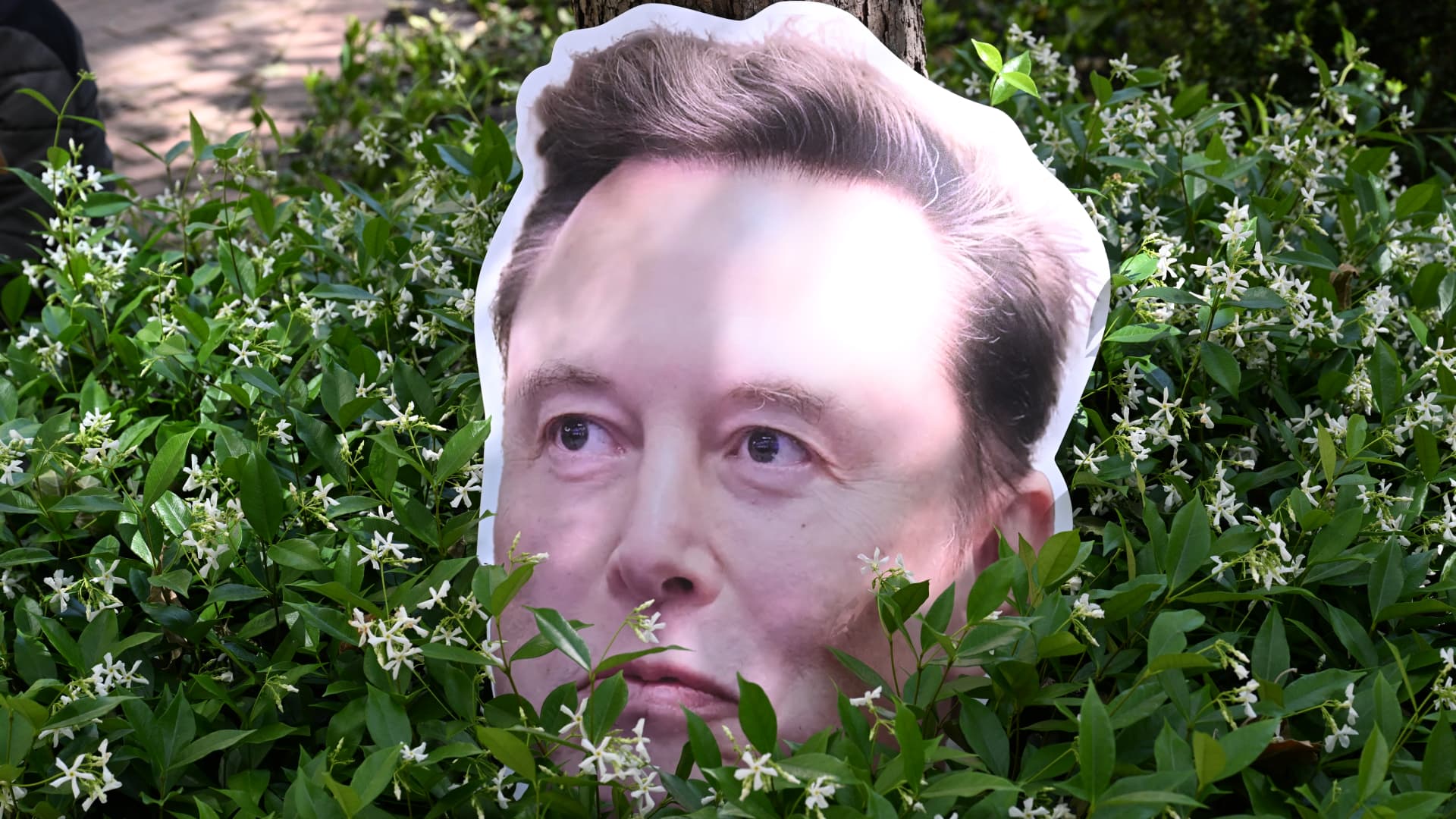
An Elon Musk sign sits in a bush the federal courthouse during proceedings in the trial over Elon Musk’s lawsuit against OpenAI in Oakland, California, on April 30, 2026.
Josh Edelson | AFP | Getty Images
A progressive wing of the Democratic Party in Delaware is endorsing primary opponents to six incumbent Democratic state lawmakers who pushed for a change to the state’s corporate law that benefits executives and billionaires, including Elon Musk and Mark Zuckerberg, who have faced shareholder litigation in the state.
The Delaware Working Families Party told CNBC exclusively that it is endorsing six Democratic candidates in primaries against fellow Democratic incumbents who supported SB 21. The measure became law in 2025 and was dubbed the “billionaires bill” by opponents. The law altered how companies can use independent directors and other officials to ensure deals they’ve made will pass muster in court, and it limited the records shareholders can obtain from companies when investigating possible wrongdoing.
Before the bill became law, many institutional investors, legal scholars and shareholders’ attorneys opposed it, arguing it would harm minority shareholders and allow boards and executives to make decisions based on their own interests rather than for the broader investor base.
Musk, whose record $56 billion pay package was in legal limbo in Delaware, relocated Tesla’s incorporation out of state during the spat. Many other businesses considered similar moves, spooking the state’s lawmakers, as Delaware, despite being a heavily Democratic state, has long been viewed as a haven for business.
The Working Families Party, prominent in New York politics and expanding in other states, said the endorsements are part of its effort to move Delaware “more in the direction of working class people.”
“We want to make sure that people know the effects that this bill has had and is going to have on hurting accountability for corporations and basically handing Elon Musk $55 billion when he was in the process … of gutting federal agencies that are saving millions of lives overseas and also laying off a bunch of Delawareans here at home,” Karl Stomberg, Delaware state director for the Working Families Party, told CNBC.
Musk last year was leading the Department of Government Efficiency, or DOGE, a White House effort to slash spending that upended numerous government agencies and laid off troves of federal workers.
A Delaware corporate firm that has represented Musk had a hand in drafting the bill, as CNBC previously reported.
Specifically, the WFP is endorsing four candidates for the state House of Representatives and two candidates for the state Senate. All are running in primaries against incumbent Democrats.
It’s endorsing Shané Darby, who is taking on Rep. Nnamdi Chukwuocha; Rae Krantz, who is running against Rep. Debra Heffernan; Pamela Salaam who is running against Rep. Frank Cooke; Will Imbrie-Moore over Rep. Kim Williams; Adriana Bohm over Sen. Dan Cruce, and Shay Frisby in her race against Sen. Ray Seigfried.
Musk’s pay package was eventually restored by the Delaware Supreme Court. The state supreme court’s decision, however, did not hinge on SB21.
Delaware Democrats who supported the corporate law rewrite, including Gov. Matt Meyer, contended they did not change the law to pay Musk.
“The law changed, because when I came in as governor, we had to make sure that our jurisprudence, that our corporate law … remained predictable, clear and fair,” Meyer said on CNBC’s “Squawk Box” last year.
Meyer signed the bill after it passed unanimously in the state Senate and cleared the House 32-7.
Delaware’s billionaire-friendly approach is different from what California voters may consider on the ballot in November. California’s Billionaire Tax Act would impose a one-time tax of 5% on the total wealth of California tax residents whose net worth is $1 billion or more. Unlike Delaware, which addressed corporate domicile, California’s proposal would address personal residency.
— CNBC’s Lora Kolodny contributed to this article.
Correction: An earlier version of this story misspelled Karl Stomberg’s name.