




“Back then, a lot of people cut down their rubber trees or oil palms to grow durians. A lot of the trees [planted then] are now starting to bear fruit,” says Lu Yuee Thing, the owner of several durian farms near the Malaysian town of Raub.
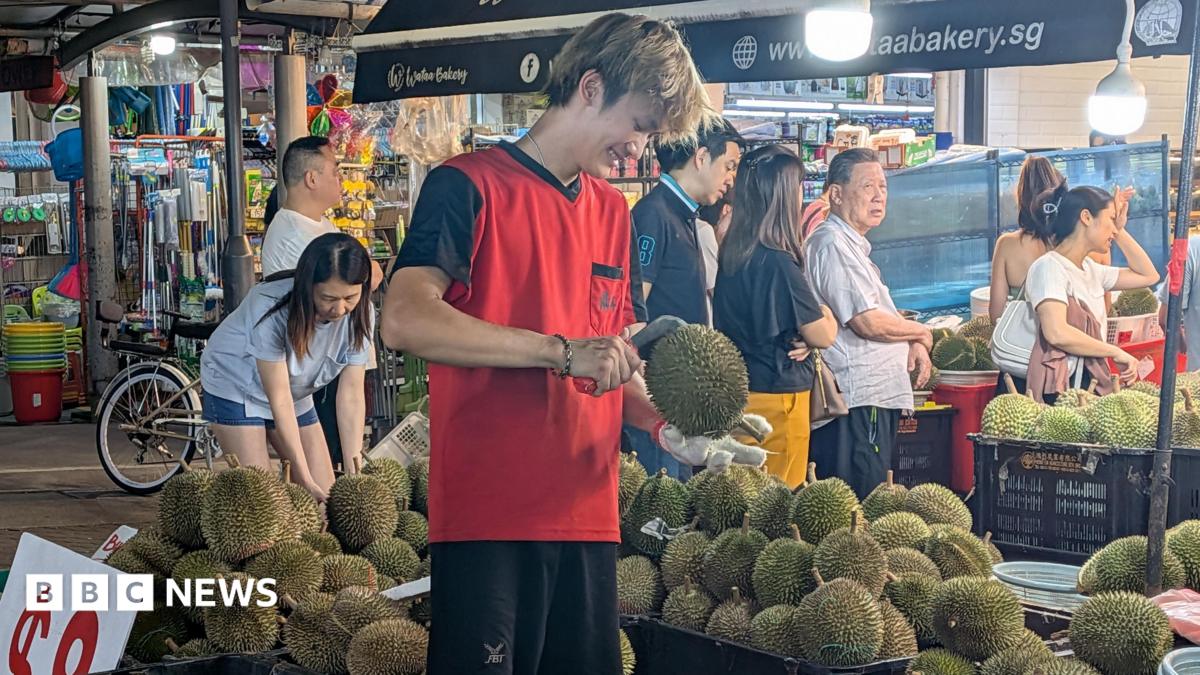
Over the last decade, Malaysia’s durian exports, to China in particular, have soared, driven mainly by prized varieties like the Musang King – a buttery, bittersweet fruit largely grown in Raub that the Chinese have dubbed the “Hermès of durians”.
As Musang King gained popularity, “a lot of people got into Musang King [farming]”, says Lee Wah Chong, who runs a luxury resort and durian farm in Malacca.
The trees in the newer farms have reached maturity around the same time, resulting in a glut that has depressed prices across the Malaysian durian market and impacted exports.
Last December, Lu sold his Musang King durians to retailers at an average of 13.50 ringgit ($3.30). This month, Lu says he can only sell them for half the price.
Han says he has slashed prices for his Musang Kings by nearly a third, offering them to customers for 50 ringgit per kilogram.
“The market pressure is too high for me,” he says, adding that he is now trying to make up for lost profits with other fruit he grows, such as bananas.
Some farmers also say they are competing against lower quality yields. Lee says that “although young trees are producing durian, the quality is not consistent”.
This sentiment is shared by Han Sing Keng, a durian farmer and seller in Malaysia’s Johor state, who says many of the durians flooding the market at throwaway prices are “not qualified for export”.
“They don’t have any other way to sell it,” he says. “The name is still Musang King, but the quality is not up to standard.”