



The Rise of Software-Defined Hydrogen Vehicles

The automotive industry has spent the past decade debating propulsion. Batteries versus hydrogen has dominated boardrooms, policy frameworks, and investment strategies. Yet this framing is increasingly incomplete. The defining shift in mobility is no longer about what powers the vehicle, but how that power is managed, optimised, and continuously improved through software. As electrification matures,…
Read More

SDVs with Green Software Engineering

Software Defined Vehicles represents a fundamental shift where a car’s features and functions are primarily enabled through software and is playing a vital role in advancing support to align with goals from the United States Department of Energy (US DOE). In the view of Green Software Engineering, the US DOE looks at Software Defined Vehicle…

Read More

Redefining Architecture in SDVs

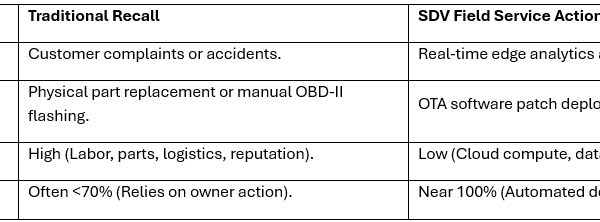
The automotive industry is currently navigating its most significant pivot since the assembly line: the transition from hardware-centric machines to Software-Defined Vehicles (SDVs).  In the traditional automotive world, a “Field Service Action” (FSA) was a heavy-handed logistical maneuver considered as a failure of hardware distribution. If a brake controller logic was flawed, the “fix” was…

Read More

Managing Semiconductor Obsolescence in ECUs

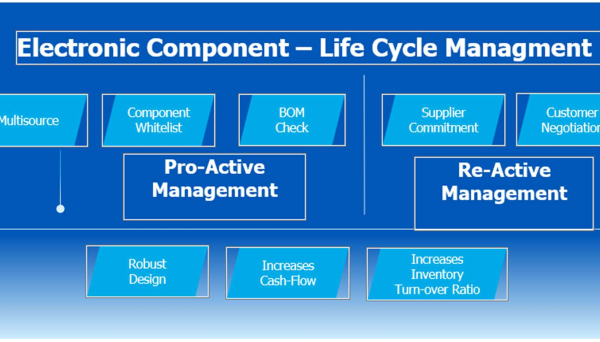
The modern automobile is no longer just a mechanical marvel, it is a distributed computing platform on wheels. Today’s vehicles contain upward of 80 to 150 electronic control units (ECUs), each embedded with hundreds of semiconductor devices. These chips manage everything from braking and steering to infotainment, driver assistance, and battery management. As the industry…

Read More

20 Voices in Automotive Cybersecurity

Automotive IQ recently announced the Top 20 Voices in Automotive Cybersecurity 2026 – a list celebrating the leaders who are shaping the future of cyber resilience across the global automotive ecosystem. During the selection process, we asked our Top 20 Voices three important questions: What emerging cybersecurity technology or capability do you believe will…

Read More

Three Key Partnerships for Cyber Resilience

More than a decade ago, the attack on Ukraine’s energy grid felt like a surprising watershed, proof that cyber operators could reach through keyboards to shut off the lights. This marked a shift into a new phase of geopolitical conflict: one defined by cyber-attacks manifesting physical world effects, particularly against critical infrastructure. Since 2015, there…

Read More

Cost Reduction Across The Electric Powertrain

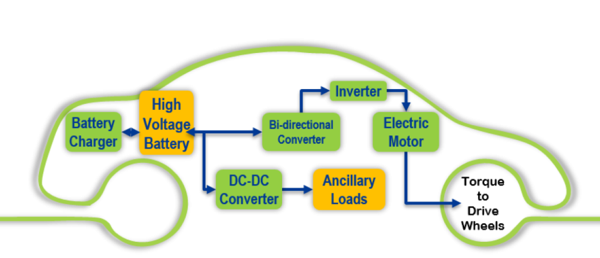
Manufacturers managing to hold their margins intact in the electric powertrain market are focusing on two key strategies. Firstly, they’re rethinking the electric powertrain as a cohesive system to cut down on materials, interfaces, and assembly steps. Secondly, they’re ramping up production with modular, scalable subsystems that can be used across different platforms and plants….

Read More

Quantitative Analysis of Vulnerabilities for SDVs

Executive Summary The evolution of Software-Defined Vehicles (SDVs) toward continuous delivery has transformed the Over-the-Air (OTA) update pipeline from a convenient feature into a critical component of vehicle safety and security. This analysis quantifies where vulnerabilities actually concentrate in modern OTA systems, revealing that the greatest risk lies not within the vehicle’s embedded systems, but…

Read More