



Bangladeshi analysts further point out that the alleged inflammatory comments against Bangladesh during India’s West Bengal state elections by Hindu-nationalist politicians are sending mixed signals to Dhaka.
“All these things got high visibility and created public dissatisfaction in Bangladesh which in a way reflected on Dhaka’s thinking process,” says Humayun Kabir, a former Bangladeshi diplomat.
“The Bangladeshi government didn’t look at these issues or positive indications,” he adds.
In May, the Hindu nationalist BJP ousted the regional Trinamool Congress in West Bengal, ending its nearly 16-year rule in the Bangladesh-bordering state. West Bengal and Bangladesh share linguistic, cultural and ethnic ties.
Any Chinese role in managing the Teesta River is a sensitive security issue for India.
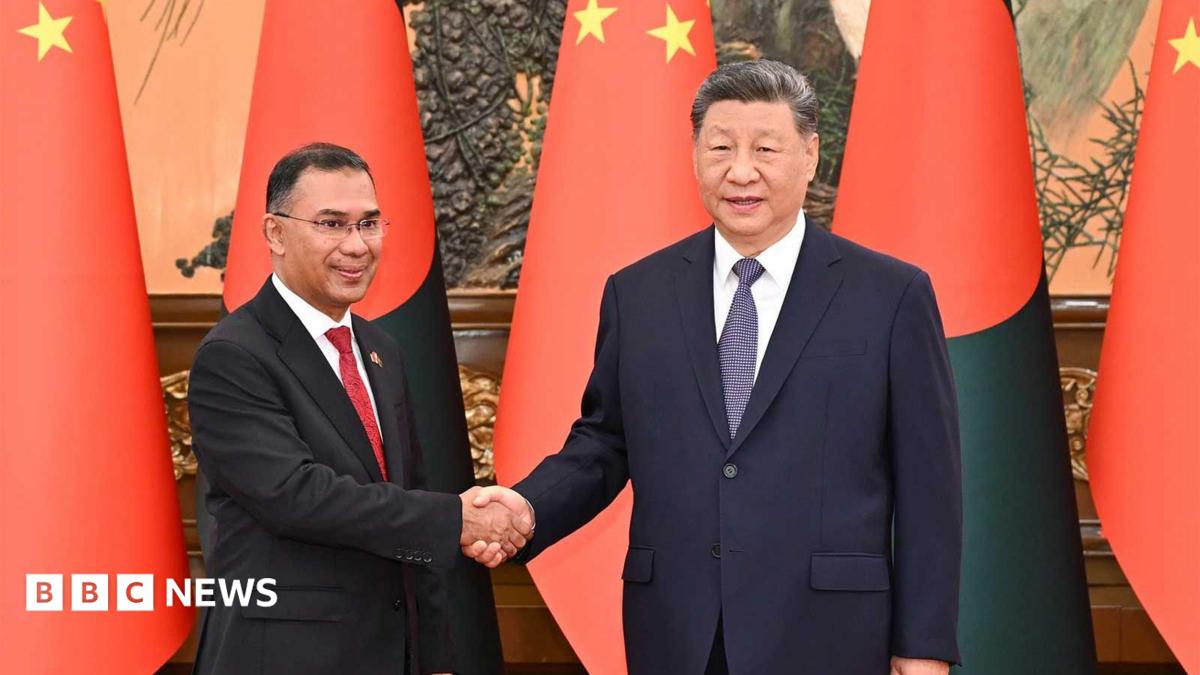
The river is shared by India and Bangladesh, whose efforts to reach a water-sharing agreement have stalled for years. During Rahman’s visit to Beijing, Bangladesh said the two sides agreed to conduct a joint technical feasibility study on managing the river.
Experts say the river needs dredging, desilting and measures to restore its flow for agriculture.
“Any Chinese involvement in any project close to our border will always be a matter of concern. So, we would certainly not welcome that at all,” Saran says.
India and China have a decades-long border dispute. A brief war in 1962 ended in a humiliating defeat for India, and more recent border clashes have claimed lives on both sides.
Any Chinese role in the project would bring it closer to the strategically vital Siliguri Corridor, or “Chicken’s Neck” – the 22km (14-mile) strip linking India’s mainland to its seven north-eastern states.
Bangladeshi officials say previous governments also invited India to join the Teesta project, but Delhi took too long to decide. They argue China has the expertise and financial resources to deliver a project of this scale.
Beijing has stepped in to allay India’s concerns.
“I would like to stress that China-Bangladesh cooperation does not target any third party and should be free from third party influence,” Chinese Foreign Ministry Spokesperson Guo Jiakun told reporters in Beijing during Rahman’s recent visit.
China is already Bangladesh’s biggest defence supplier, accounting for more than 70% of its arms imports. Dhaka also owes Beijing more than $6bn (£4.5bn).
During Rahman’s visit, China also offered to develop the China-Myanmar-Bangladesh Economic Corridor – connecting China’s Yunnan province to the two countries.
India has long viewed South Asia as its sphere of influence, but China has steadily expanded its footprint in Bangladesh, Sri Lanka and the Maldives.
India’s efforts to rebuild ties with Bangladesh’s new government are complicated by the continued presence in Delhi of deposed prime minister Sheikh Hasina, whose extradition Dhaka has sought.
Hasina was convicted in absentia of crimes against humanity over a crackdown on student-led protests that left hundreds dead. She denied the charges and was sentenced to death by a special tribunal last year.
“As long as Hasina is in Delhi, it may be somewhat difficult politically for Rahman to come to India,” says Saran.
But some experts say Rahman may still visit Delhi as India remains too important a neighbour – economically and strategically – for Dhaka to ignore.
India, too, knows that stable ties with Bangladesh are vital to security in its north-east, where several ethnic separatist groups operate.
For Rahman, balancing Dhaka’s ties with the two regional powers is going to be a delicate diplomatic balancing act.
Follow BBC News India on Instagram, external, YouTube,, external Twitter, external and Facebook, external.