
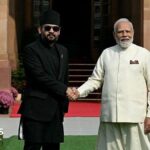






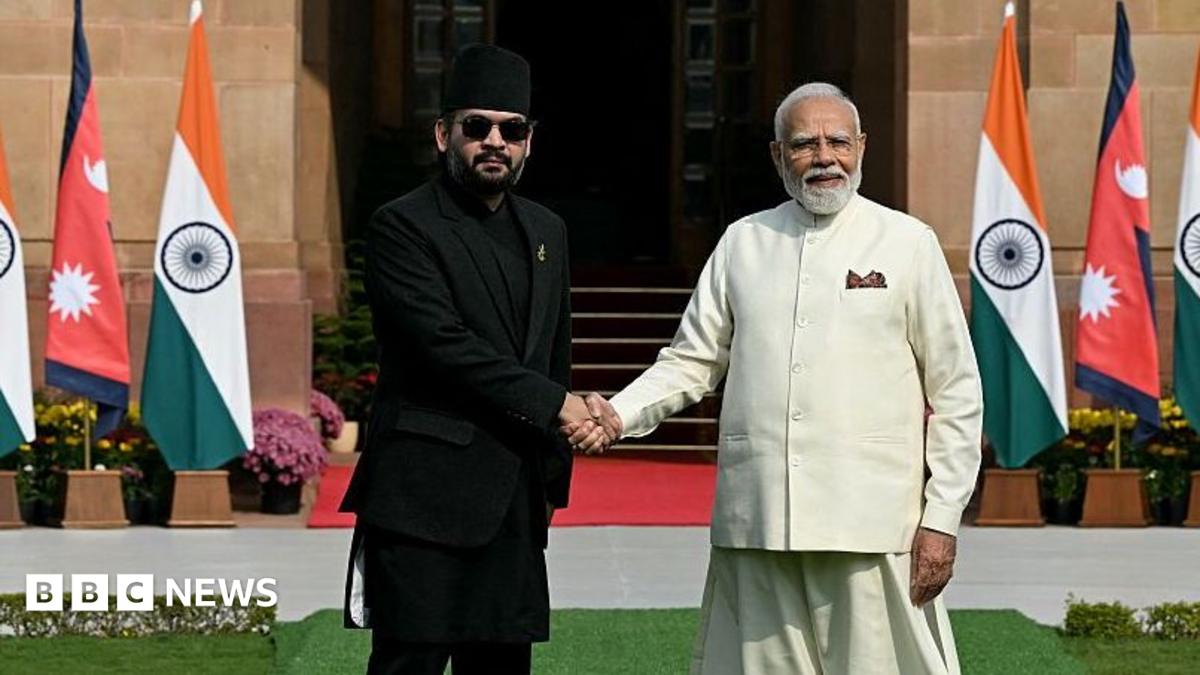
A Hindu-majority nation wedged between India and China, Nepal has long had to navigate competing interests from its two giant neighbours. Allegations of political interference and an unresolved border dispute have frequently complicated ties with India.
Nepal’s former Prime Minister, KP Sharma Oli, who leads a communist party, was widely viewed as being closer to China. Shah, by contrast, emerged as a political outsider when he was elected earlier this year. The former rapper, then 35, led a party that was only four years old.
His new approach of dealing with India may explain why the border dispute was largely absent from the leaders’ public remarks, although the joint statement acknowledged that outstanding issues remained.
According to Govind Pokharel, a former vice-chairman of Nepal’s National Planning Commission, Shah’s government may have chosen to set contentious issues aside in order to secure progress on more immediate development needs.
“Right now you can go home and convince the young Nepalis that it will be handled later,” Pokhrel says, “but if they don’t deal with these issues in the future, there will be criticism.”
Veteran Indian diplomat Anil Trigunayat says both sides appear to have opted to leave the dispute to established mechanisms rather than engage in what he calls “cartographic aggressions”.
There were other gains for Nepal as a result of the Delhi visit.
As a landlocked country heavily dependent on India for trade, Nepal secured access to two additional Indian ports, Kandla and Paradip. The two sides also agreed to improve road and rail connectivity.
The leaders jointly inaugurated a train service linking Ayodhya in India, revered by Hindus as the birthplace of Lord Ram, with Janakpur in Nepal, traditionally regarded as the birthplace of his wife Sita.
There was, however, disappointment on aviation.
Nepal has long sought greater access to Indian airspace in order to attract international traffic to its airports at Bhairahawa and Pokhara.
Some analysts believe the lack of an agreement reflects Indian concerns over Chinese involvement in the two airport projects.
“The airport in Pokhara can pose certain security challenges for India, so it is a more complicated issue to resolve,” says Trigunayat.
India did, however, agree to make an existing air route linking Kathmandu, Bhairahawa and Lucknow bidirectional.
“Nepal invested a huge amount of money in those airports,” says Pokharel. “It fell short of expectations, but the bidirectional route is a breakthrough.”
Shah must now manage relations with China as he seeks to balance the interests of Nepal’s two much larger neighbours.
For now he returns home with substantial financial commitments from India as Nepal continues the long task of rebuilding.