


This is CNBC’s Morning Squawk newsletter. Subscribe here to receive future editions in your inbox.
Happy Friday. I’m running the Detroit Marathon on Sunday, so I’m especially grateful to see that, unlike recent weekends, there’s no inclement weather in the forecast.
Some programming news: I’m moving to a new reporting assignment at CNBC, which means this is my last edition as the writer of Morning Squawk. It’s been a pleasure getting to recap the biggest stories with you over the last 16 months. There’s certainly been no shortage of news.
Rest assured, Morning Squawk will continue to arrive in your inbox as expected every weekday. I’ll leave you with a cliffhanger: To find out who takes the helm, you’ll have to open their first edition on Monday.
Stock futures are little changed this morning. Wall Street had a positive day yesterday.
Here are five key things investors need to know to start the trading day:
1. Market intelligence
Panida Wijitpanya | Istock | Getty Images
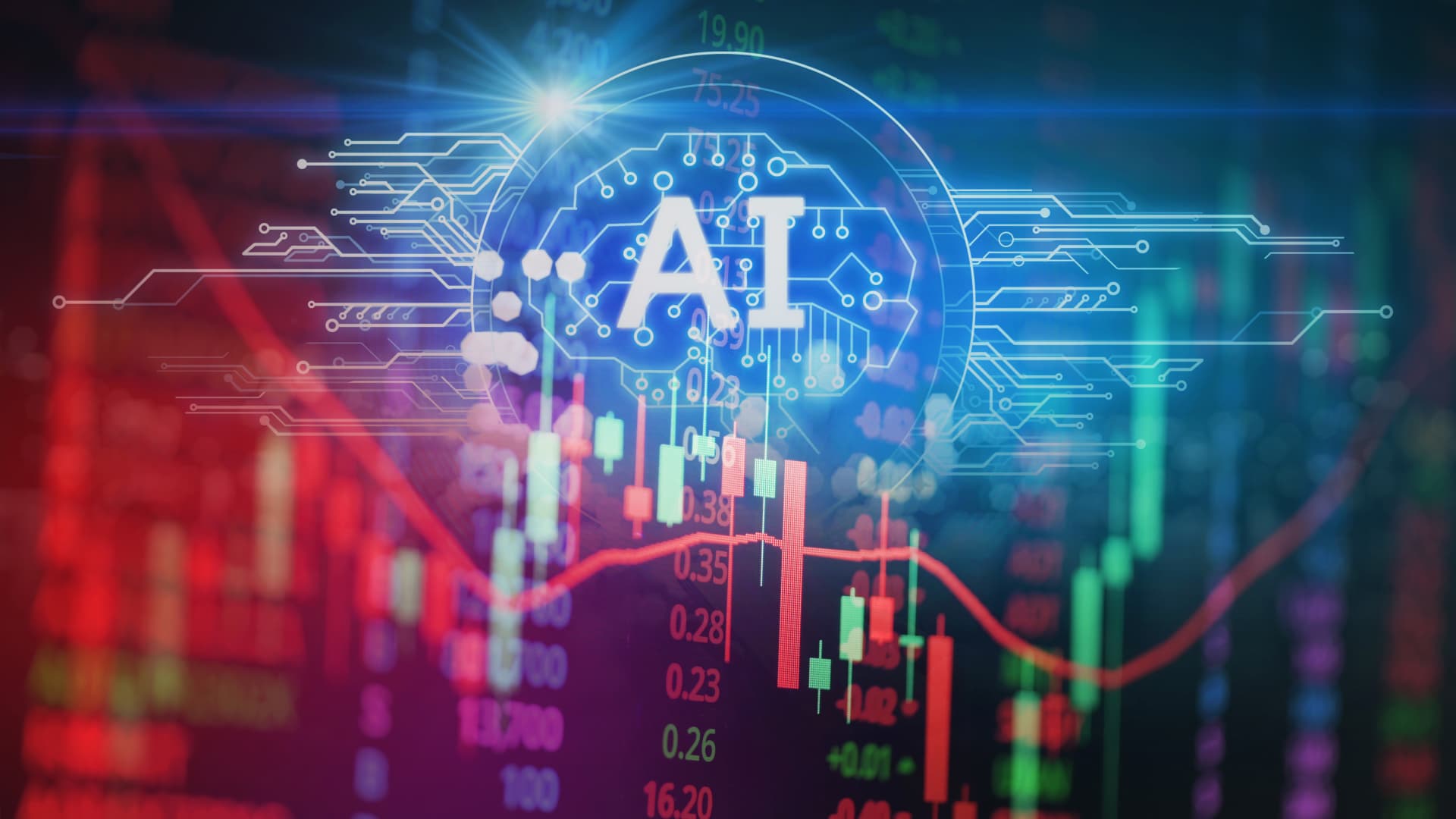
On the surface, the major averages logged a winning session yesterday, each breaking two-day losing streaks. But the story was more complicated under the hood, as concerns about artificial intelligence costs continued to plague the technology sector.
Here’s what to know:
2. Speed limit
Tesla unveils its long-delayed Roadster nearly a decade after first revealing a next-generation version of its original electric sports car, at a launch event in Waco, Texas, US, on October 15, 2026, in this still image taken from a handout video.
Tesla | Via Reuters
Nearly a decade after the company began collecting deposits for the electric sports car, Tesla last night finally revealed its next-generation Roadster. A prototype of the two-seater vehicle showcased its capabilities at a livestreamed event in Texas: It clung to a ramp upside down, flipped in mid-air and hovered above the ground.
While it certainly generated a lot of buzz among Elon Musk fans, the Roadster is expected to be a high-end, low-volume model. Musk said the car would enter production in 2028 and didn’t give a price tag. He also said the Roadster, which doesn’t have Tesla’s automated driving system, would be the company’s last vehicle intended to be controlled by a human driver.
As CNBC’s Lora Kolodny notes, the new version faced years of delays after first being announced in 2017. Reservations for the improved Roadster reopened in recent weeks, allowing potential buyers from the U.S., China and Canada to put down $50,000.
3. Forecasting heat
A woman shops for food items from a wholesale retailer in Alhambra, California on August 11, 2026.
Frederic J. Brown | Afp | Getty Images
Another day, another hot inflation report. The producer price index released Thursday recorded its highest monthly and annual increases since 2022. As expected, energy costs drove the index higher amid the Iran war, and there are signs that energy-related costs are spilling over into other categories.
As CNBC’s Steve Liesman writes, the data signals the Federal Reserve has more work to do to combat inflation. Economists now expect the core personal consumption expenditures price index — the Fed’s favored inflation gauge — to rise when it’s released later this month.
Fed Chairman Kevin Warsh avoided giving any signal as to whether the central bank will hike rates again before the end of the year, saying in a speech in Bangkok late last night that he doesn’t “prejudge meetings.” Traders took his comments as a sign that the Fed is likely to hold rates steady at its next meeting later this month.
4. Muse, meet Mac
An iMac Pro computer in an Apple store.
Zhang Peng | LightRocket | Getty Images
Apple and Meta are teaming up. The tech giants announced yesterday that developers will be able to run Meta’s new open-weight AI model, Muse Spark, locally on Apple’s pricier Mac models.
The collaboration between the two companies, which have in the past avoided public partnerships, is a sign that the AI boom has caused somewhat of a sea change in Silicon Valley alliances.
Meta CEO Mark Zuckerberg and Apple CEO John Ternus both promoted the collaboration on social media. Representatives from both companies declined to say if it could be the start of a broader relationship.
5. Traveling
People walk past a signage of Nike logo in a famous shopping hub in Bangalore, India.
Indranil Aditya | Nurphoto | Getty Images
As Nike tries to turn around its business, it’s looking to India for a boost.
The athletic retailer announced this month that it’s creating a new global campus in the city of Bengaluru that’s expected to open in the next few years. CEO Elliott Hill told employees that the new facility represents a “long-term investment” in what he called “an important growth market and manufacturing hub for Nike.” The retailer plans to discuss the India campus further at its investor day next month.
As CNBC’s Laya Neelakandan notes, the push further into India comes as Nike struggles in China, another major international market. As a whole, the company is in the midst of a quarters-long slump in business.
The Daily Dividend
Here are some stories we recommend for the weekend:
— CNBC’s Kai Nicol-Schwarz, Lee Ying Shan, Sawdah Bhaimiya, Sean Conlon, Steve Liesman, Lora Kolodny, Anniek Bao, Kif Leswing, Jonathan Vanian and Laya Neelakandan contributed to this report.
Caleigh Keating assisted in the production of this newsletter. Josephine Rozzelle edited this edition.