




A shopper browses near ‘Sale’ signs in the meats section of a grocery store. According to a new Guardian poll, 95 percent of Americans think that the United States is in the midst of an affordability crisis with many reporting trouble affording necessities like gas and groceries.
Mario Tama | Getty Images News | Getty Images
Millions of Social Security beneficiaries may see a larger than average cost-of-living adjustment in 2027, according to experts’ estimates.
The Social Security Administration is expected to announce the COLA for 2027 on Wednesday with the release of new government inflation data. Social Security experts estimate that the COLA may raise benefits by 3.5% to 3.6% next year, which would be the largest increase in three years.
Yet, even with an above-average increase, beneficiaries may still struggle to cover everyday costs.
More than three-quarters of adults 50 years and older — 76% — said they do not think a projected 3.5% Social Security cost-of-living adjustment for 2027 would be enough, according to an AARP survey published Monday. The poll of 1,023 adults ages 50-plus was fielded between Sept. 17 and 21. The survey had a 4.25% margin of error.
“I would love it if the cost-of-living increase was more generous,” said Donna Dalrymple, a 70-year-old retiree in Manchester, New Hampshire.
Dalrymple retired at age 65 following a cancer diagnosis, she said, which prompted her to claim Social Security benefits and start 401(k) withdrawals five years earlier than she had planned. Today, she worries that other rising costs, particularly those for Medicare, may outpace the annual Social Security benefit increase, she said.
Cost-of-living adjustments have averaged about 3.1% over the past decade, according to the Social Security Administration.
In September, estimates showed the Social Security COLA may be the highest in three years.
The Senior Citizens League, a nonpartisan senior advocacy group, and Mary Johnson, an independent Social Security and Medicare policy analyst, both forecast a 3.5% COLA for 2027. Meanwhile, the AARP forecasts a 3.6% increase to benefits.
The last time beneficiaries saw a larger increase was in 2023, when the COLA jumped to 8.7% — the highest in four decades — as a result of soaring inflation. In 2022, beneficiaries saw a 5.9% increase as the inflation rate began to climb.
In 2026, Social Security beneficiaries received a 2.8% boost to their benefits.
A 3.5% Social Security cost-of-living adjustment for 2027 would increase the average benefit check by $67.90 per month — to around $2,008 per month from $1,940 — according to the Senior Citizens League.
How COLA may differ from estimates
AARP’s recent survey found that 7 in 10 adults ages 50-plus said an increase between 5% and 8% would be sufficient to help keep up with the daily cost of living.
The official Social Security COLA announcement expected Wednesday may differ from September’s estimates, since it will include an additional month of inflation data.
A “very stiff jump in inflation” could push the Social Security COLA to 3.6%, Johnson said. But if inflation comes in lower than expected, the COLA may be 3.4%, she said.
Social Security’s cost-of-living adjustment is automatically applied to benefits to help keep pace with inflation.

Since 1975, COLAs have been calculated annually for both Social Security and Supplemental Security Income, or SSI, benefits. However, in some years when there was little to no inflation, the COLAs have been zero.
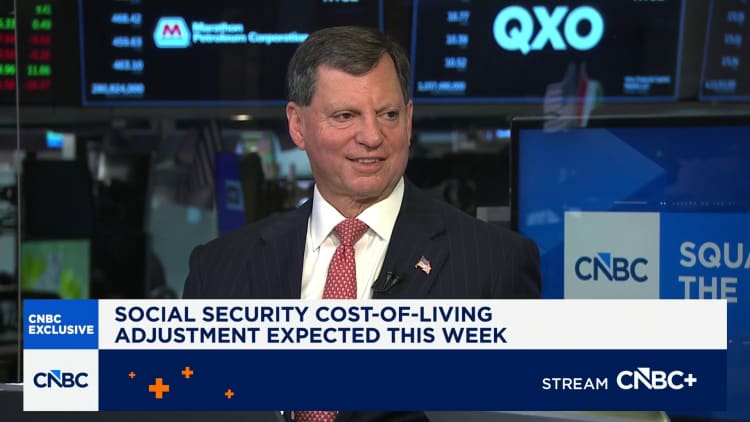
“People are very, very grateful for it, and they look forward to it,” Social Security Administration Commissioner Frank Bisignano said Monday of the upcoming COLA announcement during an interview with CNBC’s Squawk on the Street.
How Medicare costs may affect COLA
Rising Medicare costs in 2027 may limit how much of an increase Social Security beneficiaries see in their monthly checks.
Standard monthly premiums for Medicare Part B, which are typically automatically deducted from Social Security checks, are projected to be $209.50 in 2027, up from $202.90 in 2026. Medicare Part B covers certain medically necessary and preventive services. Some beneficiaries may pay extra surcharges, known as Income-Related Monthly Adjustment Amounts, if their incomes exceed certain thresholds.
Meanwhile, Medicare Part D prescription drug plans may see modest premium increases in 2027, according to an analysis by KFF, a nonpartisan health policy research group. Part D premiums may also be deducted directly from Social Security checks.
The Trump administration recently announced it is sending one-time $90 direct payments to more than 20 million Medicare Part B enrollees to help pay for monthly premium costs.
Dalrymple, the New Hampshire retiree, said she does not think she qualifies for the one-time payment, which excludes millions of Part B beneficiaries through certain eligibility criteria. Dalrymple said she worries about rising Medicare costs for 2027.
“If Medicare cost eats up the cost of living [adjustment], I’m really going to get slammed by the affordability crisis because rents are going up, groceries are going up, gas is going up,” Dalrymple said.
Some Democrats like Sen. Ron Wyden, D-Ore., ranking member of the Senate Finance Committee, have questioned the Trump administration’s motives to send the $90 payments just a month or so ahead of the midterm election. President Donald Trump has separately said the government would send $5,000 to every U.S. adult citizen if Republicans retain control of the House and Senate.
Bisignano told CNBC on Monday that the $90 one-time payments are an example of the Trump administration “taking care of Americans” and working to keep vulnerable individuals, including the elderly, out of poverty.
Kathy Callaghan, 80, of Montpelier, Vermont, said she would have preferred the money had been put in the Medicare trust fund — which is projected to run out of money to fund Part A in 2033 — rather than distributed to Americans through checks.
Callaghan said she plans to donate her $90 check to the Senate campaign of James Talarico, a Democrat and Texas state representative running for the U.S. Senate.