



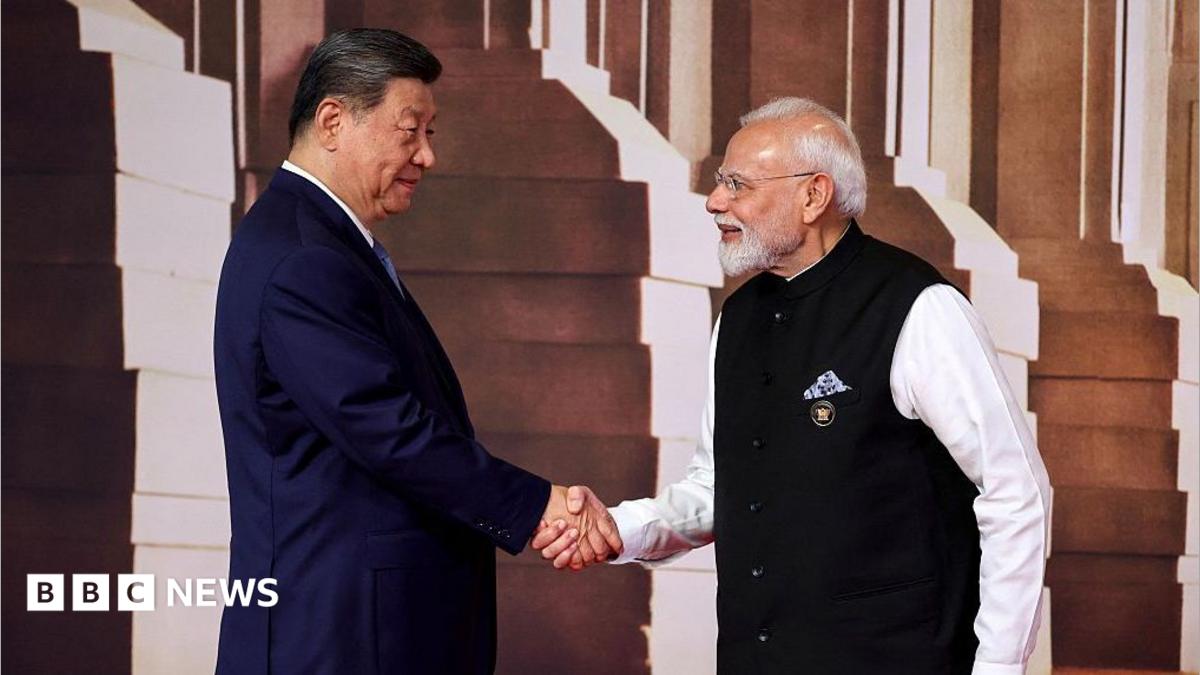
On the sidelines of the Brics summit in Delhi in September, amid a deepening thaw between the Asian giants, Prime Minister Narendra Modi and Chinese President Xi Jinping vowed to address, external these “structural trade imbalances and supply chain issues”.
But given how deeply entrenched Chinese imports have become to India’s industrial economy, this will be a formidable task for Delhi, experts told the BBC.
That’s primarily because India depends on China to not merely consume end-products, but increasingly to produce industrial goods.
To be true, India has reduced its reliance on imports of finished goods such as smartphones and solar equipment, and now produces more than a quarter of the world’s iPhones.
“Yet, production remains largely assembly-based and depends heavily on imported components, particularly from China,” says Srivastava.
It’s the same story with industrial machinery, battery inputs, chemicals, solar cells, and manufacturing equipment.
Electrical machinery and electronics alone account for 36% of imports, followed by machinery and mechanical appliances at 21.7%, while organic chemicals and plastics also have a significant share, according to the Observer Research Foundation (ORF) think tank.
“Their interruption would not merely affect consumption; it would disrupt production itself,” according to Soumya Bhowmik, a Fellow at ORF’s Centre for New Economic Diplomacy, who argues that this reflects India’s difficulty in substituting Chinese inputs with local production.
Besides a growing reliance on inputs and raw material, Chinese imports to India are also being propelled by other macroeconomic trends.
China has huge excess capacity in sectors from steel to solar panels and electric vehicles, while its slowing economy cannot absorb the output.
Manufacturers are therefore increasingly turning to overseas markets, selling goods cheaply. China’s trade surplus is expected to top $1tn for a second straight year.
A lot of these goods are coming to Indian shores because it is rapidly expanding manufacturing across segments of the economy, but also as “Western markets impose tariffs and other restrictions”, says Srivastava.