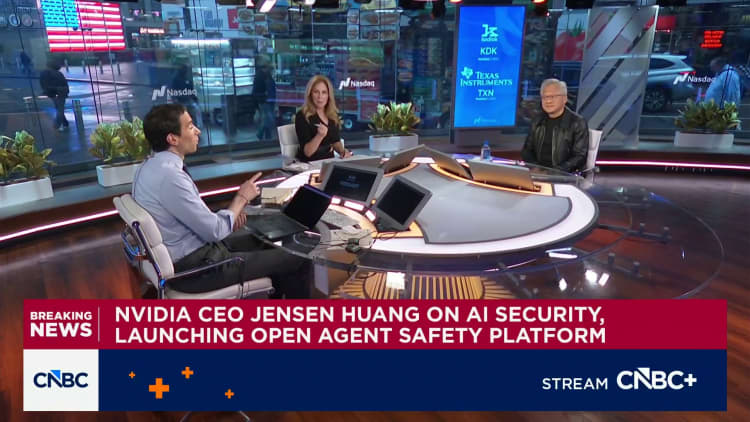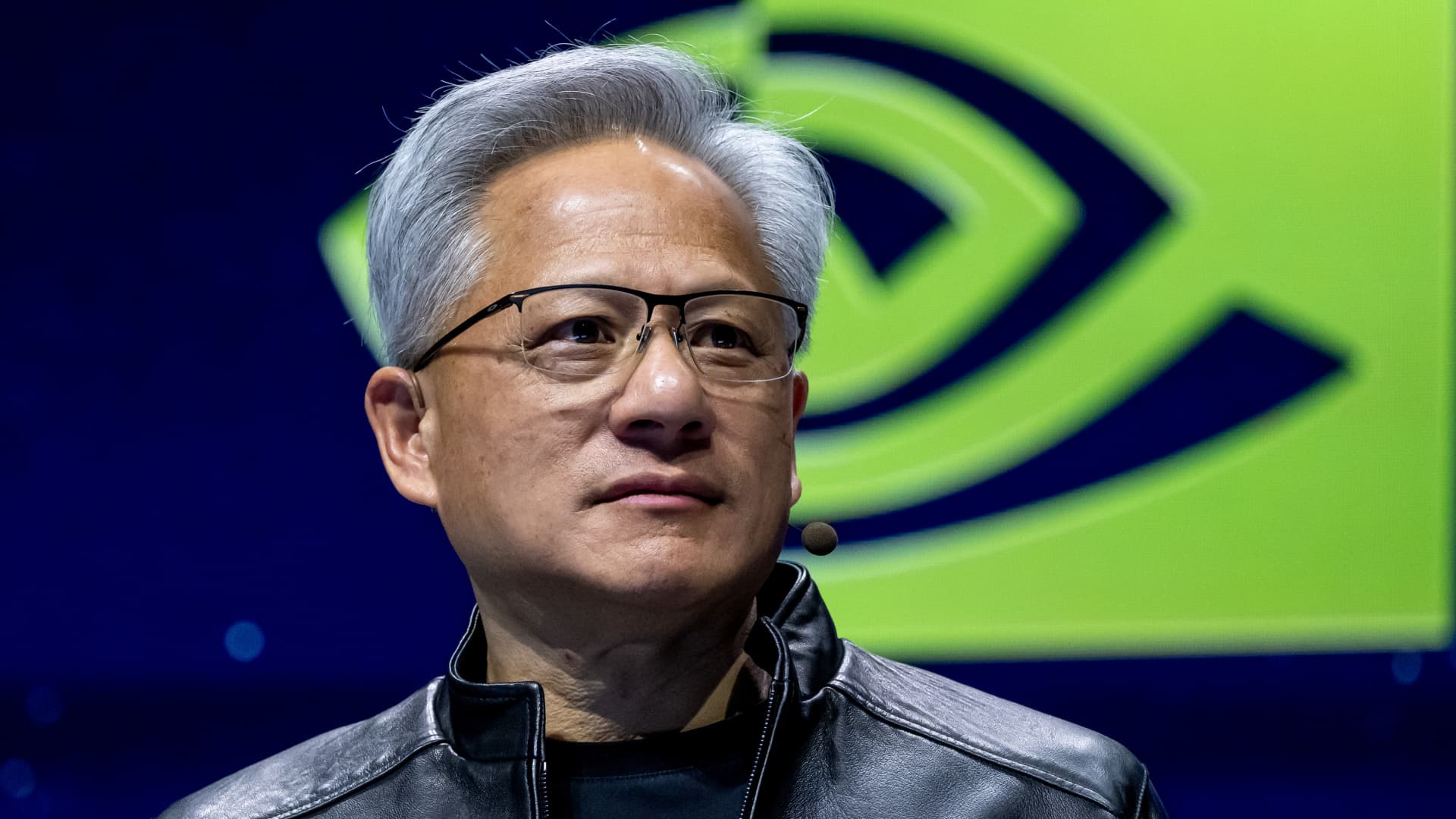




Nvidia’s massive new stock buyback is exactly the kind of move Jim Cramer has been calling for. The chipmaker’s board greenlit an additional $150 billion in share repurchases , bringing its total remaining authorization to $235 billion. Nvidia said Monday the increase is the largest in history and expects to complete the program through fiscal 2028. The company is currently in the third quarter of its fiscal 2027. “This is a very significant buyback,” Jim said Monday on CNBC. “I think if they’re active and in there every day, it will change the trajectory of the stock.” Shares rose almost 3% Monday, bringing their year-to-date gain to roughly 24%. That would be an impressive return for most companies, but Nvidia’s stock should be doing even better given the company’s position at the center of the AI revolution and its remarkable financial performance. Adjusted earnings per share have more than doubled in back-to-back quarters, a considerable feat nearly four years into the generative AI boom, and for a company of Nvidia’s size. For fiscal 2027, Nvidia is projected to grow earnings by 94%, according to FactSet estimates, an acceleration from 60% growth in the prior year. And yet, this year Nvidia is the seventh-worst performer in the iShares Semiconductor ETF , which contains 30 stocks. The ETF, as a whole, is up 86% including Monday’s intraday move. That disconnect between financial and stock performance is exactly why Jim has been pushing Nvidia to put more of its enormous and still-growing cash stockpile toward repurchasing its own shares. Buybacks reduce the number of shares outstanding, increasing the ownership stake of remaining shareholders and, all else equal, boosting earnings per share. NVDA YTD mountain Nvidia’s year-to-date stock performance. Earlier this month, Jim called for Nvidia to authorize as much as $500 billion in buybacks, pointing to the success of Apple’s longtime strategy of aggressively and consistently repurchasing its own shares. In May, Jim explicitly urged Nvidia to take a page from the Apple buyback playbook. Former Apple CFO Luca Maestri “would buy every day,” Jim said during Monday’s Morning Meeting. “And then there’d be a dip, and he would double buy, and if it dipped again, he would triple it. He just kept buying and buying on any dip.” In total, Apple bought back more than $800 billion of stock during Tim Cook’s 15 years as CEO, according to FactSet, reducing its share count by roughly 40%. If Nvidia follows the same active strategy, “then you’re going to see this stock advance dramatically,” Jim said. Nvidia was already stepping up its buybacks before Monday’s announcement. In May, the board authorized an additional $80 billion in share repurchases with no expiration date. The company bought back a combined $39 billion of stock during the first two quarters of its fiscal 2027, according to FactSet, nearly matching its repurchases for all of fiscal 2026. Nvidia bought back roughly $34 billion in fiscal 2025. Nvidia has committed to return at least 50% of its free cash flow to shareholders through buybacks and dividends. The company in May hiked its quarterly dividend payout to 25 cents a share from a penny. At less than a 0.5% dividend yield, Nvidia is far from being considered an income-oriented stock. But the decision, nevertheless, reflects the company’s confidence in its ability to sustain the higher payout in the coming years. Nvidia has also used its financial strength to support the broader AI ecosystem through investments in and financing arrangements with customers and other companies building AI infrastructure. Those deals have fueled concerns about so-called circular financing , in which companies help fund customers that ultimately spend money on their products. While mindful of the risks associated with Nvidia’s use of its balance sheet, it’s not a reason for us to leave the stock. And with fervent demand for AI computing power across the world, Nvidia’s AI chips can be redeployed if a particular customer that it has supported runs into trouble. The company has enough firepower that it can ramp up buybacks without sacrificing the investments needed to maintain its AI leadership. Wall Street projects Nvidia to generate roughly $440 billion in free cash flow over its next six unreported quarters, according to FactSet data. That’s the period of time in which Nvidia said it expects to complete the $235 billion buyback. “We’re going to generate a lot of cash in the coming years, and every single year, as we generate more cash, we’d like to be able to return it back to shareholders,” Nvidia CEO Jensen Huang said Monday on CNBC’s ” Squawk Box .” For us, the buyback strengthens the case for owning Nvidia. While the additional $150 billion authorization falls short of the $500 billion Jim called for, it’s a major step in the right direction. The business continues to benefit from enormous AI infrastructure spending, and management now has an even more powerful tool to capitalize when the stock fails to reflect that strength. (Jim Cramer’s Charitable Trust is long AAPL and NVDA. See here for a full list of the stocks.) As a subscriber to the CNBC Investing Club with Jim Cramer, you will receive a trade alert before Jim makes a trade. Jim waits 45 minutes after sending a trade alert before buying or selling a stock in his charitable trust’s portfolio. If Jim has talked about a stock on CNBC TV, he waits 72 hours after issuing the trade alert before executing the trade. THE ABOVE INVESTING CLUB INFORMATION IS SUBJECT TO OUR TERMS AND CONDITIONS AND PRIVACY POLICY , TOGETHER WITH OUR DISCLAIMER . NO FIDUCIARY OBLIGATION OR DUTY EXISTS, OR IS CREATED, BY VIRTUE OF YOUR RECEIPT OF ANY INFORMATION PROVIDED IN CONNECTION WITH THE INVESTING CLUB. NO SPECIFIC OUTCOME OR PROFIT IS GUARANTEED.